
population-scope: Regional
 Project Knitwell
 Project Knitwell
EIN: 27-2316864
Mission Statement
Project Knitwell helps people facing challenges by providing knitting instruction and shared community opportunities that promote wellness and resilience.
Program Summary
Project Knitwell will develop and deliver programs, resources, and research that demonstrate the benefits of knitting as a tool for achieving wellness, comfort, and community. Project Knitwell has programs that serves people at Virginia Hospital Center and the Catholic Diocese of Arlington, as well as other local medical facilities that serve Arlington residents. We also have several volunteers that are Arlington residents and we conduct many of our volunteer meetings at the Arlington Central Library.
Impact Statement
Project Knitwell has active programs at 12 sites throughout the Washington, DC area. Sites include programs for patients and staff at local hospitals, as well as at community sites such as the Catholic Diocese of Arlington, Hopelink and N Street Village. Over 20 volunteers spent approximately 1500 hours annually teaching 1800+ people how to knit.
What ways can the public get involved?
The public can get involved by volunteering to teach knitting onsite, helping Project Knitwell do public events to spread the word, as well as support the organization with other publicity or fundraising activities.
How are charitable dollars spent? Where does my donation go?
Donations to Project Knitwell help provide quality instructional materials for participants, including yarn, needles and reference guides. Donations also support our volunteer program to recruit, train and retain great volunteers.

Information provided March 2026
Center for Youth and Family Advocacy (CYFA)
 Center for Youth and Family Advocacy (CYFA)
EIN: 82-4681676
Mission Statement
CYFA expands educational opportunity, cultivates growth and resilience, and activates youth leadership and community contribution.
Program Summary
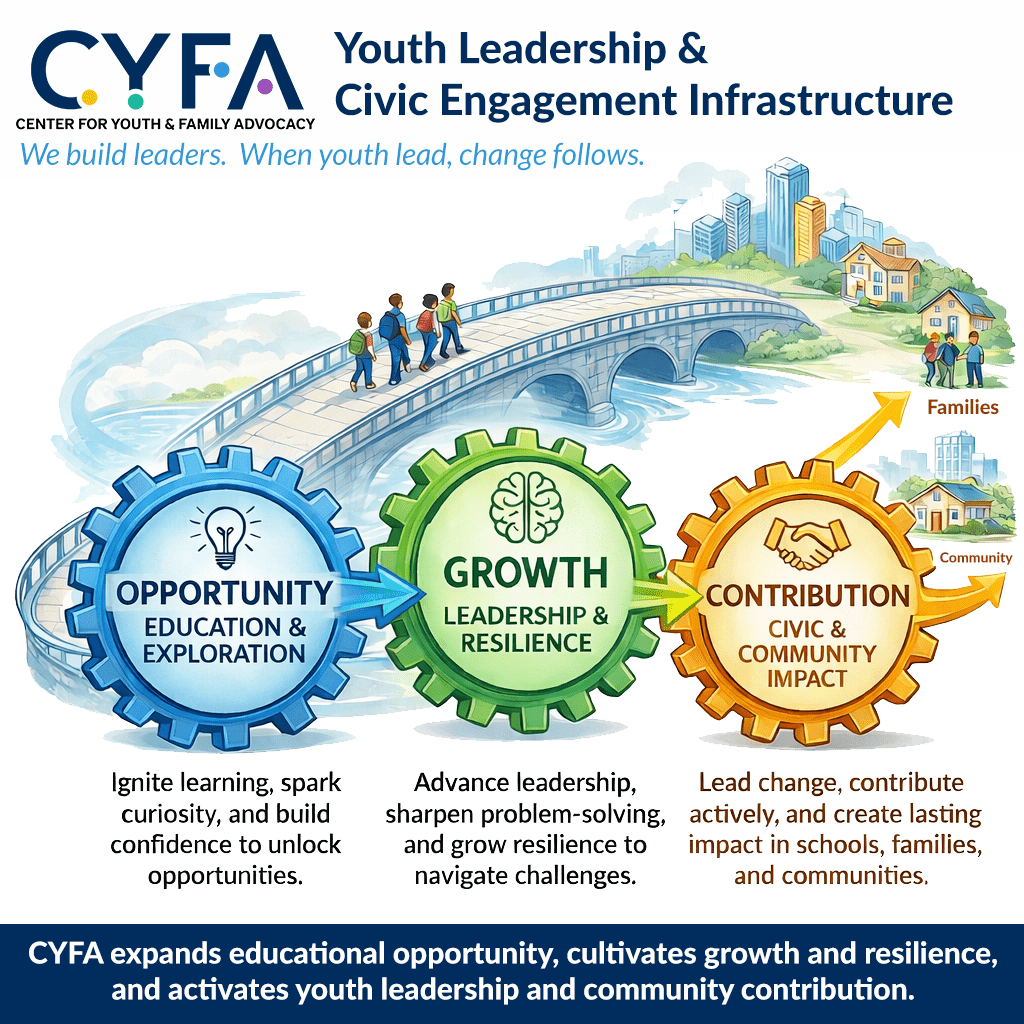
The Center for Youth and Family Advocacy (CYFA) expands educational opportunity, cultivates growth and resilience, and activates youth leadership and community contribution. Across Arlington, CYFA is building the infrastructure that ensures young people have access to opportunity, support, and pathways to lead.
CYFA’s work reflects a clear progression. Through Guiding Personal Success (GPS), youth access opportunity in safe, engaging environments, including The Zone for elementary students and Guiding Personal Success to Youth Employment Services (GPS2YES) for middle and high school youth. CYFA delivers these programs in Arlington Public Schools and in partnership with Affordable Homes and Communities, providing academic support, social-emotional learning, and opportunities to build healthy minds, healthy bodies, and healthy relationships, along with college and career exploration.
As youth grow, they develop accountability and leadership through the Youth Restorative Diversion Initiative (YRDI), a community-based alternative to the juvenile justice system where young people take accountability and repair harm through restorative practices, including PEER and Youth Peer Court (YPC), with advanced leadership through Youth Peer Court Ambassadors.
Youth then step into contribution. Through The Next Chapter, CYFA supports youth in the Northern Virginia Juvenile Detention Center and through reentry, connecting them to education, workforce opportunities, and community resources. Through the Justice Leadership Club and CYFA’s Youth Advisory Board, youth lead and create meaningful change.
Impact Statement
CYFA’s work ensures that young people have access to opportunity, develop the skills and resilience to navigate challenges, and step into leadership within their communities. Through consistent, relationship-based support, youth remain engaged in school, strengthen decision-making and accountability, and build pathways toward college, careers, and long-term stability.
In 2025, CYFA served more than 320 youth, reaching hundreds of family members through engagement and connection to resources. In 2026, 100 teens participated in CYFA’s youth-led Listen Learn Lead Summit, demonstrating the power of youth leadership in action. Across afterschool programs, 60 young people are actively engaged in academic support, social-emotional learning, and skill-building.
Through the Youth Restorative Diversion Initiative (YRDI), CYFA provides a community-based alternative to the legal system, with 99% of youth successfully completing the program and 9 in 10 avoiding deeper system involvement. Every $1 invested in YRDI returns $8 in social value.
Through reentry and leadership pathways, youth not only stay connected to opportunity, but contribute to their schools and communities, strengthening the broader Arlington community.
What ways can the public get involved?
Community members can stay informed through CYFA’s newsletter and Instagram, learning more about our work and the ways we support youth and families across Arlington. Sharing CYFA’s work and using your voice to raise awareness helps expand opportunity for young people.
Financial support is critical to sustaining CYFA’s programs, including educational opportunity through Guiding Personal Success (GPS), restorative diversion through YRDI, and youth leadership initiatives.
There are also opportunities to give your time. Volunteers can support events such as the Listen Learn Lead Summit and other youth engagement activities.
You can also help connect young people to leadership opportunities by sharing pathways to get involved, including the Youth Advisory Board and Youth Peer Court and PEER Ambassador roles.
How are charitable dollars spent? Where does my donation go?
Your donation to CYFA directly supports programs that expand opportunity, strengthen resilience, and build youth leadership across Arlington.
Contributions sustain Guiding Personal Success (GPS), including The Zone and GPS2YES, which provide academic support, social-emotional learning, and opportunities for young people to build healthy minds, healthy bodies, and healthy relationships while exploring college and career pathways.
Your support also powers the Youth Restorative Diversion Initiative (YRDI), including PEER, Youth Peer Court (YPC), and Youth Peer Court Ambassadors, which provide restorative, community-based alternatives that help young people take accountability, repair harm, and stay connected to school and opportunity.
Donations fund The Next Chapter, supporting youth in the Northern Virginia Juvenile Detention Center and through reentry with education, workforce readiness, and ongoing guidance, as well as leadership opportunities like the Youth Advisory Board, Justice Leadership Club, and youth-led events such as the Listen Learn Lead Summit.
Additional support makes community-based experiences like Unplugged possible, creating safe spaces for connection, well-being, and positive peer engagement.
Together, your investment ensures young people have the support, relationships, and opportunities they need to grow, lead, and contribute.
Information provided March 2026
Friends of Arlington’s David M. Brown Planetarium
 Friends of Arlington’s David M. Brown Planetarium
EIN: 27-2760025
Mission Statement
Promoting and supporting Arlington’s David M. Brown Planetarium as an accessible community resource for all people to learn, engage, and be inspired by the wonders of science and the universe.
Program Summary
The Friends raise funds to sponsor college scholarships, provide grants for teacher professional development, and support the licensing and creation of programming for the planetarium. As part of its ongoing public education mission, the organization also hosts a variety of science themed public events and screenings of full-dome video programs.
Impact Statement
Friends of Arlington’s David M. Brown Planetarium (FOAP) provides funding to support education in science, technology, engineering, and mathematics. We have funded more than $96,000 in scholarships to Arlington Public School Students as well as grants to Arlington Public School teachers to attend classes, major educational conferences, and online learning. The program is administered jointly with APS and has benefited dozens of our teachers and – most importantly – their students. More than 2,000 people attended planetarium shows or science-based presentations during FOAP sponsored weekend events. We also host dedicated programs for scout troops in the David M. Brown Planetarium once a month during the school year. FOAP has expanded its community outreach through its portable planetarium dome and virtual equipment. We participate in multiple events at locations throughout Arlington County in our effort to bring the planetarium to the community.
What ways can the public get involved?
The public is invited to become a member of the Friends. Members are part of a community of citizens who are concerned about the planetarium facility and science education. Members receive Advance notification of ticket availability for FOAP public programs, a subscription to the monthly FOAP digital newsletter, and invitations to special members-only events.
The public can volunteer at planetarium shows or other events, including the Arlington County Fair.
We welcome all donations. The public can donate to support general programs, the David M. Brown Memorial Scholarship, or the Alice G. B. Monet Teacher Grant Program.
How are charitable dollars spent? Where does my donation go?
100% of donations designated for the David M. Brown Memorial Scholarship are used to fund student scholarships. 100% of donations designated for the Alice G. B. Monet Teach Grant Program are used to fund teacher grants. Undesignated donations are used to fund student scholarships, teacher grants, planetarium programs, and enhancements to the planetarium facility.
All Board Members of the Friends of Arlington’s David M. Brown planetarium serve as volunteers.

Information provided March 2026
OutLaw
 OutLaw
EIN: 99-2386327
Mission Statement
OutLaw’s mission is to advocate for the rights and well-being of the LGBTQIA+ community, engage in meaningful dialogue and activities that promote unity and understanding, and educate the public and our members about pertinent issues. We believe in the power of diversity, the importance of visibility, and the necessity of action in pursuit of equality and justice. Together, we are OutLaw, and we stand strong in our commitment to create a world where everyone can live authentically and love freely.
Program Summary
OutLaw is a dynamic and inclusive LGBTQIA+ nonprofit organization that is dedicated to fostering a safe and supportive environment for all individuals. Our programs are designed to promote advocacy, community engagement, education, and outreach within the LGBTQIA+ community and beyond.
- Advocacy: We work tirelessly to champion the rights of the LGBTQIA+ community at local, state, and national levels. Our advocacy efforts include policy reform, legal support, and public campaigns to combat discrimination and promote equality.
- Community Engagement: We believe in the power of community. Through various events, workshops, and social gatherings, we aim to create a space where individuals can connect, share their experiences, and support each other.
- Education: Knowledge is power. We strive to educate the public and our members about the issues affecting the LGBTQIA+ community. This includes hosting educational seminars, distributing informational materials, and providing resources for further learning.
- Outreach: Our outreach efforts are focused on connecting with the community to spread the word about our gender marker and name change clinics. We understand the importance of these services in the lives of many in the LGBTQIA+ community, and we strive to make them as accessible as possible. We utilize a variety of communication channels, including social media, community events, and partnerships with other organizations to reach those who can benefit from these clinics. Additionally, we offer guidance and support throughout the process, ensuring that individuals are not alone in their journey towards living their most authentic lives.
Impact Statement
Since its inception, OutLaw has made a significant impact in the lives of countless individuals within the LGBTQIA+ community. Our advocacy efforts have led to increased awareness about the rights and needs of LGBTQIA+ individuals. Our community engagement initiatives have fostered a sense of belonging and support, creating a safe space for individuals to express themselves and connect with others.
Our educational programs have empowered both the LGBTQIA+ community and the general public with knowledge, promoting understanding and acceptance. Most notably, our outreach efforts have made a profound difference. By spreading the word about our gender marker and name change clinics, we have helped many individuals take crucial steps towards living their most authentic lives.
The impact of OutLaw extends beyond these tangible achievements. Every conversation sparked, every mind opened, and every life touched contributes to a more inclusive and accepting world. While there is still much work to be done, we are proud of the progress we have made and are committed to continuing our mission.
What ways can the public get involved?
- Participate in Events:
- Keep an eye out for our events, workshops, and gatherings. Attend these to learn, connect, and contribute.
- Events may include gender marker and name change clinics, panel discussions, workshops on LGBTQIA+ rights, and community-building activities.
- Volunteer:
- We rely on volunteers to organize and run our programs. Consider volunteering your time and skills.
- You could assist with event planning, outreach efforts, or administrative tasks.
- Spread Awareness:
- Use your voice and social media platforms to raise awareness about our mission and initiatives.
- Share our content, stories, and educational materials to reach a wider audience.
- Donate:
- Nonprofits like ours depend on donations to sustain our work. If you’re able, consider making a financial contribution.
- Sponsor one of OutLaw’s events or clinics. We are always welcoming new sponsors and donors. Sponsorship opportunities exist for a wide variety of items, events, clinics, and more. Please reach out to OutLaw President, Mack Freilich (he/him/his) outlaw@gmu.edu for more information. We are eager to have your support!
- Even small donations can make a difference.
- Collaborate:
- If you’re part of another organization or group, explore collaboration opportunities with us.
- Joint events, partnerships, and shared resources can amplify impact.
Remember that your involvement matters, and together, we contribute to a more inclusive and empowered LGBTQIA+ community!
How are charitable dollars spent? Where does my donation go?
Donations go directly back to the community, mission, and initiatives of OutLaw, including its fundraising efforts, events, clinics, and resources.
Information provided June 2024
Boolean Girl
 Boolean Girl
EIN: 82-1408294
Mission Statement
The mission of Boolean Girl is to diversify STEM (science, technology, engineering and math) by teaching and inspiring girls, low-income students, and underrepresented youth in grades three to eight through meaningful, hands-on instruction and sustained exposure to computer science and engineering in a collaborative and welcoming environment.
Program Summary
At Boolean Girl, we work to diversify STEM by teaching and inspiring girls, under-represented groups and low-income kids to code, build, invent and animate. Primarily serving the greater Washington, DC, area, we provide girls-only and co-ed classes, summer camps and after school programs, teaching coding and engineering in an inclusive, welcoming environment.
With separate curriculum for elementary and middle school students, children learn computer science and engineering fundamentals through a series of unique projects, hands-on challenges, and play. Our students learn coding, robotics, AI, engineering, teamwork, and digital citizenship while making new friends and having fun. With a robust curriculum and hands-on projects, we educate and empower the next generation of technologists. In addition, we hire rockstar instructors, many of whom are high school and college students who complete paid internships or workforce development programs and are excellent mentors for our younger students.
With our micro:bit for All program, Boolean Girl provides micro:bit kits to schools and students to teach coding, along with lesson plans integrated into core curriculum such as math and science, as well as supplemental lessons in computer science or specials.
At Clubhouse, students excited to continue learning coding and engineering join small groups in after-school or weekend sessions to develop their own STEM projects, share their learnings, and get inspired to continue their STEM journey. Our curriculum incorporates programming and engineering including robotics, mechanics, and circuits, along with art and creativity.
At week-long Boolean Girl camps, girls learn computer science and engineering fundamentals from our rockstar instructors through a series of unique projects. Younger students begin with Scratch coding, starting with Storytelling in Scratch and progressing through Building Games and AI. Beginning in sixth grade, we teach more advanced coding with Python, in addition to Web Development and Artificial Intelligence. We also offer two types of engineering classes for students in grades five through eight: traditional robotics (things that move), and wearable machines.
Impact Statement
Women make up half of the total U.S. college-educated workforce, but less than one third of the science and engineering workforce. Latinx and African-American women make up less than 3%. Research has shown that a 28 percentage point gap exists between male and female Gen Z members regarding their interest in pursuing careers in engineering or computer/technology fields. Boolean Girl was founded to address this by fostering inclusive, creative, and collaborative environments in which girls can learn and grow confidence in STEM subjects at a pace equal to that of their male peers.
Over ten years ago, we started our journey teaching 49 girls in one elementary school in Arlington, Virginia. We have now reached over 60,000 girls and underrepresented youth throughout the greater Washington, DC area, in addition to online students across the country.
In 2025, we reached over 10,000 students through Summer Camps, after-school Clubhouses, micro:bit for All, and other online and in-person events. We worked with 75 schools (72% of which were Title 1) to get over 6,000 micro:bit Kits to 5th grade students, training older students as instructors for the younger students. In addition, 45% of our students come from low income households and receive scholarships.
What ways can the public get involved?
The public can help through donations, sponsorships, volunteering at our events, or even teaching.
Our partners and sponsors help us fund and run our programs through financial support, providing space for events, volunteers, technical support and other resources, and through offering guidance.
How are charitable dollars spent? Where does my donation go?
- $15 – One hour of after school learning for one student
- $25 – Saturday coding Clubhouse for one child
- $40 – Micro:bit kit for a child
- $125 – Badge-earning class online for a scout troop
- $250 – Teacher training for after-school Clubhouse
- $425 – Full week of coding camp for one child
- $5000 – Micro:bit kits and teacher training for a typical 5th grade class
We run revenue generating summer camps that are open to all youth. This revenue covers our overhead costs which have been less than 10% of our overall costs for 10 years. This means that 100% of your donations go to programs that impact the community.

Information provided March 2026
HopeLink Behavioral Health
 HopeLink Behavioral Health
EIN: 54-0880899
Mission Statement
HopeLink inspires hope and provides support for individuals and families experiencing crisis and behavioral health challenges. Through innovative services and a collaborative approach, we strengthen our community one life at a time.
Impact Statement
At HopeLink, we envision a society where hope is universal. Through access to quality behavioral health, crisis intervention, and suicide intervention services, we foster an inclusive community in which everyone can attain wellness and a genuine sense of belonging.
What ways can the public get involved?
HopeLink relies on the support of our community to provide our mental health and crisis services. We offer volunteer opportunities for adults, youth, and groups including corporate groups. Gifts to support the organization help HopeLink to serve the thousands of adults, youth and families in our community.
How are charitable dollars spent? Where does my donation go?
Your dollars are critical in supporting HopeLink’s behavioral health, crisis and suicide intervention services. The demand for mental health services in our community is on the rise, and support from our community allows us to be able to offer services to our community members in need, despite financial, language, or other barriers that our community members may face to accessing care.

Information provided March 2026
Habitat for Humanity of Washington, D.C. & Northern Virginia
 Habitat for Humanity of Washington, D.C. & Northern Virginia
EIN: 52-1589700
Mission Statement
Habitat for Humanity of Washington, D.C. & Northern Virginia’s (Habitat DC-NOVA) mission is to reduce poverty and housing instability in the national capital area by creating and preserving decenter, affordable, and energy-efficient homes for Washington, D.C., and Northern Virginia residents with low to moderate incomes.
Program Summary
Habitat DC-NOVA believes that everyone deserves a safe, decent place to live. We work to break down barriers to homeownership and help families create stability and intergenerational wealth through permanent housing.
Homeownership: Habitat provides unique opportunities for families with low to moderate incomes to buy their first home. We build quality homes and partner with DC & NOVA families to sell them below market value with affordable financing, reduced down payments, and mortgage payments proportional to income. We serve families earning 30-80% of the Area Medium Income (AMI) and who live in Arlington County, Fairfax County, The Cities of Alexandria, Falls Church, Fairfax, and the District of Columbia.
Home Repair: We partner with seniors with lower incomes and adults with disabilities to help them make critical repairs and accessibility modifications to their homes. By helping families who cannot afford these repairs, we’re helping to make their homes safe, healthy, and supportive of aging in place. With modifications and support, they can continue to live—and thrive- in their own homes and communities.
Impact Statement
For the last 35 years, Habitat DC-NOVA has partnered with families to help them build stronger foundations for their future. Currently, 1/3 of households in our region pay more than 30% of their monthly income towards housing. With many spending a large portion of their income on housing, they have to make difficult decisions between spending on housing, healthcare, food, and transportation.
We have built over 300 homes, completed over 235 home repairs, and served almost 2,000 individuals. In 2018, we found that 52% of homeowners pursued higher education, and 92% of children in Habitat homes had graduated high school.
We have set an ambitious goal to serve 1,000 people by 2030 through our homeownership and home repair program. Active construction is going on in Arlington at Reeves Farmhouse, in DC at 55th Street, and in Fairfax at Fairfax Presbyterian Church.
What ways can the public get involved?
Habitat DC-NOVA brings people with all different backgrounds together to eliminate poverty housing and build community alongside our neighbors needing a decent place to live. We believe everyone can make a difference with their unique skills and talents, and we offer a variety of opportunities to support our affordable housing mission.
Whether you want to swing a hammer, help bring in donations at the ReStore, hold a fundraiser to support our builds, plan an event to raise awareness of housing needs or advocate for housing policies, we have an opportunity that will fit your needs.
Volunteering: We have volunteer opportunities on our construction site, our ReStores, and in our office. Learn more at https://www.habitatdcnova.org/get-involved/volunteer/
Donate home goods, furniture, or construction materials to the ReStore. We have three ReStores (Alexandria and Chantilly) open to the public Monday-Saturday. Shop the store that helps build homes! We accept donations at the store and may be able to pick up larger items at your home. Learn more at https://www.habitatdcnova.org/restore/
Donate your vehicle, motorcycle, or RV to the Habitat for Humanity Cars for Homes program. Your vehicle can help support local families in building strength, stability, and shelter. Learn more at https://www.habitatdcnova.org/support-us/donate-your-car/
How are charitable dollars spent? Where does my donation go?
Habitat DC-NOVA provides decent, affordable homes to families needing a safe place to call home. Each donation is used responsibly to support programs, serve families, and build more equitable and accessible communities in our region. We are currently ranked as a 4-star charity on Charity Navigator, with a 94% ranking.
With the continually increasing cost of building materials and land, we work hard to build partnerships to reduce these expenses. However, significant costs for materials, site preparation, and other services are still needed to serve families in our area.
Information provided March 2026
ECDC African Community Center
 ECDC African Community Center
EIN: 52-1308986
Mission Statement
Enable and empower refugees on their path toward building safe, sustainable lives.
Program Summary
Reception & Placement Program
The Reception & Placement program at ACC-DC-VA provides a robust suite of initial support services for newly arrived refugees and SIV holders. Over the first 90 days, clients receive essential aid including airport pickup, temporary housing, food assistance, enrollment in benefit programs, health screenings, and cultural orientation. These services are critical in helping clients stabilize and begin to navigate their new environment, setting a foundation for successful integration into the community.
Employment Support Services
Our Employment Support Services are designed to help refugees and immigrants overcome barriers to employment and advance their careers. We provide comprehensive support, including job training, skills development, resume building, and career counseling. Additionally, we facilitate job fairs to connect clients directly with potential employers, offering both immediate hiring opportunities and long-term career advancement.
Health Education and Support
ACC-DC-VA addresses health disparities by advocating for equitable healthcare and organizing health workshops in collaboration with local health departments. Our services include organizing pop-up vaccination sites and providing education on preventive care and wellness. This proactive approach ensures that our clients not only understand their health care options but also have access to necessary services to maintain good health.
Youth Mentorship and Family Enrichment
Our youth mentorship program pairs young immigrants and refugees with mentors who can provide guidance, support, and encouragement as they navigate their new lives. This program is part of our broader family enrichment services that aim to strengthen family ties and support through community-building activities and educational workshops, ensuring families have the resources to thrive together.
Intensive Case Management
For clients facing complex challenges, our intensive case management program offers personalized, in-depth support. Case managers work closely with individuals and families to address a range of needs including legal, health, and social services, ensuring that each client receives comprehensive and tailored assistance.
Immigration Aid
We offer legal immigration assistance to navigate the complexities of the U.S. immigration system, helping with visa applications, green card renewals, citizenship paperwork, and family reunification petitions. Our legal team’s expertise is crucial in guiding clients through legal hurdles and providing necessary representation.
Women’s Empowerment Program
Our Women’s Empowerment Program is dedicated to supporting female clients through educational resources, empowerment workshops, and community integration activities. It focuses on building resilience and autonomy, helping women gain the skills and confidence needed to participate fully in their new community.
Victim Advocacy
The Victim Advocacy program supports clients affected by crime, trafficking, or domestic violence. We provide counseling, mental health services, and legal advocacy to help them navigate various systems and recover from their experiences. This program is crucial in ensuring that victims receive compassionate and effective support. These programs are all aimed at empowering our clients and guiding them towards self-sufficiency, ensuring they have the support needed to overcome barriers and integrate successfully into their new communities
Impact Statement
At ACC-DC Metro, we focus on fostering self-sufficiency among newly arrived refugees and immigrants. In Fiscal Year 23, we resettled over 1,700 individuals, providing comprehensive services including resettlement assistance, legal support, youth casework, language training, employment support, and health and mental well-being programs.
Our efforts ensure smooth transitions for clients into new communities, while also addressing the complexities of immigration legal processes. Dedicated caseworkers connect youth with educational resources and mentorship for better cultural and social integration. For adults, we offer employment training to enhance job prospects and financial independence. Our health services tackle both physical and psychological needs, ensuring clients start their new lives in optimal health.
Community integration is also key; for example, our post-COVID-19 Refugees’ First Thanksgiving event brought together over 450 refugees with 200 volunteers, celebrating new beginnings and cultural exchange. Another community event attracted 500 members, including new arrivals, highlighting local support from over 100 individuals and businesses.
These initiatives help our clients become contributing, integrated members of society, reflecting our commitment to their long-term success and well-being in their new homeland.
What ways can the public get involved?
At ACC-DC Metro, you can get involved and make a meaningful impact on the lives of refugees through a variety of opportunities:
- In-Kind Donations: Donate furniture, household items, or shop for pre-made Welcome Kits containing essentials for refugees. Your contributions create welcoming homes and ease the transition for newcomers.
- Co-Sponsorship: Join as a co-sponsor to provide long-term support to refugee families. This involves mentoring, collecting donations, and assisting with essential services.
- First Friends Program: Welcome refugees at the airport and support them as they settle into their new community. This role requires a commitment of at least three months to help refugees navigate their new environment.
- Youth Mentorship & Tutoring: Mentor and tutor refugee youth, providing academic assistance and guidance on career paths.
- Corporate Volunteering: Companies and employees can volunteer in activities that support refugees, with flexible scheduling options for both one-time and ongoing commitments.
- Refugee Employment Workshop Consultants: Volunteer quarterly to assist refugees in enhancing their employment prospects through job search guidance, resume editing, and interview preparation.
- Flexible Volunteering: Engage in diverse, as-needed volunteer activities like driving refugees to appointments or helping with English language practice.
How are charitable dollars spent? Where does my donation go?
Donations to ACC-DC Metro play a vital role in enhancing the lives of refugees and immigrants by supporting essential services that meet their needs. Contributions help furnish homes for new arrivals, provide Welcome Kits with crucial items for resettlement, and fund employment programs such as job training and interview preparation. Additionally, your donations support youth educational programs, legal assistance for navigating immigration processes, and critical health services including healthcare access and surgeries. Emergency assistance funds cover immediate needs like rental support during crises. Donations also enable community integration events that foster a sense of belonging. Your generosity ensures ACC-DC Metro can continue to offer these vital services, directly impacting the lives of those we serve and aiding their successful integration and empowerment in their new communities.

Information provided April 2024
Neighborhood Health
 Neighborhood Health
EIN: 54-1849891
Mission Statement
Our mission is to improve health and advance health equity in Alexandria, Arlington, and Fairfax by providing high quality primary care regardless of ability to pay.
Program Summary
Neighborhood Health provides accessible, high quality, and patient-centered primary care to patients in Arlington, the City of
Alexandria, and Fairfax County. Our comprehensive model of primary care includes family medicine, internal medicine, and pediatrics as well as dental care, behavioral health, laboratory services, medication assistance, pediatric vision services, HIV care, diabetes education, and medical and non-medical case management. We are accredited by the Joint Commission and a certified Primary Care Medical Home, coordinating care across the health care continuum. Our mission is to improve health and advance health equity in our service area by providing high quality primary care regardless of ability to pay. Our vision is that everyone in our community has the highest quality healthcare and the opportunity to attain their highest level of health.
Neighborhood Health operates two clinics in Arlington; one at the Sequoia complex that serves adults and the Arlington
Pediatric Center which joined Neighborhood Health in January 2024. Many Arlington residents receive care at Neighborhood Health clinics in other jurisdictions.
Impact Statement
Neighborhood Health provides care for low-income, underinsured and uninsured individuals in Arlington County, the City of Alexandria, and Fairfax County. We ensure access to high quality, comprehensive primary healthcare regardless of ability to pay.
In 2024, we served 42,703 pediatric and adult patients. Most of our patients are either uninsured (37%) or on Medicaid (48%). 98% of patients report income of 200% FPL or lower. Over 90% identify as a racial or ethnic minority. We are the largest safety net health provider in Northern Virginia. Our patients have few other options to receive care.
In 2024, Neighborhood Health provided care to over 6,500 Arlington residents.
Neighborhood Health was recognized by HRSA with these 2024 Community Health Quality Recognition awards: Silver Health Center Quality Leader (top 11-20%), Health Disparities Reducer, Access Enhancer, Addressing Social Risk Factors, and Advancing HIT for Quality.
What ways can the public get involved?
The best way to support Neighborhood Health is through a financial contribution.
Neighborhood Health has limited volunteer opportunities. Email nhojvat@nhnva.org with questions.
Neighborhood Health has limited capacity for accepting donated goods. Email nhojvat@nhnva.org with inquiries.
If your organization is interested in partnering with Neighborhood Health, email jknops@nhnva.org.
How are charitable dollars spent? Where does my donation go?
Given Neighborhood Health’s high percentage of uninsured patients – about 37%, we welcome the financial support of individuals, corporations, and foundations to help cover the costs of serving our uninsured neighbors. Donations are used to pay for the care of these uninsured patients.
Examples of What Your Donation Will Cover:
- $5,000 – supports care for 4 uninsured patients with diabetes for a year
- $2,000 – supports the preventive dental care of 2 patients
- $1,000 – supports medical care for 1 newborn for a year
- $750 – supports medical care for 1 uninsured adult patient for a year
- $500 – supports two medical visits for an uninsured patient with heart disease
- $350 – supports two behavioral health visits for an uninsured patient with depression
- $250 – supports a comprehensive dental exam for a new uninsured patient
- $150 – supports an optometry visit for vision screening for an uninsured child
- $100 – supports navigation to specialty care for one uninsured patient
- $50 – supports application of dental sealant for 1 uninsured child
Call (571) 457-9146 or email development@nhnva.org with questions about donations.
Donations to Neighborhood Health can be designated for General Operations or for a specific purpose or project within our scope of work. Donations can also be made in memorium or in honor of an individual chosen by the donor. Please email development@nhnva.org for more details.
Donations to Neighborhood Health are tax deductible as allowed by law.
Information provided March 2025