
population-scope: Regional
 Arlington County Medical Society Foundation
 Arlington County Medical Society Foundation
EIN: 54-0788580
Mission Statement
The Arlington County Medical Society Foundation (ACMSF) is powered by Arlington’s physicians, who serve as the driving force behind our mission to strengthen healthcare access for communities in need across Arlington and Northern Virginia. Because our physicians work on the front lines of patient care, they are uniquely positioned to identify where healthcare gaps are most urgent and to direct resources where they will have the greatest impact. Through grantmaking, scholarships, education, and hands-on community engagement, ACMS Foundation channels the expertise, credibility, and commitment of the local medical community into lasting improvements in health equity and access.
Program Summary
ACMS Foundation’s programs are shaped and led by physicians who see community health needs firsthand. Because our physicians work directly with patients across Arlington and Northern Virginia, they are able to identify which local health needs are most critical and prioritize funding accordingly — ensuring donor dollars go where they matter most and raising awareness along the way. We provide grants to trusted local organizations and raise awareness.
We also invest in the next generation of physicians through scholarships for Arlington students pursuing medical careers, with a focus on supporting underserved student populations. In partnership with the Arlington County Medical Society, we offer hands-on shadowing experiences and career days that connect scholars directly with practicing physicians.
Beyond funding, ACMS physicians raise community awareness of pressing health issues, provide patient referrals to appropriate care, and share health education across the region — extending our impact well beyond grantmaking into direct community engagement and trust-building.
Impact Statement
For over a century, ACMS/Foundation has translated the expertise of Arlington’s physicians into measurable community health outcomes. In the past five years alone, our foundation has granted $80,000 to trusted local health organizations — Arlington Free Clinic, Neighborhood Health, VHC Health’s Palliative Care and Cancer Resource Center, VHC Health Pediatric Clinic, Hopelink, and the Culmore Clinic — expanding access to care for Arlington’s most vulnerable residents.
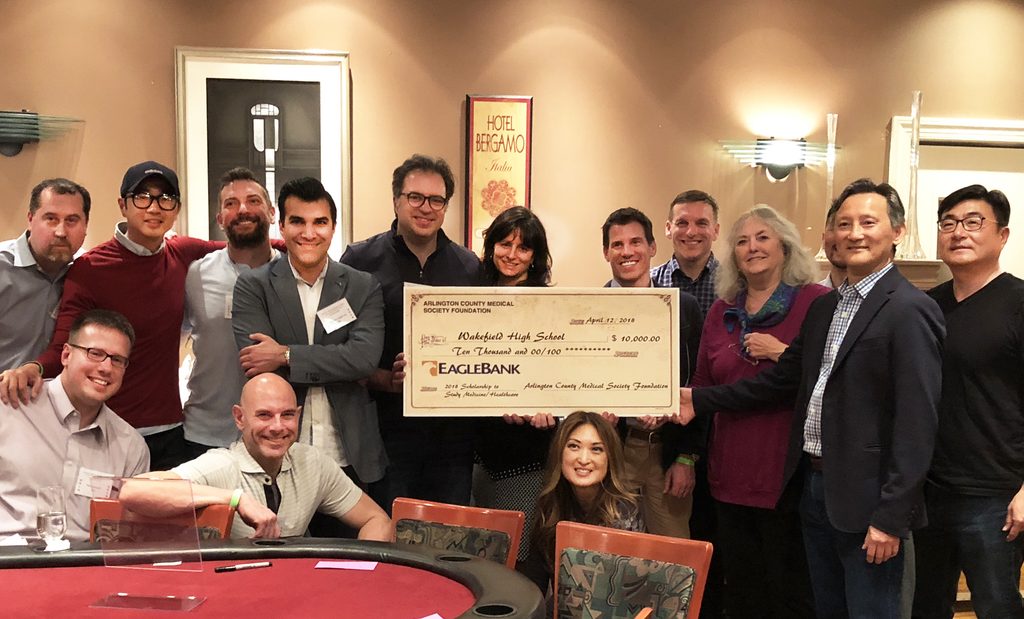
Over the past decade, ACMS Foundation has awarded $75,000 in scholarships to help launch the careers of aspiring physicians from underserved Arlington communities, while the Arlington County Medical Society continues to offer students invaluable shadowing experiences and career mentorship.
Our legacy runs deep: for 25 years, our Sharon McGowan Breast Health Fund provided life-saving breast health screenings to 2,900 uninsured women, delivering 2,500 mammograms, 300 sonograms, and 170 biopsies — funded by $700,000 raised by the medical community and coordinated with local hospitals and providers. ACMS Foundation also historically helped provide polio vaccines across Arlington.
Today, that same physician-driven commitment continues through active grantmaking, scholarships for future physicians, and community health engagement across Arlington and Northern Virginia.
What ways can the public get involved?
Donate to the ACMSF Donor Fund — Support grants identified by need by ACMS physicians to trusted local health organizations serving Arlington’s most vulnerable residents.
Contribute to the Scholarship Fund — Help launch the careers of aspiring physicians from Arlington’s underserved communities.
Attend, Support or Sponsor Fundraising Events — Help sustain ACMS Foundation’s grantmaking and scholarship programs through community fundraising efforts.
Spread Awareness — Share information about local health resources and ACMS Foundation’s work to help connect community members with care.
Refer or Connect Community Members to Care — Help residents access local clinics and health services supported by ACMS Foundation grants.
How are charitable dollars spent? Where does my donation go?
Every dollar donated to ACMS Foundation is directed by Arlington physicians who see community health needs firsthand — ensuring your gift goes where it matters most. Donors can choose to give to our Donor Fund, which grants to local health organizations addressing the most pressing needs and raising awareness across Arlington and Northern Virginia; to our Scholarship Fund, supporting Arlington students from underserved communities pursuing careers in medicine; or leave your gift undesignated to be applied where the need is greatest. 100% of proceeds go directly to programs — never overhead.
Information provided October 2026
Guardian Hands
 Guardian Hands
EIN: 92-1655080
Mission Statement
Guardian Hands empowers adults with intellectual and developmental disabilities to achieve greater independence, community inclusion, and workforce readiness through person-centered support, community engagement, and real-world skill development. We are committed to helping individuals build confidence, develop meaningful relationships, and pursue opportunities that enhance their quality of life throughout Northern Virginia, including Arlington County, Fairfax County, and the City of Alexandria.
Program Summary
Community Engagement Services
Guardian Hands provides structured community-based activities that help adults with intellectual and developmental disabilities build social skills, increase independence, and actively participate in community life. Participants engage in recreational, educational, and volunteer activities while developing communication, decision-making, and self-advocacy skills.
Group Day Support
Our non-center-based Group Day Support program offers individualized and small-group instruction designed to promote independent living skills, community integration, and personal growth. Participants receive support in developing daily living skills, social interactions, safety awareness, and community navigation.
Impact Statement
Guardian Hands Inc. helps adults with intellectual and developmental disabilities overcome barriers to independence, employment, and community participation. Through community-based services and workforce readiness training, participants develop practical life skills, strengthen social connections, increase confidence, and build the tools needed to navigate their communities more independently. Our programs promote inclusion, self-determination, and meaningful opportunities for individuals to reach their personal goals while enhancing their overall quality of life.
What ways can the public get involved?
- Volunteer during community outings and special events.
- Assist with workforce readiness workshops and mock interviews.
- Donate professional clothing, work shoes, backpacks, and employment-related supplies.
- Sponsor transportation passes and community participation activities.
- Make financial contributions to support workforce readiness and community integration programs.
- Introduce local businesses interested in providing volunteer, internship, or employment opportunities for adults with disabilities.
- Partner with Guardian Hands to host inclusive community events and educational opportunities.
How are charitable dollars spent? Where does my donation go?
- $25 provides a participant with transportation assistance for community-based workforce readiness activities.
- $50 purchases job-readiness workbooks, learning materials, and skill-building resources.
- $100 helps provide professional clothing and interview preparation supplies for an adult preparing for employment opportunities.
- $250 supports a month of transportation and community integration activities for one participant.
- $500 funds workforce readiness materials and mobility training resources for multiple participants.
- $1,000 helps expand the Path to Independence program by providing transportation vouchers, vocational materials, and employment preparation supports for adults with intellectual and developmental disabilities.
Donations directly support community engagement, workforce readiness training, transportation access, and independent living skill development, helping adults with intellectual and developmental disabilities achieve greater independence and inclusion in Arlington, Fairfax, and Alexandria.
Information provided June 2026
Real Food for Kids
 Real Food for Kids
EIN: 46-3514249
Mission Statement
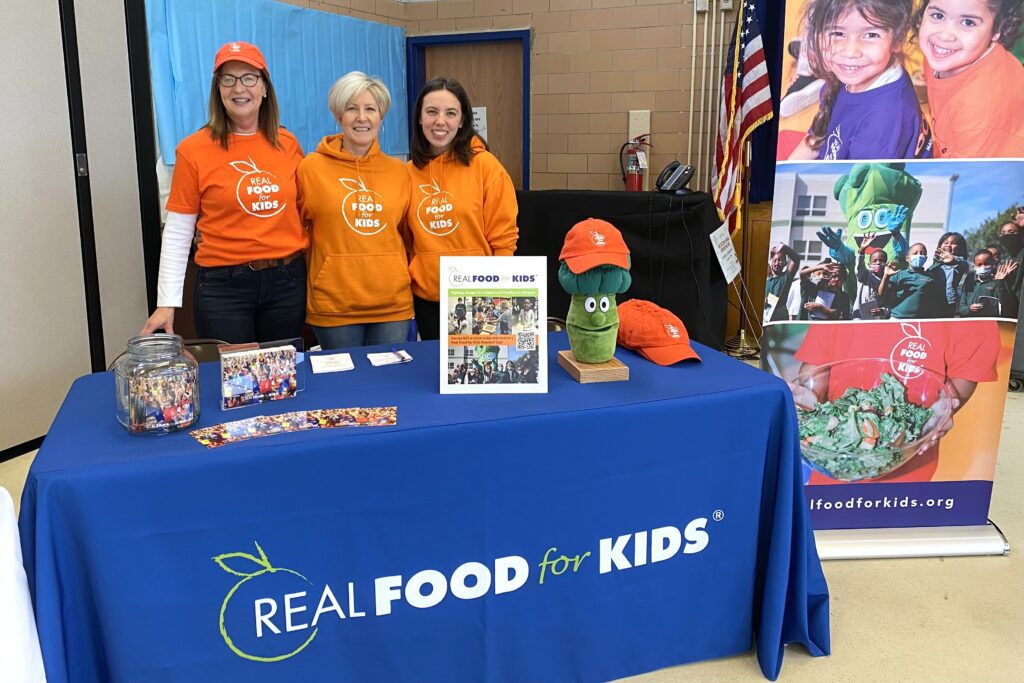
Real Food for Kids (RFFK) dismantles barriers to nutrition equity through programs that increase access to real, whole foods, build and support healthy choices through nutrition education, and advance policy change to sustain a population of healthy eaters. Our work inside and outside school walls addresses the systemic challenges to nutrition equity that disproportionately impact low-income, multi-ethnic communities. Our successes have resulted from collaborative community engagement, mission-aligned partners, and positive advocacy with a diverse range of stakeholders.
Program Summary
Real Food for Kids addresses nutrition insecurity by connecting children and families in Arlington with fresh whole foods and building their capacity to make healthy food choices.
- 🥦Fresh Food Explorers is a nutrition education program delivered in preschool classrooms that cultivates food literacy and a love of vegetables in early learners.
- 🥦SNAP Ambassadors strengthens understanding of and access to the Supplemental Nutritional Assistance Program among eligible families. We engage in direct community outreach in Arlington, train social services professionals in SNAP application assistance, and provide free SNAP educational resources for all community members.
- 🥦Chefs Feeding Families distributes free, fresh produce bags to low-income families across the DMV including 8 sites in Arlington to increase accessibility to local, fresh produce.
- 🥦The annual Culinary Challenge encourages student voice in school meal offerings. Middle and High school family and consumer sciences students’ submissions are evaluated by a judging panel and presented to community attendees.
Impact Statement
In our FY26…
- 🍊The Chefs Feeding Families program provided over 90,000 pounds of produce to 5,000 families across 15 sites. 45% of the produce was distributed in Arlington.
- 🍊As the only Virginia SNAP outreach partner in Arlington County, we trained 100 school and affiliate staff as SNAP Ambassadors and directly provided SNAP information to more than 8,000 community members. We also published a SNAP support website available in English and Spanish to answer common questions about the program and highlight discount programs available to low-income residents.
- 🍊At the 14th annual Culinary Challenge this past February, 15 teams competed representing 10 schools and 5 school districts. The winning dish was Potomac Middle School’s (PWCS) BBQ Tofu Sliders with Strawberry Salad.
- 🍊Our Fresh Food Explorers program was delivered in 12 classrooms across 5 schools over 3 school districts. In June, 240 students graduated as Veggie Superheroes! 80 families in our Fairfax classrooms also received 80 lbs. of produce each over the program’s duration.
What ways can the public get involved?
- Donate / Collect Donations for Chefs Feeding Families fresh produce distribution to Arlington children and families.
- Train as a SNAP Ambassador and volunteer at our community events.
- Organize a SNAP outreach event at your school/library/community center with us.
- Middle and High School Family and Consumer Sciences (FACS) students can compete in the Culinary Challenge (with a teacher sponsor).
- Attend the Annual Culinary Challenge.
- Volunteer at the Annual Culinary Challenge.
- Advocate for healthy school meals and increased healthy food access in Arlington.
- Sign up for our newsletter.
- Follow our social media pages @realfoodforkids.
How are charitable dollars spent? Where does my donation go?
Donations will directly support our Chefs Feeding Families produce distribution. This program ensures low-income children and families have reliable access to locally grown, fresh produce to support their nutrition security.
- A $10 donation provides a child with four days of fresh produce.
- A $50 donation provides a child two weeks of fresh produce.
- A $100 donation provides a child four weeks of fresh produce.
- A $250 donation provides a family of 4 three weeks of fresh produce.
- A $500 donation provides a family of 4 six weeks of fresh produce.
Information Provided June 2026
L’Enfant Education Association French Classes School
 L’Enfant Education Association French Classes School
EIN: 84-4470879
Mission Statement
Our Purpose and Core Mission is to
- develop and operate preschools and primary school programs,
- organize classes, educational programs and other activities to help students learn French and other new languages or improve their knowledge of languages,
- conduct public discussion groups, forums, panels, lectures and workshops about the benefits of learning languages as well as early and primary education,
- promote and organize cultural and other events related to the promotion and support of such goals,
- engage in other activities related to educating the public about the benefits of learning languages as well as early and primary education.
How are charitable dollars spent? Where does my donation go?
Donations are used for our scholarship fund and for book purchases for our school library.
Information provided June 2026
Jews United for Justice
 Jews United for Justice
EIN: 52-2346578
Mission Statement
Jews United for Justice advances economic, racial, and social justice in Washington, DC, Maryland, and Virginia by educating and mobilizing our local Jewish communities to action.
We move our region closer to equity and justice by advancing issue-based campaigns that make real, immediate, and concrete improvements in people’s lives and build the power of working-class and poor communities of color. Through these campaigns we develop leaders, build our Jewish grassroots community, shift the consciousness of our community, and build the collective power needed to undo systemic racism and inequality.
Program Summary
For more than a quarter century, Jews United for Justice (JUFJ) has worked in coalition to win policy changes – like increasing the minimum wage, expanding access to affordable housing, and providing paid family leave to everyone – that make concrete improvements in the lives of millions of people. JUFJ simultaneously builds a vibrant Jewish community and Jewish home for local activists, who gather together for Jewish holiday celebrations and to take powerful action on local issues together. Through this work, JUFJ builds partnerships with non-Jewish organizations and communities across the region that increases understanding of the Jewish community and establishes the foundation for shared efforts to dismantle antisemitism, racism, and xenophobia.
JUFJ launched our work in Arlington and more broadly in Northern Virginia in 2025. We are currently:
- Building a vibrant community of leaders and volunteers committed to advancing justice
- Helping to win Constitutional Amendments to advance voting rights, marriage equality, and reproductive justice
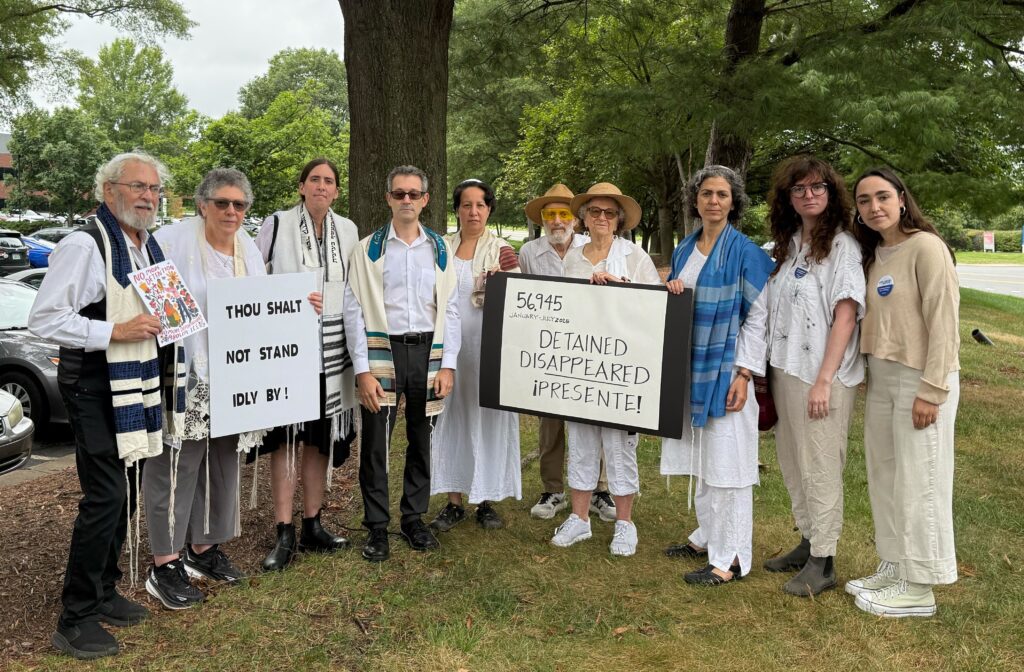
- Mobilizing the Jewish community to support and protect immigrants in the region.
Impact Statement
JUFJ’s work targets two distinct communities. Through our policy advocacy campaigns, JUFJ’s work benefits millions of people in our region who are living in poverty or who are otherwise vulnerable. We work collaboratively with faith, community, and advocacy groups of people who are most directly and negatively impacted by the problems we seek to address, and we follow their leadership. Due to the advocacy of JUFJ and our partners, we have worked successfully for Paid Family Leave in Maryland and DC, Paid Sick Days in Maryland and DC, progressive tax laws, and many more policies that have a positive impact on people in our region.
Our work also directly impacts the lives of our base of mostly- Jewish volunteers, who plan and lead our programming, public education, and issue campaigns. This uniquely intergenerational constituency builds strong relationships, Jewish identity, and community, and often describes JUFJ as their Jewish home. They build leadership and advocacy skills and are part of a community working for justice.
What ways can the public get involved?
JUFJ is building a powerful group of volunteers that will fight for a more just state, and we are recruiting Virginians to volunteer with us. We invite you to join us at rallies, meetings with elected officials, and at our cultural and educational events. Our current advocacy is focused on supporting three state constitutional amendments to enshrine Voting Rights, Marriage Equality, and Reproductive Justice in the Constitution, and to advance Immigrant justice. We hope you will join us!
How are charitable dollars spent? Where does my donation go?
JUFJ is a careful steward of the money we raise, ensuring every dollar is spent wisely to help us advance our goals of a more just region.
More than 90% of our budget goes to our core staff costs. That staff provides the foundation to enable coordinated collective action with hundreds of multi-racial, multi-faith partners across the region, and to support our volunteer leaders to advance the work. We are actively seeking support to sustain and expand our staff team in Northern Virginia.
Information Provided February 2026
Velocity Bicycle Co-op
 Velocity Bicycle Co-op
EIN: 26-3453393
Mission Statement
The mission of Vélocity Bicycle Cooperative is to build a more equitable, sustainable, and healthy community through cycling. We promote equity by enabling greater access to bicycle ownership and maintenance for people of all income levels and cultures. We advance sustainability by recycling bicycles and making cycling more widely available as an alternative to motor vehicle travel. We support the physical and mental health of local residents through the exercise and independence provided by bicycles and through the positive socio-emotional effects of volunteering cooperatively.
Program Summary
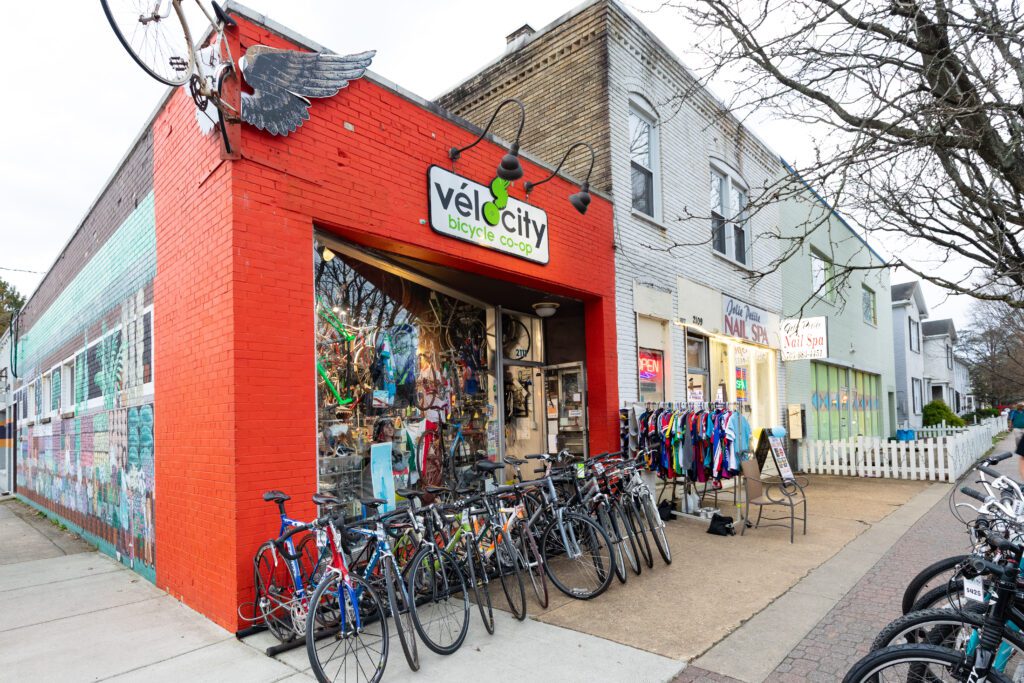
Vélocity believes everyone, no matter their income level, should be able to own and maintain a bicycle for healthy exercise and environmentally sustainable travel. At Vélocity’s shops in Arlington and Alexandria, Virginia, customers can purchase refurbished used bicycles, bike parts, and bike repairs at prices below those offered by for-profit bike shops. Vélocity’s professional mechanics guide customers in repairing their own bicycles at DIY nights each week. Vélocity also maintains a warehouse where anyone who is interested can learn to repair bicycles, either in low-cost maintenance classes or for free through the process of repairing donated bicycles with the help of experienced volunteers. Vélocity donates refurbished bicycles to under-resourced adults and children of low-income families, along with locks and helmets. Since Vélocity is a cooperative, volunteers who contribute 10 hours or more a month to Vélocity are entitled to work on their own bikes using Vélocity’s space and resources. They also receive discounts purchasing bicycles, parts, and supplies from Vélocity’s shops. Vélocity helps keep our environment clean by receiving and reusing unwanted bicycles, while recycling unusable components.
Impact Statement
In fiscal year 2025, Vélocity sold 725 used bicycles and over 7,000 new and used bicycle parts at affordable prices. Our mechanics provided nearly 2,200 low-cost repairs to customers’ bicycles and guided customers in repairing their own bicycles at DIY nights more than 200 times. More than 120 local residents spent a total of over 2,100 hours gaining hands-on experience fixing bicycles by volunteering with Vélocity. Volunteers and shop mechanics working together provided free refurbished bicycles, along with new helmets, bicycle locks, and (for adults) bicycle lights to approximately 100 disadvantaged individuals in our area. By providing a free means of transportation, Vélocity empowered underprivileged individuals to improve their lives. By creating a place to belong and contribute, Vélocity offered benefits to all members of our local community.
What ways can the public get involved?
All members of the public are invited to volunteer with Vélocity, refurbishing donated bicycles at our volunteer nights, helping customers repair their own bicycles at our DIY nights, and supporting our mechanics with customer service at our shops during business hours. Visit our Meetup page to sign up – no experience necessary! Vélocity also accepts donations of used bicycles, parts, and gear during business hours at our shops, which are posted on our website. We accept financial donations through Donorbox to help pay for the space we use, new tools for our volunteers, and consumable parts and supplies such as oil, grease, cables, chains, and inner tubes.
How are charitable dollars spent? Where does my donation go?
- $10 pays for a new chain to make a used bicycle work again
- $25 purchases a helmet so a recipient of a free bicycle can ride safely
- $50 supplies fresh tubes and tires to bring new life to a worn-out bicycle
- $100 covers parts and supplies to refurbish a bicycle for a child whose family can’t afford one, plus a cable lock and helmet
- $250 buys a folding bicycle repair stand, tire pump, tools and supplies for a volunteer to provide bicycle safety checks and mechanical support at youth cycling events
- $500 finances the parts and supplies to refurbish two bicycles for under-resourced adults who need a means of transportation, plus U-locks, helmets, and lights
- $750 funds one professional double-arm repair stand to allow two mechanics or volunteers to work on bicycles at one time
- $1,000 provides parts and supplies to refurbish a dozen bicycles, plus helmets, to start a new school cycling club
Information provided May 2026
Community Residences Inc (CRi)
 Community Residences Inc (CRi)
EIN: 54-1004092
Mission Statement
CRi envisions a world where all people have Choice, Respect, Independence, and the support needed to live a fulfilling life. We deliver personalized resources to youth and adults with mental health support needs and developmental disabilities, and for 50 years have promoted equity by aiding people with these diagnoses to live in diverse communities. Started in Arlington as part of the de-institutionalization movement, CRi provides services via a person-centered approach that emphasizes individual needs and preferences. CRi services help Virginians to increase their stability, autonomy, and well-being – via community homes, supervised residential services, and community-based case management services.
Program Summary
CRi Programs serve people with intellectual and developmental disabilities, mental health support needs, and youth as they age out of foster care:
- Developmental Disabilities programs include neighborhood-based shared living community homes, Supported Living services that promote skills building for community integration as well as daily care for individuals with intellectual and developmental disability (I/DD) diagnoses, and intermediate care facilities (I/DD/ICF) that provide 24-hour clinical support to prevent hospitalization or admission to a nursing facility. As part of these programs CRi provides Behavioral Therapeutic Consultation, to aid caregivers to implement each client’s Individual Support Plan, which is developed with families and clinical staff to help reach individual goals.
- In Virginia, CRi’s Mental Health programs focus on evidence-based skills building services for recovery, delivered through supervised community living in residential apartment settings.
- Tenant Support Services reach individuals with either disabilities or a mental health diagnosis, or a dual diagnosis. Case managers aid clients to set goals for independent living, develop measurable plans, and strengthen the skills needed to be a responsible tenant.
- The Living Independently for Tomorrow (LIFT) program serves youth age 17-21 as they transition out of foster care, via provision of apartment-based case management and support services for housing, employment, and therapeutic needs.
Impact Statement
CRi measures its impact beyond the number of people served each year – which in FY24 was 700 people in Virginia and Maryland. Clinical staff work with clients and families to develop an Individual Support Plan or Individual Recovery Plan for every person in each program, which helps measure progress toward goals such as community integration and outcomes including improved communication, pro-social behaviors, money management skills, and use of community resources. We assess the quality of CRi’s services by tracking individual advancement, and by gathering feedback via an annual client satisfaction survey. Over 460 individuals responded to the 2024 survey, with results reflecting the strong relationships developed in CRi’s programs. Over 90% of individuals agreed that they feel heard, understood, and respected. This impact can be seen in the success stories of people we serve, in an increased ability to participate in community events and connect with others, in the improvement in symptoms of a mental illness, the capacity to maintain one’s own clean apartment, and the capability to sustain employment or education.
What ways can the public get involved?
Financial donations of any size are always welcome, and a small monetary amount can help our individuals participate in community events and activities such as local music concerts and movies, by contributing to transportation funds. People who are interested in collaborating with CRi can also volunteer and/or advocate with us, and/or donate in-kind items. Our Volunteer Program Manager organizes activities with local businesses and civic groups to help us maintain and beautify our community houses, plus events with Volunteer Arlington and Volunteer Fairfax, such as the annual Martin Luther King Jr. Day of Service in January. We can work with teachers and schools to help students fulfill service hours. Civic groups can also visit a program in their community and bring arts and craft supplies or board games, and can assemble kits to support our individual residents, e.g., with hygiene kits or “busy boxes.” CRi also has an Advocates Group to aid our leadership in publicly supporting our work with individuals with disabilities and mental health diagnoses.
How are charitable dollars spent? Where does my donation go?
Financial contributions support CRi’s general operating costs, such as providing transportation for youth and adults to community events and appointments with healthcare providers. For adults with developmental disabilities and/or mental health support needs, a donation of $50 will enable our staff to transport and accompany an individual on an outing such as a concert by the Arlington Philharmonic Orchestra. $100 would help provide gardening supplies to maintain the 11 community homes we manage in Arlington and Falls Church. Larger donations, such as from a Donor Advised Fund, could help us with staff appreciation and professional development for our dedicated Direct Support Professionals, who provide the services to the individuals we serve.
Information provided March 2026
Shepherd’s Center
 Shepherd’s Center
EIN: 46-0997432
Mission Statement
We assist our aging community members in maintaining independent and safe lifestyles in their own homes by providing free rides to medical and therapy appointments, and to grocery stores. As an all-volunteer, 501(c)(3) nonprofit organization, we are dedicated to serving seniors in need in Northern Virginia.
Program Summary
In the first 11 months of 2025, 31 volunteers who live in Arlington gave rides to seniors to medical appointments and grocery shopping. Forty-one seniors who live in Arlington received rides from Shepherd’s Center volunteers.
Impact Statement
By providing rides at no cost to seniors living in Arlington, the Shepherd’s Center has enabled seniors to age in place in their homes.
What ways can the public get involved?
The Shepherd’s Center is an all-volunteer organization. We rely on volunteers to provide rides to seniors. There is no minimum commitment; volunteers can drive once a week, once a month, or once a year. Volunteers are also needed in support roles, such as screening client applicants and help recruiting volunteers.
How are charitable dollars spent? Where does my donation go?
Our major expenses are hosting volunteer appreciation events several times a year, providing insurance for board members, and paying for taxis in the fewer than 5% of the cases where a client submits a request for a ride and no volunteer selects that ride.
Information provided March 2026
DC Policy Center
 DC Policy Center
EIN: 82-2380479
Mission Statement
The mission of the D.C. Policy Center is to arm decision makers with fact-based, unbiased, and reliable research and analyses to help create a vibrant local economy that can maximize opportunities for residents, workers, and businesses in the District of Columbia.
Program Summary
The D.C. Policy Center is an independent, non-partisan think tank that conducts rigorous, data-driven research to strengthen the District’s economy and improve outcomes for residents, workers, and businesses. Our work focuses on education, housing, workforce development, the business environment, and long-term economic competitiveness, offering clear insights that help leaders make informed policy decisions.
Because the District operates within a deeply interconnected regional economy, our research consistently examines D.C. in relation to neighboring jurisdictions—especially Arlington. We analyze commuting patterns, labor flows, housing markets, and economic trends that cross borders every day, providing a fuller understanding of the conditions that shape opportunity on both sides of the river.
By highlighting how shared challenges and regional dynamics influence outcomes in both communities, our work directly supports leaders in Arlington who rely on accurate, timely information to guide planning, investment, and collaboration. Through this regional lens, the D.C. Policy Center helps strengthen both the District and Arlington, contributing to a more competitive and resilient metropolitan area.
Impact Statement
The D.C. Policy Center’s work leads to clearer, more effective public policy decisions that directly impact the well-being of the communities we serve. Our research helps improve educational opportunities, strengthen the regional workforce, expand housing supply and affordability, and support a more competitive and resilient local economy. By equipping policymakers, nonprofit partners, and business leaders with actionable data and analysis, we contribute to policies and investments that enhance economic mobility, improve access to quality services, and create better outcomes for residents across the District and the broader region, including Arlington.
What ways can the public get involved?
The public can get involved by attending our events, briefings, and community conversations; subscribing to our newsletters to stay informed about new research and opportunities; and engaging with our work by sharing information, providing feedback, and participating in discussions that shape policy dialogue in the region.
How are charitable dollars spent? Where does my donation go?
Charitable dollars directly support the research that drives policy change. Donations fund data analysis, policy studies, and publications that inform leaders and strengthen decision-making across the District and the region. Contributions also help us expand our capacity to respond quickly to emerging issues, ensuring our work continues to shape solutions that improve outcomes for residents, workers, and communities.
Information provided November 2025