
Population: Women
 National Capital Treatment and Recovery
 National Capital Treatment and Recovery
EIN: 54-0805530
Mission Statement
National Capital Treatment and Recovery’s mission is to save lives and heal communities touched by substance use disorders. Our vision is communities free from pain and suffering associated with substance misuse. Over the past 60+ years, NCTR has served more than 60,000 patients.
Program Summary
RESIDENTIAL PROGRAMS
NCTR’s residential programs are all medically monitored & clinically managed 24/7. We utilize an evidence-based, trauma-informed approach to care through individual and group counseling and offer additional medical and mental health care as needed.
- PHOENIX PROGRAM INTENSIVE RESIDENTIAL PROGRAM FOR MEN provides care for up to 64 adult men and offers withdrawal management services when needed. This program helps break the cycle of drug and alcohol misuse and equips men with the tools to be successful at the next appropriate level of care.
- DEMETER HOUSE INTENSIVE RESIDENTIAL PROGRAM FOR WOMEN provides care for up to 20 adult women in a safe, supported, and comfortable environment. This program serves women from all walks of life and prepares them for the next appropriate level of care to be successful in recovery.
- ARLINGTON RECOVERY CENTER offers withdrawal management and intensive residential treatment services for adult men and women in the early stages of recovery. This program, operated under contract with Arlington County, is available to Alexandria and Arlington County residents.
- NCTR PHASE TWO MENS RESIDENTIAL gives patients extended time in treatment while also allowing them to adjust to day-to-day living in recovery. Patients attend outpatient treatment at our nearby Counseling Center, receive supportive services, and are encouraged to seek employment or volunteer in the community as they progress in the program and as their schedule permits.
- INDEPENDENCE HOUSE provides low intensity supportive services to adult men and women who have completed intensive treatment, so they have a safe and stable living environment, while securing employment and practicing living in recovery. NCTR operates this program under contract with Arlington County for Arlington residents.
OUTPATIENT PROGRAMS
At NCTR’s Counseling Center, we provide flexible outpatient services that meet patients where they are,
offering a range of treatment levels based on individual needs. Group sessions combined with one-on-one
personalized counseling, provide both clinical and emotional support.
- PARTIAL HOSPITALIZATION PROGRAM (PHP) is the most intensive level of outpatient care consisting of six hours per day / five days per week for up to 4-6 weeks.
- INTENSIVE OUTPATIENT PROGRAM (IOP) For individuals 18 and over, we offer Adult IOP. Patients typically participate three to five times a week for three hours each day, for up to 6-8 weeks. Adolescents aged 13 – 18 can attend our Adolescent IOP which is offered three times a week for two hours each day, for up to 6-8 weeks.
- OUTPATIENT PROGRAM (OP) Adults and Adolescents (ages 13-18) are provided outpatient continuing care as they step down from more intensive counseling. Patients typically begin by attending an average of two times a week and gradually progress to attending once per month over a 6–12-month period.
- MEDICATION ASSISTED TREATMENT NCTR operates an office-based addiction treatment clinic (OBAT) in our outpatient facility. Patients are required to participate in outpatient counseling while receiving medication.
COMMUNITY COLLABORATIONS
NCTR’s commitment to community collaboration is evident through its partnerships with various organizations and institutions. Through these collaborations, NCTR enhances its ability to provide effective treatment and support, reinforcing its mission to save lives and heal communities impacted by substance use disorders.
- FAMILY SERVICES Families are included in the treatment process to better understand addiction and support recovery. Our weekly Concerned Persons Conversations is an online educational opportunity that provides insight and support for families, helping them play a positive role in their loved one’s recovery journey.
- RECOVERY HAVEN Located in Alexandria, VA, this low intensity residential program for women aged 18+ in recovery combines NCTR and Friends of Guest House’s strengths. It offers extended treatment, supportive services, intensive case management, and helps patients transition to daily life through employment and volunteer opportunities.
- YOUTH EMPOWERMENT PROGRAM provides on-site assessment and counseling for youth with substance use disorders at the Northern Virginia Juvenile Detention Center, serving Arlington, Alexandria, and Falls Church. It supports recovery by offering treatment during detention and transitioning patients to outpatient care upon release.
Impact Statement
We offer several levels of person-centered treatment designed to meet the severity and unique needs of every patient we serve. In each program, our interdisciplinary staff of highly-qualified clinicians delivers treatment based on evidence-based practices in a supportive atmosphere where patients can achieve a drug/alcohol-free lifestyle.
Our programs include cognitive behavioral therapy, 12-step facilitation, trauma-informed treatment, and Medication Assisted Treatment, as needed.
Every step of the way, we are educating, empowering, and supporting the patient. We provide patients with education about the disease, how to identify the signs and symptoms of their substance use disorder, develop a recovery plan, and learn coping skills. We hold patients accountable as we support them in their efforts to change negative behaviors to positive.
In turn, we expect patients to act as responsible members of the patient community, complete treatment tasks, take part in their treatment planning, and fulfill their obligations within the Residential or Outpatient Community Structure.
What ways can the public get involved?
We welcome the community to get involved by joining one of NCTR’s Board committees: Development/Fundraising, Facilities, or Marketing/Communications.
The public can also donate in-kind goods, including clothing, books, art supplies, etc. for men and women in our residential programs. Due to strict HIPAA regulations and patient confidentiality, we are unable to accept volunteers other than Board members and professional internship opportunities.
How are charitable dollars spent? Where does my donation go?
Charitable donations are spent specifically to provide financial assistance to adults and adolescents who are uninsured, under-insured or without personal financial resources.
Our Patient Assistance Fund and the Young Adult Treatment Fund in Memory of John Buck, were created to provide access to treatment for patients who lack insurance or financial means to pay for treatment. Through these funds, which rely entirely on donations from the community, we ensure that all patients who turn to us – even those with no medical coverage – can access the treatment they need. We also have our Recovery Rewards Fund. Donations to this Fund allow us to purchase patient “rewards” such as journals, gift certificates or fun experiences, to reinforce and incentivize positive patient recovery behavior.
Information provided March 2025
Doorways
 Doorways
EIN: 54-1087829
Mission Statement
Doorways creates pathways out of domestic violence, sexual assault, and homelessness, leading to safe, stable, and empowered lives.
Program Summary
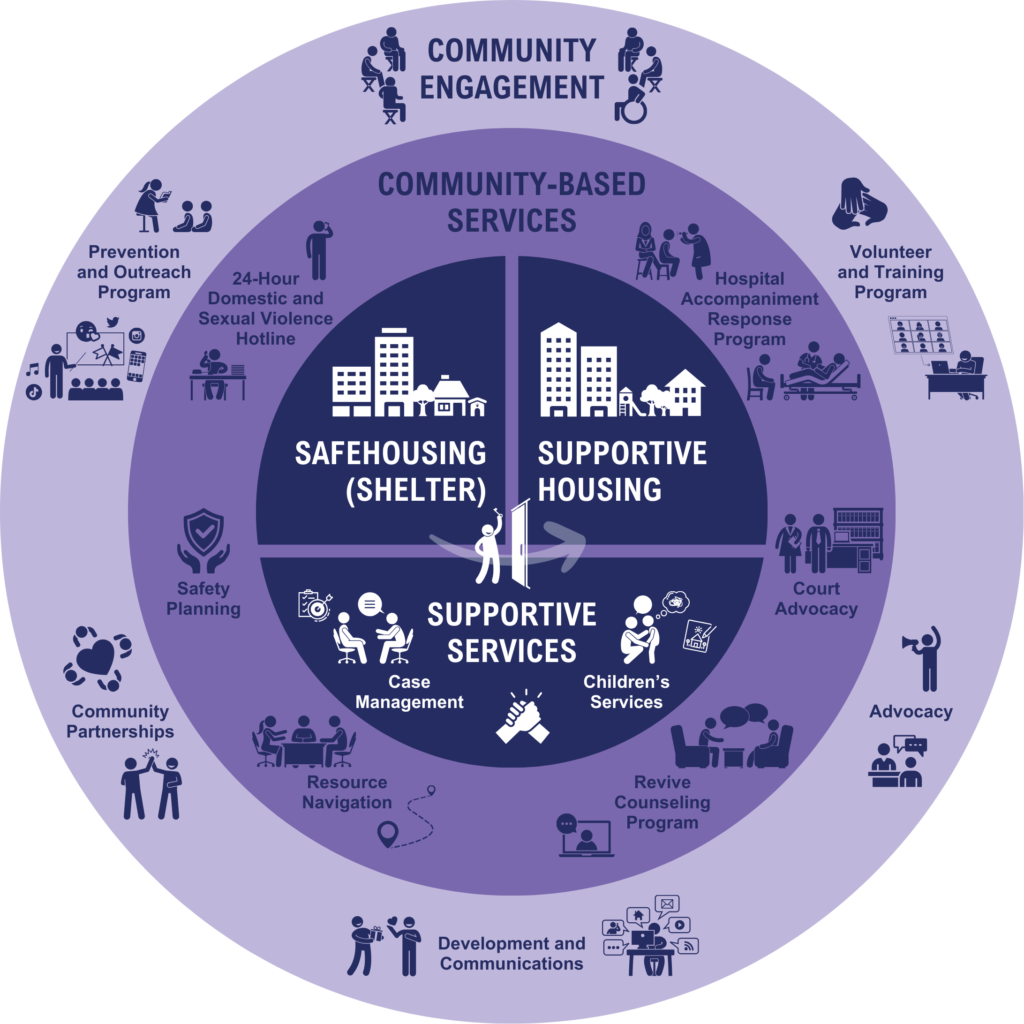
Doorways’ response to domestic and sexual violence spans a spectrum—from preventing violence, to supporting survivors and their families throughout our community, to providing shelter and housing. We offer a wide range of trauma-informed services designed to meet survivors’ complex needs. All services are free, confidential, and available in all languages (multiple languages spoken in-person onsite, and more available through a language line). Through the generosity of our partners and supporters, we provide safe harbor, healing, and hope.
Community Engagement
Doorways partners with our neighbors, supporters, and fellow service providers to realize our mission every day.
- Prevention and Outreach Program
- Volunteer and Training Program
- Community Partnerships
- Advocacy
- Development and Communications
Community-Based Services
Doorways supports survivors throughout our community with a wide range of crisis response services, advocacy, and counseling.
- 24-Hour Domestic and Sexual Violence Hotline (703-237-0881)
- Hospital Accompaniment Response Program (HARP)
- Safety Planning
- Court Advocacy
- Revive Counseling Program
Shelter, Housing, and Supportive Services
Doorways provides Arlington’s only emergency safehousing for survivors experiencing homelessness due to domestic and sexual violence. HomeStart, Doorways’ housing program, supports clients transitioning out of shelter to a home of their own.
- Supportive Services (Case Management, Children’s Services, Financial and Employment Counseling)
- Safehousing (Shelter)
- HomeStart Supportive Housing Program
Impact Statement
2025 was another record-breaking year for Doorways:
- Safehousing provided emergency shelter for 150 people (80 adults and 70 children) in 79 households, a record high throughout Doorways’ history. 90% of households who disclosed their next destination did not return to an abusive living situation after leaving shelter.
- HomeStart supported 149 people (69 adults and 80 children) in 58 households.
- Children’s Services provided 2,390 sessions supporting kids and their parents in our shelter and housing programs, more than double compared to 2024.
- Revive Counseling Program provided supportive counseling and safety planning for 240 people, including 2,519 individual counseling sessions.
Read Doorways’ annual report to learn more about how supporters like you make a difference for survivors like the ones quoted here:
“Doorways saved my life and has changed everything.”
“Doorways has helped my child open up, express her feelings, and communicate. She loves to attend play therapy where we see a huge change with issues we had prior to coming.”
“I have learned to understand my situations and got help with getting custody of my son. This is a great resource for victims of domestic violence.”
“My mental health has improved greatly post-assault. I was having trouble taking care of myself because I was mentally in a sad state. Doorways’ therapy sessions have taught me how to cope and recover in a healthy way. I feel fully supported here.”
What ways can the public get involved?
- Host a Fundraiser or Donation Drive: Individuals and groups can support Doorways’ mission by collecting critical funds and supplies. Monetary donations and VISA gift cards are needed year-round. Please contact Doorways for a current list of in-kind needs (e.g., personal and household items) or see our wish list. Learn more at www.doorwaysva.org/join-our-cause.
- Host an Educational Prevention Workshop: Contact our Prevention and Outreach Program to host a free educational prevention workshop for your community/organization, or to request Doorways representation at an upcoming event. Request a workshop by visiting www.doorwaysva.org/prevention.
- Volunteer: Volunteers are an essential part of the Doorways team! Visit www.doorwaysva.org/volunteer to learn more, submit an online application, and plan to attend an information session to get started.
- For Kids and Youth: Visit Doorways’ Kids’ Corner for ways that young people can get involved, including learning about the issues with our recommended reading list, hosting a fundraiser, and more: www.doorwaysva.org/kids-corner/.
How are charitable dollars spent? Where does my donation go?
Every year, half of Doorways’ budget comes from private donations. These monetary gifts from individuals, businesses, foundations, and corporate, faith, civic, and community groups ensure that Doorways is able to provide safe haven to every survivor in-need.
- $100 could help provide a month of infant care supplies for a baby living in shelter.
- $250 could help provide a Revive trauma therapy session for an adult, youth, or child impacted by domestic violence.
- $500 could help sustain Doorways’ wraparound services in shelter and housing to promote healing, safety, and sustainability.
- $1,500 could help provide a security deposit for a survivor’s new apartment after graduating from shelter.
Information provided March 2026