
Population: Children and Youth
 Arlington Soccer Association
 Arlington Soccer Association
EIN: 23-7284150
Mission Statement
Provide quality soccer programs and experiences for youth of all abilities, backgrounds and financial means to encourage personal growth, promote a love for the game, and advance soccer in Arlington and surrounding communities.
Program Summary
Arlington Soccer Association offers recreational, developmental and travel soccer, as well as a number of camps, clinics and other programs throughout the year. Over 9,000 children take advantage of Arlington Soccer programs each year!
How are charitable dollars spent? Where does my donation go?
For the Arlington Soccer Association, a 501(c)(3) nonprofit organization, charitable donations are vital to supporting its mission and operations. Generally donations go towards financial aid, unless they are specifically earmarked for other causes. Here is how financial aid funds are typically utilized:
Financial Aid for Players: Donations designated for financial aid are used to subsidize the costs for players who may not otherwise be able to afford to participate in the soccer programs. This can include covering part or all of the fees associated with:
- Registration Fees: These are often the primary costs associated with joining the soccer programs. Financial aid can help cover these expenses to ensure every child has the opportunity to play, regardless of their financial background.
- Uniforms and Equipment: Soccer requires specific gear, such as jerseys, shorts, socks, cleats, and shin guards. Financial aid can help families obtain these necessary items.
- Travel Costs: For travel teams, expenses can include transportation, lodging, and meals for away games and tournaments. Financial aid can help ensure that all team members can participate in these important events.
Information provided March 2026
Neighborhood Health
 Neighborhood Health
EIN: 54-1849891
Mission Statement
Our mission is to improve health and advance health equity in Alexandria, Arlington, and Fairfax by providing high quality primary care regardless of ability to pay.
Program Summary
Neighborhood Health provides accessible, high quality, and patient-centered primary care to patients in Arlington, the City of
Alexandria, and Fairfax County. Our comprehensive model of primary care includes family medicine, internal medicine, and pediatrics as well as dental care, behavioral health, laboratory services, medication assistance, pediatric vision services, HIV care, diabetes education, and medical and non-medical case management. We are accredited by the Joint Commission and a certified Primary Care Medical Home, coordinating care across the health care continuum. Our mission is to improve health and advance health equity in our service area by providing high quality primary care regardless of ability to pay. Our vision is that everyone in our community has the highest quality healthcare and the opportunity to attain their highest level of health.
Neighborhood Health operates two clinics in Arlington; one at the Sequoia complex that serves adults and the Arlington
Pediatric Center which joined Neighborhood Health in January 2024. Many Arlington residents receive care at Neighborhood Health clinics in other jurisdictions.
Impact Statement
Neighborhood Health provides care for low-income, underinsured and uninsured individuals in Arlington County, the City of Alexandria, and Fairfax County. We ensure access to high quality, comprehensive primary healthcare regardless of ability to pay.
In 2024, we served 42,703 pediatric and adult patients. Most of our patients are either uninsured (37%) or on Medicaid (48%). 98% of patients report income of 200% FPL or lower. Over 90% identify as a racial or ethnic minority. We are the largest safety net health provider in Northern Virginia. Our patients have few other options to receive care.
In 2024, Neighborhood Health provided care to over 6,500 Arlington residents.
Neighborhood Health was recognized by HRSA with these 2024 Community Health Quality Recognition awards: Silver Health Center Quality Leader (top 11-20%), Health Disparities Reducer, Access Enhancer, Addressing Social Risk Factors, and Advancing HIT for Quality.
What ways can the public get involved?
The best way to support Neighborhood Health is through a financial contribution.
Neighborhood Health has limited volunteer opportunities. Email nhojvat@nhnva.org with questions.
Neighborhood Health has limited capacity for accepting donated goods. Email nhojvat@nhnva.org with inquiries.
If your organization is interested in partnering with Neighborhood Health, email jknops@nhnva.org.
How are charitable dollars spent? Where does my donation go?
Given Neighborhood Health’s high percentage of uninsured patients – about 37%, we welcome the financial support of individuals, corporations, and foundations to help cover the costs of serving our uninsured neighbors. Donations are used to pay for the care of these uninsured patients.
Examples of What Your Donation Will Cover:
- $5,000 – supports care for 4 uninsured patients with diabetes for a year
- $2,000 – supports the preventive dental care of 2 patients
- $1,000 – supports medical care for 1 newborn for a year
- $750 – supports medical care for 1 uninsured adult patient for a year
- $500 – supports two medical visits for an uninsured patient with heart disease
- $350 – supports two behavioral health visits for an uninsured patient with depression
- $250 – supports a comprehensive dental exam for a new uninsured patient
- $150 – supports an optometry visit for vision screening for an uninsured child
- $100 – supports navigation to specialty care for one uninsured patient
- $50 – supports application of dental sealant for 1 uninsured child
Call (571) 457-9146 or email development@nhnva.org with questions about donations.
Donations to Neighborhood Health can be designated for General Operations or for a specific purpose or project within our scope of work. Donations can also be made in memorium or in honor of an individual chosen by the donor. Please email development@nhnva.org for more details.
Donations to Neighborhood Health are tax deductible as allowed by law.
Information provided March 2025
Latinas Leading Tomorrow
 Latinas Leading Tomorrow
EIN: 27-5119847
Mission Statement
Our mission is to connect and expose Latinas to opportunities that enrich their future through education, mentoring and leadership development
Program Summary
We are dedicated to empowering Latina middle and high school students through our free programming initiatives. These programs, specifically designed for Latinas leading tomorrow, encompass a range of opportunities. From our CORE (Creating Opportunities to Reach Excellence) program, which lays the groundwork for future success, to our ELITE Leadership Academy, where leadership skills are honed within a supportive team environment, we strive to provide avenues for personal and academic growth. Additionally, our LLT STEMpower Camps serves as a platform for Latinas to excel in these critical fields, equipping them with the skills and confidence to become leaders in STEM and beyond. Through these initiatives, we aim to inspire and empower the next generation of Latina leaders to reach their full potential and make a meaningful impact in their communities and beyond.
Impact Statement
Our organization’s efforts have yielded significant outcomes for the population we serve. Latinas Leading Tomorrow has positively impacted a diverse demographic, with 65% coming from low-income backgrounds, 60% being first-generation students, and 50% raised in single-parent households. Remarkably, 90% of our participants have successfully transitioned to college, showcasing the profound effect of our work.
What ways can the public get involved?
Ways the Public Can Get Involved with Latinas Leading Tomorrow
There are many meaningful ways individuals, organizations, and businesses can support the mission of Latinas Leading Tomorrow and help empower the next generation of young women leaders.
Volunteer with Our Programs and Events
Community members can volunteer their time by supporting student workshops, mentoring sessions, STEM activities, or helping at community events such as our Noche de Impacto celebrations, STEM Boot Camps, and college exposure trips.
Become a Speaker or Mentor
Professionals are invited to share their career journeys and expertise with our students through guest speaking opportunities, career panels, and mentorship sessions that inspire young women to explore new possibilities.
Partner with Us
Organizations, universities, and businesses can partner with LLT to create internships, host educational experiences, sponsor programs, or collaborate on initiatives that expand opportunities for our students.
Make a Donation or Provide In-Kind Support
Financial contributions and in-kind donations such as school supplies, technology, transportation support, or event sponsorships help ensure that our programs remain accessible to the students and families we serve.
Host or Support a Fundraiser
Community members can help raise awareness and resources by organizing fundraising events, sponsoring program activities, or participating in events like our Reach for the Stars 5K or Noche de Impacto celebrations.
Together, we can create more opportunities for young women to grow as confident leaders, pursue higher education, and shape the future of our communities.
How are charitable dollars spent? Where does my donation go?
Latinas Leading Tomorrow allocates $0.89 to $1 of each dollar towards programming, directly supporting mission-related activities and services. Here’s a detailed breakdown:
Programming Expenses: This part of the budget covers essential activities and services that fulfill the organization’s mission. For instance, it includes expenses for program materials like T-shirts and educational materials, as well as provisions for meals/snacks and transportation for field trips. Additionally, it covers costs for a program coordinator to oversee operations.
Administrative Costs: Administrative expenses pertain to the overall running of the organization and include expenditures like rent for storage space and dues & subscription expenses.
Fundraising Expenses: Funds dedicated to fundraising cover various costs associated with generating additional financial support for the organization’s mission. This encompasses expenses related to events like 5K Run/Walk, marketing and advertising efforts, donor outreach, and engaging a race timer.
Information provided March 2026
National Chamber Ensemble (NCE)
 National Chamber Ensemble (NCE)
EIN: 46-4007072
Mission Statement
The Mission of the National Chamber Ensemble (NCE) is to entertain as well as provide opportunities to appreciate and enjoy the art of chamber music, bringing together performers, audiences and composers. The NCE produces high quality chamber music performances for the general public at a reasonable cost. Through our performances and commissions of original musical works we present a full range of chamber music repertoire from the classics to the contemporary. The most important goal of the NCE is to build a sense of closeness between performers and audience that enhances the feeling of community and a deeper musical experience.
How are charitable dollars spent? Where does my donation go?
Contributions are tax deductible to the fullest extent of the law. They support educational programs NCE produces as well as general operation support such as printing, piano movers, piano tuners etc. They may help with special projects involving guest artists.
Information provided March 2025
Britepaths
 Britepaths
EIN: 52-1596259
Mission Statement
Britepaths provides short-term safety-net services to our neighbors in need while empowering them to work toward long-term self-sufficiency. We deliver our services with respect, compassion, and equity, always preserving the dignity and self-esteem of our clients.
Program Summary
Britepaths brings personal finance classes and career building skills to partners in Arlington: Bridges to Independence, ACH Inc., Arlington Agency on Aging, Catholic Charities, ECDC African Community Center, Enterprise Development Group, and Melwood. Clients participate in a series of classes that vary with the needs of each partner and have options for further one-one-one financial empowerment and/or career building services. Arlington residents who have low or middle incomes are welcome to sign up for any of the free services offered through the Financial Empowerment Center (FEC). The FEC assists over 2,000 individuals annually, providing most services virtually which are offered in English, Spanish, and other languages as needed. Services include personal finance workshops, classes, financial coaching and mentoring, small business and tax consulting, tax assistance, and some legal services. Workforce development programs include workshops, coaching, leadership skills and soft skills training, mentoring, and culinary skills training. The best place for the most recent options is to go directly to the website at https://soco.financialempowermentcenters.org
Impact Statement
Britepaths offers services that actually help improve the lives of families in financial crisis. The services we provide to clients through our Arlington partners, help them to develop tools to organize, understand, and manage their finances. Using these tools, they can start to pay down debt, become banked, and/or start saving. We also help them with job skills to help them find a job or move a better paying one. Any of these skills can help improve their current situation. We encourage clients to explore our other, more long-term services that have proven effectiveness. For clients who attended classes or workshops, 71% of respondents have improved their financial situation, and for clients who participate in financial mentoring for 6-9 months, 81% improve their situation based on survey score. We serve more than 2,000 clients annually through the Financial Empowerment Center (FEC) receiving personal finance and/or workforce development services. We continue to add workforce training and certification classes.
What ways can the public get involved?
The Financial Empowerment Center uses many volunteers. Anyone with a financial background can be trained to be a financial coach, mentor, or instructor. Workforce development needs volunteers to mentor clients in their own field to help them learn more about the field and develop a professional network. We also need volunteers to do practice interviewing and review resumes. We are particularly seeking bilingual volunteers in any language but have a need for Dari and Pashto speakers. We also need office volunteers to help with data entry and calling clients to remind them of scheduled coaching sessions. The best way to find out about volunteering is https://soco.financialempowermentcenters.org/get-involved/ or https://britepaths.org/get-involved/volunteer/
How are charitable dollars spent? Where does my donation go?
Donated dollars go to support the staff time, materials needed for classes and workshops, translation services, and other community needs. The services provided at the Financial Empowerment Center (FEC) are mostly provided by volunteer financial professionals. Staff coordinate classes, coaching sessions, mentor matches, develop curricula for workshops and classes, data entry, and reporting. Workforce Development staff provide coaching, some classes, curricula develop and use professional volunteers for classes and mentoring. Training classes are taught by professional instructors. We provide training materials and in the case of culinary skills training, provide a kitchen and food to prepare. We engage in as many partnerships as possible to stretch donated dollars for maximum impact.
Information provided March 2026
Four Mile Run Conservatory
 Four Mile Run Conservatory
EIN: 81-1611867
Mission Statement
The Four Mile Run Conservancy connects nature, culture, and community at lower Four Mile Run through restoration, advocacy, recreation, and education.
Program Summary
COMMUNITY STEWARDSHIP: we provide frequent opportunities for volunteers to improve the condition of lower Four Mile Run, such as land- and kayak-based litter clean-ups, native tree/shrub plantings, and invasive species removal.
YOUTH AND PUBLIC PROGRAMS: through our Nature Explorers And Restorers (NEAR) program, we offer outdoor learning opportunities for young people, mostly those from program partners that serve recently-immigrated families, families transitioning from homelessness, and underserved youth. NEAR programming is provided at no cost to them. Throughout the year we offer public interpretive programs, such as pop-up nature centers and park walks highlighting nature and local history.
CONSERVATION INTERNSHIPS: we offer part-time paid summer internships for high-school and college age youth, providing on-the-job experience in natural resource management, field research, and program leadership.
COMMUNITY SCIENCE: we conduct ongoing research with community volunteers and youth interns that includes wildlife camera surveys, water quality testing, and documentation of the ecosystem using the iNaturalist app and online mapping tools.
PARK IMPROVEMENT: we advocate for and seek out resources to support better park infrastructure. Projects have included signage, public drinking water sources, bird nesting boxes, and our current project to build an ADA-accessible kayak and canoe launch.
Impact Statement
We see lower Four Mile Run, its associated park lands, and surrounding community as extraordinary in ecological and socioeconomic diversity, as well as in the range of activities that happen here, whether organized sports, outdoor recreation, informal play, fishing, picnicking, and more. The area’s demographic diversity is reflected in our volunteers, who come from the immediate neighborhood as well as from all across the DC metro region.
We continue to work to ensure the benefits of nearby nature are accessible to the community, both in terms of addressing physical barriers, as with our recently completed project to build an ADA-accessible public kayak/canoe launch, and in terms of sociocultural barriers, as with translation of signage and interpretive materials.
As we celebrate our 10th anniversary this year, we reflect on an impact that has included:
- more than 20 tons of litter removed in 265 land and kayak-based clean-ups
- 200+ trees and 300+ wetland plants/shrubs planted
- 56 internships provided for high school and college students
- Construction completion of an ADA-accessible kayak launch
Coming soon: freshwater mussel restoration and adaptive paddling programs!
What ways can the public get involed?
Volunteering for land-based and kayak-based stream/park clean-ups, planting, and invasive plant removal events, participating in our local nature/history walks, visiting our pop-up nature centers and tables at local events.
How are charitable dollars spent? Where does my donation go?
Donations support project and program expenses. We do not receive County or City funding, and depend on donations and grants to support our work.

Information provided March 2026
Equipment Connections for Children
 Equipment Connections for Children
EIN: 27-1062106
Mission Statement
ECFC connects with families of children living with disabilities in order to help fulfill vital unmet adaptive equipment needs, provide educational workshops, and foster community, free of charge.
Program Summary
Our equipment loan closet helps provide needed equipment to families struggling to get the equipment their child needs, either at all or in a timely manner. Families can use the equipment as long as needed. When the items are returned, they can then go out to another family in need!
Impact Statement
We have helped thousands of families with children living with disabilities in Maryland, DC, and Northern Virginia since 2009.
How are charitable dollars spent? Where does my donation go?
All donations go to support our equipment loan closet program.
Information provided May 2026
Nature Forward
 Nature Forward
EIN: 53-0233715
Mission Statement
Nature Forward’s mission is to inspire residents of the greater Washington, DC region to appreciate, understand and protect their natural environment through outdoor experiences, education and advocacy. We seek to create a larger and more diverse community of people who treasure the natural world and work to preserve it.
Program Summary
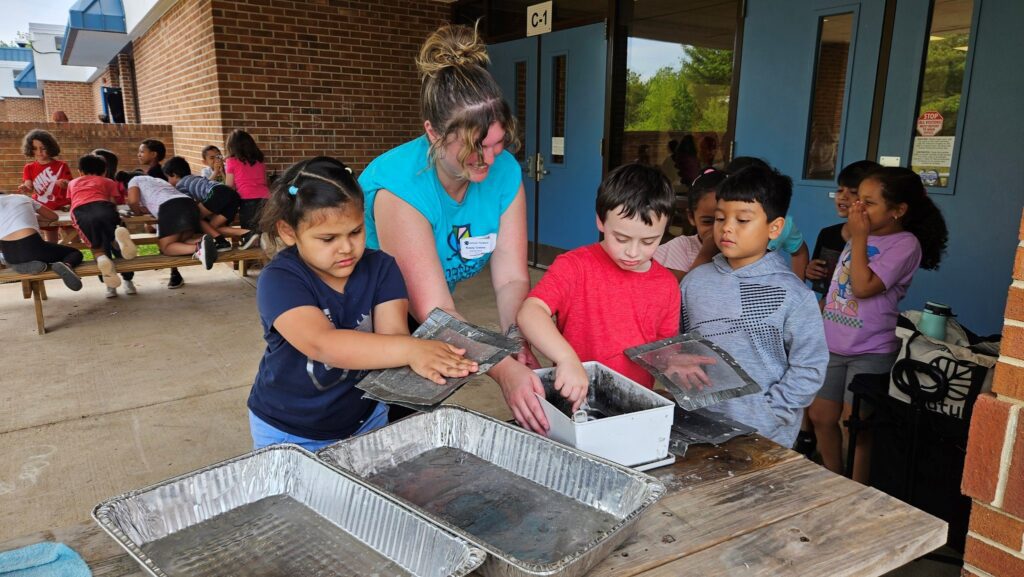
- GreenKids environmental literacy lessons for Pre-K to Grade 12 students in northern Virginia, DC and Maryland, and professional development training for teachers to be able to lead environmental education and Green School certification efforts.
- Water quality monitoring at 25 stream tributaries of the Potomac and Anacostia Rivers for over 30 years. We provide consistent, reliable water quality data to policymakers and the public.
- Flood preparedness and resilience outreach and education for highly flood-prone neighborhoods in DC’s Wards 7 and 8.
- Data center guidelines to protect the environment.
- Planting thousands of native trees and installing rain gardens and other green infrastructure in high-density urban neighborhoods to increase tree canopy, reduce urban “heat islands” and mitigate stormwater runoff during heavy rain events.
- Leadership, civic engagement and advocacy training for underserved communities in Fairfax County and Washington DC. Trained Conservation Ambassadors are equipped to be effective voices for their communities on issues that impact environmental and human health.
- Wheelchair-accessible nature trail through the woods, nature play space and bathrooms at our 40-acre Woodend Nature Sanctuary just north of DC, and school field trips that are hosted at Woodend and at Rust Nature Sanctuary in Leesburg, VA.
- Native plant kits to help with stormwater management and to support pollinators, native plant garden consultations, and best management practices on display at Woodend.
- Popular Woodend summer camp and days off camps; nature preschool.
Impact Statement
FY2026 ACCOMPLISHMENTS: OVER 35,000 PEOPLE SERVED
- Planted 960 native trees at schools and other Justice 40 communities, and 8,868 native shrubs, grasses, sedges and perennials in soft landing gardens.
- Distributed over 250 pollinator garden kits with instructions and support to residents of the Northwest Branch and Northeast Branch of the Anacostia.
- Assisted 70 schools in becoming Green Schools since the program began and reached 11,968 students and 406 teachers in the DC metro area with GreenKids hands-on environmental literacy lessons.
- Successfully advocated for natural resource parks and trails maintenance budgets to be restored in Fairfax and Montgomery Counties; made progress on data center regulations and education.
- Engaged Spanish-speaking residents of the Route 1 Corridor in Fairfax County in contacting their elected officials.
- We broke a Nature Forward record with the highest number of perfect scoring streams in over 30 years of the Water Quality Monitoring program’s existence, when 6 of 27 sites scored a 5.00 on the Index of Biological Integrity.
- Held successful Taking Nature Black #6 and Naturally Latinos #5 with rave reviews.
What ways can the public get involved?
Founded and run by volunteers for many years, Nature Forward continues to rely on their help in all areas of our mission. Nature Forward offers a range of volunteer opportunities to fit a variety of schedules, interests and abilities.
For more information about how to become a volunteer, please email Volunteer Coordinator Peihan Orestes at peihan.orestes@natureforward.org. To fill out an application, click here.
- Master Naturalists train with experts to become key players on Nature Forward’s volunteer teams.
- Teens: MCPS students can earn service learning hours through our camp programs or by participating with an adult in our water quality monitoring program.
How are charitable dollars spent? Where does my donation go?
DONATIONS CAN SUPPORT ANY OF THE FOLLOWING:
- General Operating
- Conference Sponsorship
- Conservation and Advocacy
- Environmental Education
- School Programs Scholarships
- Summer Camp Scholarships
- Woodend Sanctuary Restoration
Information provided March 2026
Greater DC Diaper Bank
 Greater DC Diaper Bank
EIN: 27-4276547
Mission Statement
Greater DC Diaper Bank supports vulnerable families across DC, Maryland, and Virginia by providing diapers and other critical hygiene items, and expanding access to essential services for those who need them most.
Program Summary
In collaboration with our partner network, we execute the following programs:
- Diaper Collection and Distribution Diapers are secured through in-kind donations and discounted wholesale purchases. Distribution partners receive 5,000–40,000 diapers each month. Because of our purchasing power, we can buy two diapers for the cost of one in stores.
- The Baby Pantry Established in 2014, the Baby Pantry distributes formula, wipes, baby food, and essential hygiene items for babies, teens, and adults. These include body wash, shampoo, deodorant, toothpaste, period products, and adult incontinence supplies.
- The Monthly Launched in 2016, this program provides menstrual products to those experiencing period poverty and is distributed through our Baby Pantry.
- The Nursery Project Established in 2017, the program provides bundles of baby gear that promote safe sleep, play, and travel, including cribs, strollers, and car seats.
Impact Statement
Greater DC Diaper Bank (GDCDB) continues to lead the charge as the largest diaper bank in the DC region and one of the largest nationwide. Distributing diapers, formula, baby food, period products, and other hygiene essentials through partners across DC, Maryland, and Virginia, we’re making a powerful impact by reaching families in 375 zip codes.
In 2024, we increased our regional service level from meeting 20% of the diaper need to 23%-a result of both operational improvements and strategic growth-to reach record levels of impact.
This growth was made possible by the addition of eight new community partners located in geographic areas of the highest levels of unmet diaper need. These data-driven programmatic decisions had a ripple effect—expanding our geographic reach, increasing equity in distribution, and deepening relationships across our community.
We distributed 10.2 million diapers, turning a value of over $4.02 million back to local families!
Our programs – The Baby Pantry, The Nursery Project, and The Monthly – provide basic needs items beyond diapers. In 2024, the value of these items provided to families for free was nearly $1 million.
In addition, we served 46,740 babies and 39,800 families, increasing service levels by 11%and 8%, respectively, over 2023.
What ways can the public get involved?
Give
- Give Items: We accept items for families at our warehouse and around the region! Visit greaterdcdiaperbank.org/donate-in-your-neighborhood
- Give Dollars: Financial support makes our work possible! Make your donation any time at greaterdcdiaperbank.org/give-dollars. For every $1 you spend on diapers at the store, we can buy two!
Volunteer
- On-Site: We welcome dozens of volunteers to our Silver Spring, MD warehouse each week! Visit greaterdcdiaperbank.org/volunteer to sign up today! All opportunities are family friendly and all ages are welcome.
- At Work: Our new Mobile Volunteer Program gives employers the chance to bring GDCDB to you! Visit greaterdcdiaperbank.org/mvp to learn more!
How are charitable dollars spent? Where does my donation go?
When you give to Greater DC Diaper Bank, your dollars go twice as far, every day. For every $1 donated, we can purchase two diapers through our wholesaler—twice as many as you’d be able to buy at a store.
Your dollars help us purchase hygiene supplies such as diapers and wipes, and support our programs including the Baby Pantry and Nursery Project. Financial support enables us to flexibly respond to the community’s most urgent hygiene needs and leverage our wholesale and corporate relationships for greater purchasing power and to ensure your dollars go as far as possible.

Information provided April 2025