
Population: Children and Youth
 Junior League of Northern Virginia
 Junior League of Northern Virginia
EIN: 54-0651635
Mission Statement
The Junior League of Northern Virginia is an organization of women whose mission is to advance women’s leadership for meaningful community impact through volunteer action, collaboration, and training.
Program Summary
Throughout our robust history, the Junior League of Northern Virginia (JLNV) has been at the forefront of making a lasting impact in our community. We support several signature programs, with the collective goal of advancing women’s leadership for meaningful community impact through volunteer action, collaboration, and training. Each program also aligns with our focus area, Women Helping Women, and continued commitment to improving the lives of women and families in Northern Virginia through access to essential services and professional development opportunities.
- Volunteer action: Each year, the JLNV donates thousands of volunteer hours to community organizations and programs in alignment with our mission and focus area. Last year, the JLNV provided 805 volunteer hours to 15 different community partners, including the Arlington Food Assistance Center.
- Community Grants Program: The JLNV awards annual grants of funds and volunteer hours through our Community Grants program that support projects aligned with our mission, focus area, and commitment to diversity, equity and inclusion. Last year, the JLNV granted $10,000 to five local nonprofit organizations in the Northern Virginia area, including Bridges to Independence in Arlington.
- Period Pantries: To further JLNV’s current focus area, the League is currently running a Period Pantry Campaign. Since 2023, the JLNV has launched five local period pantries across Northern Virginia, while collecting more than 20,000 period products to keep up with demand. Period pantries are designed to address the critical issue of period poverty by distributing free period products to anyone in need.
- JLNV Teens Program: The JLNV is the first League in the nation to establish the JLNV Teens program, an opportunity for high school teenage women to partner with us to ignite lasting change in their community through leadership development and volunteerism. The program, which was launched in Summer 2024, currently has 38 members from over seven local high schools, including from Arlington area high schools.
Impact Statement
Since 1958, the Junior League of Northern Virginia (JLNV) has provided tens of thousands of service hours, thousands of hours in leadership training, and millions in financial support to local nonprofits across Northern Virginia. Throughout its history, the JLNV has been a founder for the Children’s Science Center, created the Family Resource Center with Shelter House, and built multipurpose rooms at the Katherine K. Hanley Family Shelter. Most recently, the JLNV is addressing period poverty in our communities and improving access to menstrual products for women in Northern Virginia through the establishment of our period pantries.
Each year, the JLNV partners with a diverse range of community agencies that reflect our mission, vision and values by providing much-needed volunteer resources and funding. This year, through our Community Grants program alone, the JLNV will contribute more than 330 volunteer hours, valued at more than $11,051, along with awarding $10,000 in grant funding to our community partners.
What ways can the public get involved?
There are several ways that the public can get involved with the Junior League of Northern Virginia (JLNV). First, whether through individual giving, sponsorship, or in-kind donations, your support of the JLNV helps to expand our community programs and build future leaders. Approximately 94% of our community service programs and activities are funded through donations from individuals, corporations and foundations.
The JLNV also provides volunteers in response to requests from community organizations that reflect our mission and community focus. Community organizations can request volunteer support for short-term projects or events throughout the year.
Additionally, the JLNV welcomes all women across the Northern Virginia area who value our mission and share a common desire to drive positive change in the community to consider joining our League as members. We accept new members twice a year to be a part of our Spring and Fall New Member Classes. The JLNV is committed to inclusive environments of diverse individuals, organizations, and communities and we embrace the diverse representation of the women reflected in our communities and their wide range of backgrounds, opinions, races, ethnicities, sexual orientations, religions and lived experiences. We recognize that diversity among our members and our community outreach is critical to accomplishing our mission.
How are charitable dollars spent? Where does my donation go?
Donations help the Junior League of Northern Virginia (JLNV) advance women’s leadership for meaningful community impact through volunteer action, collaboration, and training. As a donor, you are empowering the JLNV to continue our community work by:
- Maintaining 5 Period Pantries across Northern Virginia, improving access for women to much-needed, but often out-of-reach menstrual products.
- Volunteering 100s of hours of time to local community organizations that are committed to improving the lives of women and families in Northern Virginia.
- Investing in the community work of local nonprofits selected through our annual Community Grants program (totaling $10,000 annually) who are committed to improving access to essential services and professional development opportunities for women and families.
- Building the leadership potential of our community’s 300+ women leaders through training, project management, and board service experience.

Information provided March 2025
Little Beginnings Child Development Center
 Little Beginnings Child Development Center
EIN: 52-1306992
Mission Statement
Established in 1986, Little Beginnings Child Development Center℠ is a non-profit, year-round, full-day childcare center based in Arlington, Virginia.
At Little Beginnings we believe that each child is entitled to responsive and respectful care, attuned to his or her developmental abilities, individual temperament, and interests. Through a collaborative framework, parents and teachers work together to create an inclusive, safe and nurturing environment where all children will grow and thrive.
How are charitable dollars spent? Where does my donation go?
As a non-profit organization, we welcome children and families from all backgrounds. Donations assist us with providing high-quality education to low-income children at our center.
Information provided March 2026
Project Knitwell
 Project Knitwell
EIN: 27-2316864
Mission Statement
Project Knitwell helps people facing challenges by providing knitting instruction and shared community opportunities that promote wellness and resilience.
Program Summary
Project Knitwell will develop and deliver programs, resources, and research that demonstrate the benefits of knitting as a tool for achieving wellness, comfort, and community. Project Knitwell has programs that serves people at Virginia Hospital Center and the Catholic Diocese of Arlington, as well as other local medical facilities that serve Arlington residents. We also have several volunteers that are Arlington residents and we conduct many of our volunteer meetings at the Arlington Central Library.
Impact Statement
Project Knitwell has active programs at 12 sites throughout the Washington, DC area. Sites include programs for patients and staff at local hospitals, as well as at community sites such as the Catholic Diocese of Arlington, Hopelink and N Street Village. Over 20 volunteers spent approximately 1500 hours annually teaching 1800+ people how to knit.
What ways can the public get involved?
The public can get involved by volunteering to teach knitting onsite, helping Project Knitwell do public events to spread the word, as well as support the organization with other publicity or fundraising activities.
How are charitable dollars spent? Where does my donation go?
Donations to Project Knitwell help provide quality instructional materials for participants, including yarn, needles and reference guides. Donations also support our volunteer program to recruit, train and retain great volunteers.

Information provided March 2026
Center for Youth and Family Advocacy (CYFA)
 Center for Youth and Family Advocacy (CYFA)
EIN: 82-4681676
Mission Statement
CYFA expands educational opportunity, cultivates growth and resilience, and activates youth leadership and community contribution.
Program Summary
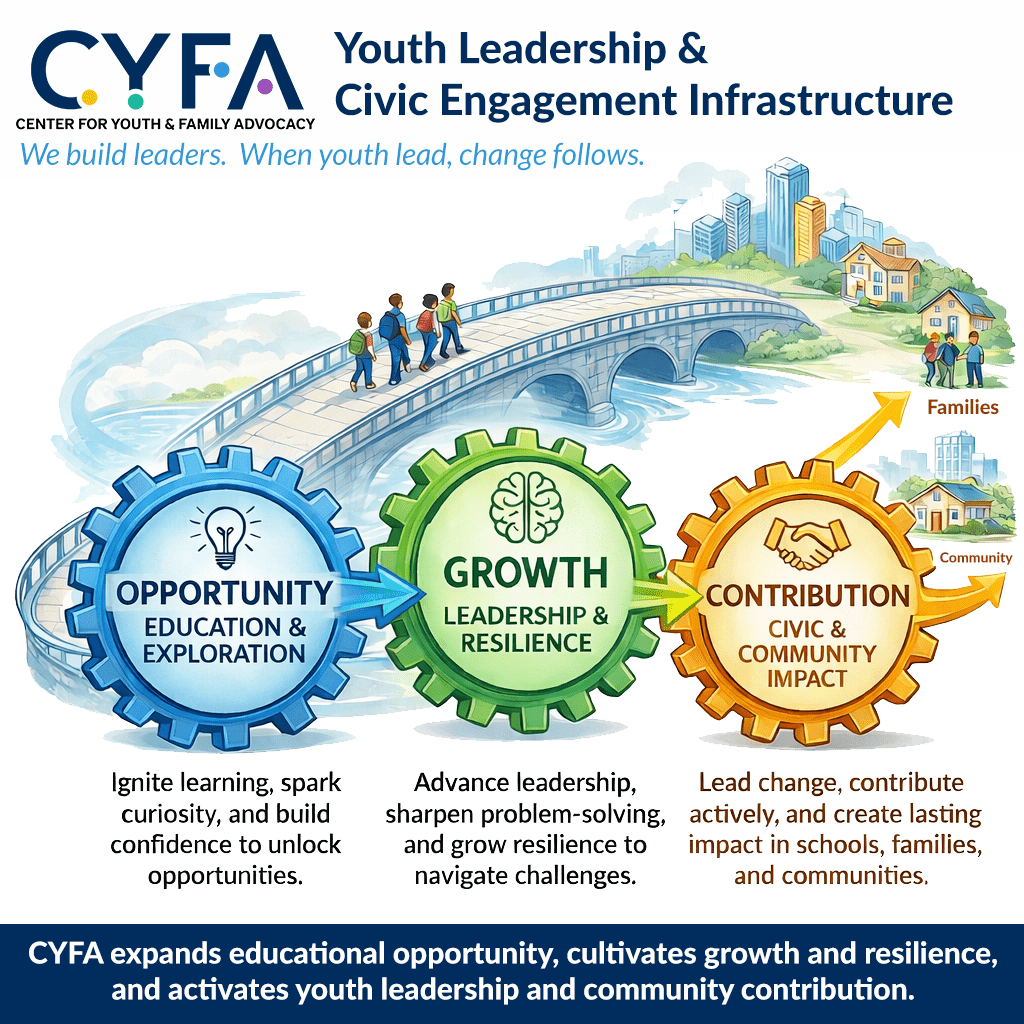
The Center for Youth and Family Advocacy (CYFA) expands educational opportunity, cultivates growth and resilience, and activates youth leadership and community contribution. Across Arlington, CYFA is building the infrastructure that ensures young people have access to opportunity, support, and pathways to lead.
CYFA’s work reflects a clear progression. Through Guiding Personal Success (GPS), youth access opportunity in safe, engaging environments, including The Zone for elementary students and Guiding Personal Success to Youth Employment Services (GPS2YES) for middle and high school youth. CYFA delivers these programs in Arlington Public Schools and in partnership with Affordable Homes and Communities, providing academic support, social-emotional learning, and opportunities to build healthy minds, healthy bodies, and healthy relationships, along with college and career exploration.
As youth grow, they develop accountability and leadership through the Youth Restorative Diversion Initiative (YRDI), a community-based alternative to the juvenile justice system where young people take accountability and repair harm through restorative practices, including PEER and Youth Peer Court (YPC), with advanced leadership through Youth Peer Court Ambassadors.
Youth then step into contribution. Through The Next Chapter, CYFA supports youth in the Northern Virginia Juvenile Detention Center and through reentry, connecting them to education, workforce opportunities, and community resources. Through the Justice Leadership Club and CYFA’s Youth Advisory Board, youth lead and create meaningful change.
Impact Statement
CYFA’s work ensures that young people have access to opportunity, develop the skills and resilience to navigate challenges, and step into leadership within their communities. Through consistent, relationship-based support, youth remain engaged in school, strengthen decision-making and accountability, and build pathways toward college, careers, and long-term stability.
In 2025, CYFA served more than 320 youth, reaching hundreds of family members through engagement and connection to resources. In 2026, 100 teens participated in CYFA’s youth-led Listen Learn Lead Summit, demonstrating the power of youth leadership in action. Across afterschool programs, 60 young people are actively engaged in academic support, social-emotional learning, and skill-building.
Through the Youth Restorative Diversion Initiative (YRDI), CYFA provides a community-based alternative to the legal system, with 99% of youth successfully completing the program and 9 in 10 avoiding deeper system involvement. Every $1 invested in YRDI returns $8 in social value.
Through reentry and leadership pathways, youth not only stay connected to opportunity, but contribute to their schools and communities, strengthening the broader Arlington community.
What ways can the public get involved?
Community members can stay informed through CYFA’s newsletter and Instagram, learning more about our work and the ways we support youth and families across Arlington. Sharing CYFA’s work and using your voice to raise awareness helps expand opportunity for young people.
Financial support is critical to sustaining CYFA’s programs, including educational opportunity through Guiding Personal Success (GPS), restorative diversion through YRDI, and youth leadership initiatives.
There are also opportunities to give your time. Volunteers can support events such as the Listen Learn Lead Summit and other youth engagement activities.
You can also help connect young people to leadership opportunities by sharing pathways to get involved, including the Youth Advisory Board and Youth Peer Court and PEER Ambassador roles.
How are charitable dollars spent? Where does my donation go?
Your donation to CYFA directly supports programs that expand opportunity, strengthen resilience, and build youth leadership across Arlington.
Contributions sustain Guiding Personal Success (GPS), including The Zone and GPS2YES, which provide academic support, social-emotional learning, and opportunities for young people to build healthy minds, healthy bodies, and healthy relationships while exploring college and career pathways.
Your support also powers the Youth Restorative Diversion Initiative (YRDI), including PEER, Youth Peer Court (YPC), and Youth Peer Court Ambassadors, which provide restorative, community-based alternatives that help young people take accountability, repair harm, and stay connected to school and opportunity.
Donations fund The Next Chapter, supporting youth in the Northern Virginia Juvenile Detention Center and through reentry with education, workforce readiness, and ongoing guidance, as well as leadership opportunities like the Youth Advisory Board, Justice Leadership Club, and youth-led events such as the Listen Learn Lead Summit.
Additional support makes community-based experiences like Unplugged possible, creating safe spaces for connection, well-being, and positive peer engagement.
Together, your investment ensures young people have the support, relationships, and opportunities they need to grow, lead, and contribute.
Information provided March 2026
Friends of Arlington’s David M. Brown Planetarium
 Friends of Arlington’s David M. Brown Planetarium
EIN: 27-2760025
Mission Statement
Promoting and supporting Arlington’s David M. Brown Planetarium as an accessible community resource for all people to learn, engage, and be inspired by the wonders of science and the universe.
Program Summary
The Friends raise funds to sponsor college scholarships, provide grants for teacher professional development, and support the licensing and creation of programming for the planetarium. As part of its ongoing public education mission, the organization also hosts a variety of science themed public events and screenings of full-dome video programs.
Impact Statement
Friends of Arlington’s David M. Brown Planetarium (FOAP) provides funding to support education in science, technology, engineering, and mathematics. We have funded more than $96,000 in scholarships to Arlington Public School Students as well as grants to Arlington Public School teachers to attend classes, major educational conferences, and online learning. The program is administered jointly with APS and has benefited dozens of our teachers and – most importantly – their students. More than 2,000 people attended planetarium shows or science-based presentations during FOAP sponsored weekend events. We also host dedicated programs for scout troops in the David M. Brown Planetarium once a month during the school year. FOAP has expanded its community outreach through its portable planetarium dome and virtual equipment. We participate in multiple events at locations throughout Arlington County in our effort to bring the planetarium to the community.
What ways can the public get involved?
The public is invited to become a member of the Friends. Members are part of a community of citizens who are concerned about the planetarium facility and science education. Members receive Advance notification of ticket availability for FOAP public programs, a subscription to the monthly FOAP digital newsletter, and invitations to special members-only events.
The public can volunteer at planetarium shows or other events, including the Arlington County Fair.
We welcome all donations. The public can donate to support general programs, the David M. Brown Memorial Scholarship, or the Alice G. B. Monet Teacher Grant Program.
How are charitable dollars spent? Where does my donation go?
100% of donations designated for the David M. Brown Memorial Scholarship are used to fund student scholarships. 100% of donations designated for the Alice G. B. Monet Teach Grant Program are used to fund teacher grants. Undesignated donations are used to fund student scholarships, teacher grants, planetarium programs, and enhancements to the planetarium facility.
All Board Members of the Friends of Arlington’s David M. Brown planetarium serve as volunteers.

Information provided March 2026
Boolean Girl
 Boolean Girl
EIN: 82-1408294
Mission Statement
The mission of Boolean Girl is to diversify STEM (science, technology, engineering and math) by teaching and inspiring girls, low-income students, and underrepresented youth in grades three to eight through meaningful, hands-on instruction and sustained exposure to computer science and engineering in a collaborative and welcoming environment.
Program Summary
At Boolean Girl, we work to diversify STEM by teaching and inspiring girls, under-represented groups and low-income kids to code, build, invent and animate. Primarily serving the greater Washington, DC, area, we provide girls-only and co-ed classes, summer camps and after school programs, teaching coding and engineering in an inclusive, welcoming environment.
With separate curriculum for elementary and middle school students, children learn computer science and engineering fundamentals through a series of unique projects, hands-on challenges, and play. Our students learn coding, robotics, AI, engineering, teamwork, and digital citizenship while making new friends and having fun. With a robust curriculum and hands-on projects, we educate and empower the next generation of technologists. In addition, we hire rockstar instructors, many of whom are high school and college students who complete paid internships or workforce development programs and are excellent mentors for our younger students.
With our micro:bit for All program, Boolean Girl provides micro:bit kits to schools and students to teach coding, along with lesson plans integrated into core curriculum such as math and science, as well as supplemental lessons in computer science or specials.
At Clubhouse, students excited to continue learning coding and engineering join small groups in after-school or weekend sessions to develop their own STEM projects, share their learnings, and get inspired to continue their STEM journey. Our curriculum incorporates programming and engineering including robotics, mechanics, and circuits, along with art and creativity.
At week-long Boolean Girl camps, girls learn computer science and engineering fundamentals from our rockstar instructors through a series of unique projects. Younger students begin with Scratch coding, starting with Storytelling in Scratch and progressing through Building Games and AI. Beginning in sixth grade, we teach more advanced coding with Python, in addition to Web Development and Artificial Intelligence. We also offer two types of engineering classes for students in grades five through eight: traditional robotics (things that move), and wearable machines.
Impact Statement
Women make up half of the total U.S. college-educated workforce, but less than one third of the science and engineering workforce. Latinx and African-American women make up less than 3%. Research has shown that a 28 percentage point gap exists between male and female Gen Z members regarding their interest in pursuing careers in engineering or computer/technology fields. Boolean Girl was founded to address this by fostering inclusive, creative, and collaborative environments in which girls can learn and grow confidence in STEM subjects at a pace equal to that of their male peers.
Over ten years ago, we started our journey teaching 49 girls in one elementary school in Arlington, Virginia. We have now reached over 60,000 girls and underrepresented youth throughout the greater Washington, DC area, in addition to online students across the country.
In 2025, we reached over 10,000 students through Summer Camps, after-school Clubhouses, micro:bit for All, and other online and in-person events. We worked with 75 schools (72% of which were Title 1) to get over 6,000 micro:bit Kits to 5th grade students, training older students as instructors for the younger students. In addition, 45% of our students come from low income households and receive scholarships.
What ways can the public get involved?
The public can help through donations, sponsorships, volunteering at our events, or even teaching.
Our partners and sponsors help us fund and run our programs through financial support, providing space for events, volunteers, technical support and other resources, and through offering guidance.
How are charitable dollars spent? Where does my donation go?
- $15 – One hour of after school learning for one student
- $25 – Saturday coding Clubhouse for one child
- $40 – Micro:bit kit for a child
- $125 – Badge-earning class online for a scout troop
- $250 – Teacher training for after-school Clubhouse
- $425 – Full week of coding camp for one child
- $5000 – Micro:bit kits and teacher training for a typical 5th grade class
We run revenue generating summer camps that are open to all youth. This revenue covers our overhead costs which have been less than 10% of our overall costs for 10 years. This means that 100% of your donations go to programs that impact the community.

Information provided March 2026
HopeLink Behavioral Health
 HopeLink Behavioral Health
EIN: 54-0880899
Mission Statement
HopeLink inspires hope and provides support for individuals and families experiencing crisis and behavioral health challenges. Through innovative services and a collaborative approach, we strengthen our community one life at a time.
Impact Statement
At HopeLink, we envision a society where hope is universal. Through access to quality behavioral health, crisis intervention, and suicide intervention services, we foster an inclusive community in which everyone can attain wellness and a genuine sense of belonging.
What ways can the public get involved?
HopeLink relies on the support of our community to provide our mental health and crisis services. We offer volunteer opportunities for adults, youth, and groups including corporate groups. Gifts to support the organization help HopeLink to serve the thousands of adults, youth and families in our community.
How are charitable dollars spent? Where does my donation go?
Your dollars are critical in supporting HopeLink’s behavioral health, crisis and suicide intervention services. The demand for mental health services in our community is on the rise, and support from our community allows us to be able to offer services to our community members in need, despite financial, language, or other barriers that our community members may face to accessing care.

Information provided March 2026
Bridges to Independence
 Bridges to Independence
EIN: 54-1368484
Mission Statement
Bridges to Independence leads individuals and families out of poverty and into stable, independent futures.
Since 1985, Bridges to Independence has empowered 16,000 homeless children and families in Arlington. What began as a small shelter has grown into a multifaceted children and family services agency.
Program Summary
Bridges provides the following programs for children and families experiencing homelessness in Arlington:
- Shelter: Bridges operates Arlington County’s largest emergency family shelter with approximately 50 beds across 15 apartment units and includes a 24-hour food pantry. The median length of stay is 90 days. 2 out of 3 shelter residents are children.
- Youth Development: The program transforms the lives of children. Activities include arts and crafts, tutoring, cooking, music, swim lessons, STEM workshops, and field trips. The young people improve their grades, self-esteem, job readiness, and health. Staff find students internships in the field of their choice. For the last seven consecutive years, 100% of high school seniors at Bridges are graduating on time and will continue on to college, job training, employment, or most often, a combination of these.
- Housing: Bridges provides rental assistance, housing placement support for families, and daily case management at the Rapid Rehousing program. Staff connect families to additional resources to access financial assistance, legal counseling, mental health services, and medical care.
- Community Services Center: Bridges offers a walk-in referral and information resource in South Arlington. Residents may meet regularly with a case manager. The Center offers health screenings, school supplies for students, and community classes on topics such as parenting, tenant rights, and nutrition.
- Workforce Development: Bridges provides seminars and counseling to transition working adults from minimum wage to a livable wage. The staff helps them find and maintain employment through partnerships with local businesses in Arlington while reducing barriers to employment, such as childcare, transportation, and professional certifications for workers to maintain employment and earn promotions.
Impact Statement
- In 2025, Bridges served 535 individuals experiencing poverty and homelessness in Arlington.
- 60% of the individuals served in our programs were children.
- The Youth Development Program effectively reduced the school dropout rate for homeless students in Arlington. For the 9th consecutive year, 100% of high school seniors at Bridges are graduating on time and continuing on to college, job training, a career, or most often, a combination of these.
- Bridges has an 80% success rate in moving families to permanent destinations who have been experiencing homelessness.
- 7 in 10 adults eligible for employment had income at the time they exited the Rapid Rehousing Program.
- 92% of families remained permanently housed after exiting the Rapid Rehousing Program.
- 3 out of 4 families maintained or increased their household income upon exit of the Bridges Rapid Rehousing Program.
- 260+ Arlington residents accessed referrals, resources, and services at the Bridges BAJ Community Services Center.
- 0 families were removed from the shelter without a safe place to go. Staff ensure that all families move from the shelter into housing, and no family is ever thrown out and left on the streets.
What ways can the public get involved?
- Donate: Money, food, clothing, household supplies, and resources that go directly to our community.
- Volunteer: Projects include gardening, tutoring, collecting supplies for our back-to-school donation drive or holiday toy drive, assembling Snack Sacks, and more!
- Join a committee: Join the Bridges events, communications and advocacy, or fundraising committee.
How are charitable dollars spent? Where does my donation go?
- $50- one pair of children’s sneakers
- $100- GED or ESL course registration fee
- $250- afterschool programming for one child
- $500- one month of groceries for a family
- $1,000- financial literacy and career workshops
- $2,000- one month of rent for a family
Information provided March 2026
ECDC African Community Center
 ECDC African Community Center
EIN: 52-1308986
Mission Statement
Enable and empower refugees on their path toward building safe, sustainable lives.
Program Summary
Reception & Placement Program
The Reception & Placement program at ACC-DC-VA provides a robust suite of initial support services for newly arrived refugees and SIV holders. Over the first 90 days, clients receive essential aid including airport pickup, temporary housing, food assistance, enrollment in benefit programs, health screenings, and cultural orientation. These services are critical in helping clients stabilize and begin to navigate their new environment, setting a foundation for successful integration into the community.
Employment Support Services
Our Employment Support Services are designed to help refugees and immigrants overcome barriers to employment and advance their careers. We provide comprehensive support, including job training, skills development, resume building, and career counseling. Additionally, we facilitate job fairs to connect clients directly with potential employers, offering both immediate hiring opportunities and long-term career advancement.
Health Education and Support
ACC-DC-VA addresses health disparities by advocating for equitable healthcare and organizing health workshops in collaboration with local health departments. Our services include organizing pop-up vaccination sites and providing education on preventive care and wellness. This proactive approach ensures that our clients not only understand their health care options but also have access to necessary services to maintain good health.
Youth Mentorship and Family Enrichment
Our youth mentorship program pairs young immigrants and refugees with mentors who can provide guidance, support, and encouragement as they navigate their new lives. This program is part of our broader family enrichment services that aim to strengthen family ties and support through community-building activities and educational workshops, ensuring families have the resources to thrive together.
Intensive Case Management
For clients facing complex challenges, our intensive case management program offers personalized, in-depth support. Case managers work closely with individuals and families to address a range of needs including legal, health, and social services, ensuring that each client receives comprehensive and tailored assistance.
Immigration Aid
We offer legal immigration assistance to navigate the complexities of the U.S. immigration system, helping with visa applications, green card renewals, citizenship paperwork, and family reunification petitions. Our legal team’s expertise is crucial in guiding clients through legal hurdles and providing necessary representation.
Women’s Empowerment Program
Our Women’s Empowerment Program is dedicated to supporting female clients through educational resources, empowerment workshops, and community integration activities. It focuses on building resilience and autonomy, helping women gain the skills and confidence needed to participate fully in their new community.
Victim Advocacy
The Victim Advocacy program supports clients affected by crime, trafficking, or domestic violence. We provide counseling, mental health services, and legal advocacy to help them navigate various systems and recover from their experiences. This program is crucial in ensuring that victims receive compassionate and effective support. These programs are all aimed at empowering our clients and guiding them towards self-sufficiency, ensuring they have the support needed to overcome barriers and integrate successfully into their new communities
Impact Statement
At ACC-DC Metro, we focus on fostering self-sufficiency among newly arrived refugees and immigrants. In Fiscal Year 23, we resettled over 1,700 individuals, providing comprehensive services including resettlement assistance, legal support, youth casework, language training, employment support, and health and mental well-being programs.
Our efforts ensure smooth transitions for clients into new communities, while also addressing the complexities of immigration legal processes. Dedicated caseworkers connect youth with educational resources and mentorship for better cultural and social integration. For adults, we offer employment training to enhance job prospects and financial independence. Our health services tackle both physical and psychological needs, ensuring clients start their new lives in optimal health.
Community integration is also key; for example, our post-COVID-19 Refugees’ First Thanksgiving event brought together over 450 refugees with 200 volunteers, celebrating new beginnings and cultural exchange. Another community event attracted 500 members, including new arrivals, highlighting local support from over 100 individuals and businesses.
These initiatives help our clients become contributing, integrated members of society, reflecting our commitment to their long-term success and well-being in their new homeland.
What ways can the public get involved?
At ACC-DC Metro, you can get involved and make a meaningful impact on the lives of refugees through a variety of opportunities:
- In-Kind Donations: Donate furniture, household items, or shop for pre-made Welcome Kits containing essentials for refugees. Your contributions create welcoming homes and ease the transition for newcomers.
- Co-Sponsorship: Join as a co-sponsor to provide long-term support to refugee families. This involves mentoring, collecting donations, and assisting with essential services.
- First Friends Program: Welcome refugees at the airport and support them as they settle into their new community. This role requires a commitment of at least three months to help refugees navigate their new environment.
- Youth Mentorship & Tutoring: Mentor and tutor refugee youth, providing academic assistance and guidance on career paths.
- Corporate Volunteering: Companies and employees can volunteer in activities that support refugees, with flexible scheduling options for both one-time and ongoing commitments.
- Refugee Employment Workshop Consultants: Volunteer quarterly to assist refugees in enhancing their employment prospects through job search guidance, resume editing, and interview preparation.
- Flexible Volunteering: Engage in diverse, as-needed volunteer activities like driving refugees to appointments or helping with English language practice.
How are charitable dollars spent? Where does my donation go?
Donations to ACC-DC Metro play a vital role in enhancing the lives of refugees and immigrants by supporting essential services that meet their needs. Contributions help furnish homes for new arrivals, provide Welcome Kits with crucial items for resettlement, and fund employment programs such as job training and interview preparation. Additionally, your donations support youth educational programs, legal assistance for navigating immigration processes, and critical health services including healthcare access and surgeries. Emergency assistance funds cover immediate needs like rental support during crises. Donations also enable community integration events that foster a sense of belonging. Your generosity ensures ACC-DC Metro can continue to offer these vital services, directly impacting the lives of those we serve and aiding their successful integration and empowerment in their new communities.

Information provided April 2024