
budget-size: Less than $1M
 OutLaw
 OutLaw
EIN: 99-2386327
Mission Statement
OutLaw’s mission is to advocate for the rights and well-being of the LGBTQIA+ community, engage in meaningful dialogue and activities that promote unity and understanding, and educate the public and our members about pertinent issues. We believe in the power of diversity, the importance of visibility, and the necessity of action in pursuit of equality and justice. Together, we are OutLaw, and we stand strong in our commitment to create a world where everyone can live authentically and love freely.
Program Summary
OutLaw is a dynamic and inclusive LGBTQIA+ nonprofit organization that is dedicated to fostering a safe and supportive environment for all individuals. Our programs are designed to promote advocacy, community engagement, education, and outreach within the LGBTQIA+ community and beyond.
- Advocacy: We work tirelessly to champion the rights of the LGBTQIA+ community at local, state, and national levels. Our advocacy efforts include policy reform, legal support, and public campaigns to combat discrimination and promote equality.
- Community Engagement: We believe in the power of community. Through various events, workshops, and social gatherings, we aim to create a space where individuals can connect, share their experiences, and support each other.
- Education: Knowledge is power. We strive to educate the public and our members about the issues affecting the LGBTQIA+ community. This includes hosting educational seminars, distributing informational materials, and providing resources for further learning.
- Outreach: Our outreach efforts are focused on connecting with the community to spread the word about our gender marker and name change clinics. We understand the importance of these services in the lives of many in the LGBTQIA+ community, and we strive to make them as accessible as possible. We utilize a variety of communication channels, including social media, community events, and partnerships with other organizations to reach those who can benefit from these clinics. Additionally, we offer guidance and support throughout the process, ensuring that individuals are not alone in their journey towards living their most authentic lives.
Impact Statement
Since its inception, OutLaw has made a significant impact in the lives of countless individuals within the LGBTQIA+ community. Our advocacy efforts have led to increased awareness about the rights and needs of LGBTQIA+ individuals. Our community engagement initiatives have fostered a sense of belonging and support, creating a safe space for individuals to express themselves and connect with others.
Our educational programs have empowered both the LGBTQIA+ community and the general public with knowledge, promoting understanding and acceptance. Most notably, our outreach efforts have made a profound difference. By spreading the word about our gender marker and name change clinics, we have helped many individuals take crucial steps towards living their most authentic lives.
The impact of OutLaw extends beyond these tangible achievements. Every conversation sparked, every mind opened, and every life touched contributes to a more inclusive and accepting world. While there is still much work to be done, we are proud of the progress we have made and are committed to continuing our mission.
What ways can the public get involved?
- Participate in Events:
- Keep an eye out for our events, workshops, and gatherings. Attend these to learn, connect, and contribute.
- Events may include gender marker and name change clinics, panel discussions, workshops on LGBTQIA+ rights, and community-building activities.
- Volunteer:
- We rely on volunteers to organize and run our programs. Consider volunteering your time and skills.
- You could assist with event planning, outreach efforts, or administrative tasks.
- Spread Awareness:
- Use your voice and social media platforms to raise awareness about our mission and initiatives.
- Share our content, stories, and educational materials to reach a wider audience.
- Donate:
- Nonprofits like ours depend on donations to sustain our work. If you’re able, consider making a financial contribution.
- Sponsor one of OutLaw’s events or clinics. We are always welcoming new sponsors and donors. Sponsorship opportunities exist for a wide variety of items, events, clinics, and more. Please reach out to OutLaw President, Mack Freilich (he/him/his) outlaw@gmu.edu for more information. We are eager to have your support!
- Even small donations can make a difference.
- Collaborate:
- If you’re part of another organization or group, explore collaboration opportunities with us.
- Joint events, partnerships, and shared resources can amplify impact.
Remember that your involvement matters, and together, we contribute to a more inclusive and empowered LGBTQIA+ community!
How are charitable dollars spent? Where does my donation go?
Donations go directly back to the community, mission, and initiatives of OutLaw, including its fundraising efforts, events, clinics, and resources.
Information provided June 2024
Boolean Girl
 Boolean Girl
EIN: 82-1408294
Mission Statement
The mission of Boolean Girl is to diversify STEM (science, technology, engineering and math) by teaching and inspiring girls, low-income students, and underrepresented youth in grades three to eight through meaningful, hands-on instruction and sustained exposure to computer science and engineering in a collaborative and welcoming environment.
Program Summary
At Boolean Girl, we work to diversify STEM by teaching and inspiring girls, under-represented groups and low-income kids to code, build, invent and animate. Primarily serving the greater Washington, DC, area, we provide girls-only and co-ed classes, summer camps and after school programs, teaching coding and engineering in an inclusive, welcoming environment.
With separate curriculum for elementary and middle school students, children learn computer science and engineering fundamentals through a series of unique projects, hands-on challenges, and play. Our students learn coding, robotics, AI, engineering, teamwork, and digital citizenship while making new friends and having fun. With a robust curriculum and hands-on projects, we educate and empower the next generation of technologists. In addition, we hire rockstar instructors, many of whom are high school and college students who complete paid internships or workforce development programs and are excellent mentors for our younger students.
With our micro:bit for All program, Boolean Girl provides micro:bit kits to schools and students to teach coding, along with lesson plans integrated into core curriculum such as math and science, as well as supplemental lessons in computer science or specials.
At Clubhouse, students excited to continue learning coding and engineering join small groups in after-school or weekend sessions to develop their own STEM projects, share their learnings, and get inspired to continue their STEM journey. Our curriculum incorporates programming and engineering including robotics, mechanics, and circuits, along with art and creativity.
At week-long Boolean Girl camps, girls learn computer science and engineering fundamentals from our rockstar instructors through a series of unique projects. Younger students begin with Scratch coding, starting with Storytelling in Scratch and progressing through Building Games and AI. Beginning in sixth grade, we teach more advanced coding with Python, in addition to Web Development and Artificial Intelligence. We also offer two types of engineering classes for students in grades five through eight: traditional robotics (things that move), and wearable machines.
Impact Statement
Women make up half of the total U.S. college-educated workforce, but less than one third of the science and engineering workforce. Latinx and African-American women make up less than 3%. Research has shown that a 28 percentage point gap exists between male and female Gen Z members regarding their interest in pursuing careers in engineering or computer/technology fields. Boolean Girl was founded to address this by fostering inclusive, creative, and collaborative environments in which girls can learn and grow confidence in STEM subjects at a pace equal to that of their male peers.
Over ten years ago, we started our journey teaching 49 girls in one elementary school in Arlington, Virginia. We have now reached over 60,000 girls and underrepresented youth throughout the greater Washington, DC area, in addition to online students across the country.
In 2025, we reached over 10,000 students through Summer Camps, after-school Clubhouses, micro:bit for All, and other online and in-person events. We worked with 75 schools (72% of which were Title 1) to get over 6,000 micro:bit Kits to 5th grade students, training older students as instructors for the younger students. In addition, 45% of our students come from low income households and receive scholarships.
What ways can the public get involved?
The public can help through donations, sponsorships, volunteering at our events, or even teaching.
Our partners and sponsors help us fund and run our programs through financial support, providing space for events, volunteers, technical support and other resources, and through offering guidance.
How are charitable dollars spent? Where does my donation go?
- $15 – One hour of after school learning for one student
- $25 – Saturday coding Clubhouse for one child
- $40 – Micro:bit kit for a child
- $125 – Badge-earning class online for a scout troop
- $250 – Teacher training for after-school Clubhouse
- $425 – Full week of coding camp for one child
- $5000 – Micro:bit kits and teacher training for a typical 5th grade class
We run revenue generating summer camps that are open to all youth. This revenue covers our overhead costs which have been less than 10% of our overall costs for 10 years. This means that 100% of your donations go to programs that impact the community.

Information provided March 2026
Arlington Historical Society
 Arlington Historical Society
EIN: 54-0920730
Mission Statement
Our mission is to improve our community by building knowledge of our diverse history.
The Arlington Historical Society, founded in 1956, is a nonprofit educational organization incorporated under the laws of the Commonwealth of Virginia. The Arlington Historical Society conducts research to preserve and disseminate knowledge relating to the history, archaeology, material culture, geography, and socio-economic development of Arlington County, Virginia.
Program Summary
The society fulfills its mission by providing historic resources for the community, including two historic properties (the Arlington Historical Museum and the Ball-Sellers House) and its artifact collection; original historical research (such as the Memorializing the Enslaved in Arlington project) and publications (including an annual scholarly magazine); the discovery, collection, preservation and exhibition of artifacts; and the presentation and dissemination of knowledge on the local history of Arlington County (through both recurring monthly events as well as individual community events), and all of this is free to the public.
Impact Statement
AHS builds community by spreading awareness and appreciation of our shared history.
Our museums reach life-long residents, newcomers who want to learn about their new community and out of town guests who learn about Arlington’s role in just about every aspect of US history.
Our current project, Memorializing the Enslaved in Arlington involves original research of the enslaved in Arlington, including their names (where available from the historic record), their occupations and place of enslavement. This information is available on our website, and it is made accessible to the public through community events and through “stumbling stones” which are markers that will be placed throughout the community to commerate the lives of the enslaved. We are working with Arlington County Public Schools to produce the stumbling stones and the County to place the stumbling stones. The first 18 of an estimated 2750 have been produced and placed as a pilot program, and more will be regularly produced and placed.
Additionally, AHS is actively involved in community outreach and many people gain a deeper understanding and appreciation of our county’s history through our monthly events, special events at our museums and our involvement with numerous civic and other community events.
What ways can the public get involved?
- Become a member: membership starts at $35. Get monthly email, quarterly newsletter, annual Arlington Historical Magazine, and 10% discount on any AHS purchase.
- Donate artifacts of Arlington history. Help us tell Arlington’s story.
- Donate financial support for the work of AHS and preservation of our two museums.
- Volunteer with AHS in any of our wide variety of opportunities. We’ll help you find something you’ll find rewarding and fun.
How are charitable dollars spent? Where does my donation go?
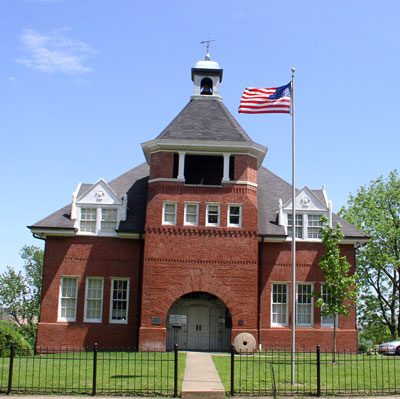
AHS has very little overhead, and virtually all money raised goes directly into our program. Our significant expenditures include operating and maintaining our two historic properties, the oldest extant school building in the county and the oldest extant structure in the county, maintaining our artifact collection, holding our events and educating the public through our digital and physical content.
We have recently completed preservation work on the Arlington Historical Museum, housed in the historic 1891 Hume School. We have updated all the exhibits and transformed space previously used for storage into community space that will be used as a center for history education, presentations, co-curated exhibits that highlight our rich diversity, and for general community use. We are raising money for a part time Museum Director, part time Executive director to expand our reach in the community, as well as raising money for preserving the Ball-Sellers House. We are also raising money for the stumbling stones for the Memorializing the Enslaved in Arlington program.
Information provided March 2026
Latinas Leading Tomorrow
 Latinas Leading Tomorrow
EIN: 27-5119847
Mission Statement
Our mission is to connect and expose Latinas to opportunities that enrich their future through education, mentoring and leadership development
Program Summary
We are dedicated to empowering Latina middle and high school students through our free programming initiatives. These programs, specifically designed for Latinas leading tomorrow, encompass a range of opportunities. From our CORE (Creating Opportunities to Reach Excellence) program, which lays the groundwork for future success, to our ELITE Leadership Academy, where leadership skills are honed within a supportive team environment, we strive to provide avenues for personal and academic growth. Additionally, our LLT STEMpower Camps serves as a platform for Latinas to excel in these critical fields, equipping them with the skills and confidence to become leaders in STEM and beyond. Through these initiatives, we aim to inspire and empower the next generation of Latina leaders to reach their full potential and make a meaningful impact in their communities and beyond.
Impact Statement
Our organization’s efforts have yielded significant outcomes for the population we serve. Latinas Leading Tomorrow has positively impacted a diverse demographic, with 65% coming from low-income backgrounds, 60% being first-generation students, and 50% raised in single-parent households. Remarkably, 90% of our participants have successfully transitioned to college, showcasing the profound effect of our work.
What ways can the public get involved?
Ways the Public Can Get Involved with Latinas Leading Tomorrow
There are many meaningful ways individuals, organizations, and businesses can support the mission of Latinas Leading Tomorrow and help empower the next generation of young women leaders.
Volunteer with Our Programs and Events
Community members can volunteer their time by supporting student workshops, mentoring sessions, STEM activities, or helping at community events such as our Noche de Impacto celebrations, STEM Boot Camps, and college exposure trips.
Become a Speaker or Mentor
Professionals are invited to share their career journeys and expertise with our students through guest speaking opportunities, career panels, and mentorship sessions that inspire young women to explore new possibilities.
Partner with Us
Organizations, universities, and businesses can partner with LLT to create internships, host educational experiences, sponsor programs, or collaborate on initiatives that expand opportunities for our students.
Make a Donation or Provide In-Kind Support
Financial contributions and in-kind donations such as school supplies, technology, transportation support, or event sponsorships help ensure that our programs remain accessible to the students and families we serve.
Host or Support a Fundraiser
Community members can help raise awareness and resources by organizing fundraising events, sponsoring program activities, or participating in events like our Reach for the Stars 5K or Noche de Impacto celebrations.
Together, we can create more opportunities for young women to grow as confident leaders, pursue higher education, and shape the future of our communities.
How are charitable dollars spent? Where does my donation go?
Latinas Leading Tomorrow allocates $0.89 to $1 of each dollar towards programming, directly supporting mission-related activities and services. Here’s a detailed breakdown:
Programming Expenses: This part of the budget covers essential activities and services that fulfill the organization’s mission. For instance, it includes expenses for program materials like T-shirts and educational materials, as well as provisions for meals/snacks and transportation for field trips. Additionally, it covers costs for a program coordinator to oversee operations.
Administrative Costs: Administrative expenses pertain to the overall running of the organization and include expenditures like rent for storage space and dues & subscription expenses.
Fundraising Expenses: Funds dedicated to fundraising cover various costs associated with generating additional financial support for the organization’s mission. This encompasses expenses related to events like 5K Run/Walk, marketing and advertising efforts, donor outreach, and engaging a race timer.
Information provided March 2026
Culpepper Garden
 Culpepper Garden
EIN: 54-1681671
Mission Statement
Serving Northern Virginia since 1975, Culpepper Garden nonprofit retirement community provides affordable housing and a range of supportive services that enable older adults on very low, fixed incomes to age with independence, dignity, wellness, connection, and peace of mind. This award-winning community provides a vital lifeline for 400 vulnerable seniors per year who in no other instance can afford a home in this costly area or the services that meet their basic needs as they grow older. In many cases, Culpepper Garden is their last, best home.
Program Summary
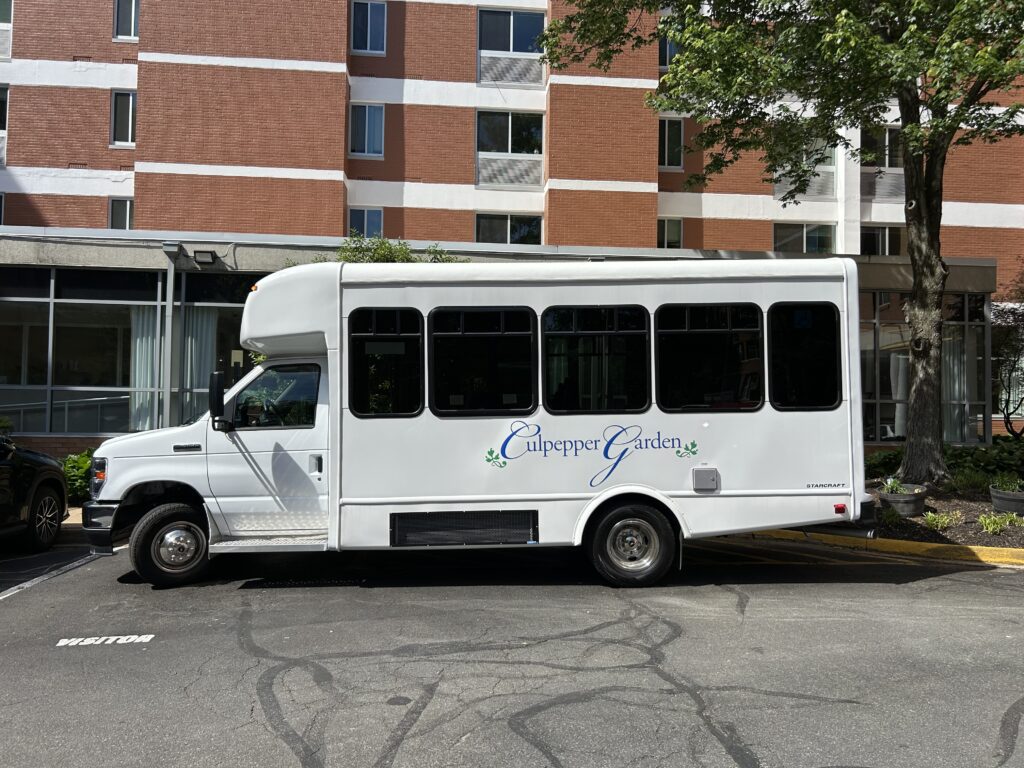
Owned by the nonprofit Arlington Retirement Housing Corporation, Culpepper Garden provides 346 units of federally subsidized Independent Living. Our services begin with immediate housing stabilization in our well-maintained apartments, but our work does not end there. We are the only affordable retirement community in Arlington that offers a dining plan and provides free transportation to medical appointments and shopping destinations to ensure our residents have food security and access to healthcare services. A full calendar of daily activities fosters social engagement and enriches our residents’ lives. An array of free and low-cost wellness services provided by two dozen community partners help to maintain residents’ physical, dental, visual, and mental health. Through responsible stewardship and a commitment to equity, we strive to ensure older adults with limited resources have a stable home, meaningful support in a vibrant community, and the opportunity to thrive.
This affordable, service-enriched housing model has helped to reduce homelessness among older adults in Arlington County by 15% over the past several years. Culpepper Garden’s services provided in collaboration with our partners’ wellness programs consistently improve health outcomes for our residents, resulting in a 20% decrease in hospital admissions. We remain committed to providing a safety net for Arlington’s most vulnerable older adults and meeting their needs for generations to come.
Impact Statement
Our impact is reflected in the ability of older adults to age in place with stability, dignity, and appropriate support. At Culpepper Garden, residents secure not only affordable housing, but also access to essential services that enable them to maintain independence and quality of life.
While we serve individuals aged 62 and older who meet federal income eligibility requirements, our resident population is significantly older and more vulnerable than these criteria suggest. Sixty-five percent of residents are age 75 or older, and nearly one-third are over age 82, with many living into their 90s and beyond.
Residents live on extremely limited financial resources, with an average annual income of $18,069. The majority rely on Social Security, and many require additional assistance to meet basic needs, including food security. A growing number of residents enter our communities following periods of housing instability or homelessness.
Through stable housing and coordinated support, Culpepper Garden enables older adults with the greatest needs to live safely, maintain independence, and experience improved well-being.
What ways can the public get involved?
Volunteer. Our organization could not do this important work without the dedicated, passionate volunteers who serve Culpepper Garden. Volunteers assist with maintaining our gardens and grounds, assisting with special events, leading resident activities, and more. By volunteering here, you will be joining others in our community who are making a positive difference.
Donate. Almost all of the funding we receive from donors goes toward delivery of affordable service-enriched housing that enhances the lives of at-risk older adults. We are extremely efficient in how we use the money we have.
Collaborate. We regularly seek out opportunities to partner with local organizations and supporters who compliment and advance the impact we are able to make in our community. We’ve been able to sustain our work for more than 50 years because of our lasting partnerships
How are charitable dollars spent? Where does my donation go?
Financial support plays a vital role in sustaining and expanding our mission to provide affordable housing, services, and compassionate support for older adults with limited financial meals. Every contribution directly helps create a safe and supportive living environment while also funding programs that promote health, social connection, and overall well-being.
Through careful and responsible stewardship of every dollar, we ensure that resources are used efficiently and transparently to maximize their impact.
By investing in this work, donors help empower older adults to live with dignity and purpose—ensuring they have a stable home and the opportunity to truly thrive.
Information provided March 2026
National Chamber Ensemble (NCE)
 National Chamber Ensemble (NCE)
EIN: 46-4007072
Mission Statement
The Mission of the National Chamber Ensemble (NCE) is to entertain as well as provide opportunities to appreciate and enjoy the art of chamber music, bringing together performers, audiences and composers. The NCE produces high quality chamber music performances for the general public at a reasonable cost. Through our performances and commissions of original musical works we present a full range of chamber music repertoire from the classics to the contemporary. The most important goal of the NCE is to build a sense of closeness between performers and audience that enhances the feeling of community and a deeper musical experience.
How are charitable dollars spent? Where does my donation go?
Contributions are tax deductible to the fullest extent of the law. They support educational programs NCE produces as well as general operation support such as printing, piano movers, piano tuners etc. They may help with special projects involving guest artists.
Information provided March 2025
Four Mile Run Conservatory
 Four Mile Run Conservatory
EIN: 81-1611867
Mission Statement
The Four Mile Run Conservancy connects nature, culture, and community at lower Four Mile Run through restoration, advocacy, recreation, and education.
Program Summary
COMMUNITY STEWARDSHIP: we provide frequent opportunities for volunteers to improve the condition of lower Four Mile Run, such as land- and kayak-based litter clean-ups, native tree/shrub plantings, and invasive species removal.
YOUTH AND PUBLIC PROGRAMS: through our Nature Explorers And Restorers (NEAR) program, we offer outdoor learning opportunities for young people, mostly those from program partners that serve recently-immigrated families, families transitioning from homelessness, and underserved youth. NEAR programming is provided at no cost to them. Throughout the year we offer public interpretive programs, such as pop-up nature centers and park walks highlighting nature and local history.
CONSERVATION INTERNSHIPS: we offer part-time paid summer internships for high-school and college age youth, providing on-the-job experience in natural resource management, field research, and program leadership.
COMMUNITY SCIENCE: we conduct ongoing research with community volunteers and youth interns that includes wildlife camera surveys, water quality testing, and documentation of the ecosystem using the iNaturalist app and online mapping tools.
PARK IMPROVEMENT: we advocate for and seek out resources to support better park infrastructure. Projects have included signage, public drinking water sources, bird nesting boxes, and our current project to build an ADA-accessible kayak and canoe launch.
Impact Statement
We see lower Four Mile Run, its associated park lands, and surrounding community as extraordinary in ecological and socioeconomic diversity, as well as in the range of activities that happen here, whether organized sports, outdoor recreation, informal play, fishing, picnicking, and more. The area’s demographic diversity is reflected in our volunteers, who come from the immediate neighborhood as well as from all across the DC metro region.
We continue to work to ensure the benefits of nearby nature are accessible to the community, both in terms of addressing physical barriers, as with our recently completed project to build an ADA-accessible public kayak/canoe launch, and in terms of sociocultural barriers, as with translation of signage and interpretive materials.
As we celebrate our 10th anniversary this year, we reflect on an impact that has included:
- more than 20 tons of litter removed in 265 land and kayak-based clean-ups
- 200+ trees and 300+ wetland plants/shrubs planted
- 56 internships provided for high school and college students
- Construction completion of an ADA-accessible kayak launch
Coming soon: freshwater mussel restoration and adaptive paddling programs!
What ways can the public get involed?
Volunteering for land-based and kayak-based stream/park clean-ups, planting, and invasive plant removal events, participating in our local nature/history walks, visiting our pop-up nature centers and tables at local events.
How are charitable dollars spent? Where does my donation go?
Donations support project and program expenses. We do not receive County or City funding, and depend on donations and grants to support our work.

Information provided March 2026
Equipment Connections for Children
 Equipment Connections for Children
EIN: 27-1062106
Mission Statement
ECFC connects with families of children living with disabilities in order to help fulfill vital unmet adaptive equipment needs, provide educational workshops, and foster community, free of charge.
Program Summary
Our equipment loan closet helps provide needed equipment to families struggling to get the equipment their child needs, either at all or in a timely manner. Families can use the equipment as long as needed. When the items are returned, they can then go out to another family in need!
Impact Statement
We have helped thousands of families with children living with disabilities in Maryland, DC, and Northern Virginia since 2009.
How are charitable dollars spent? Where does my donation go?
All donations go to support our equipment loan closet program.
Information provided May 2026
Friends of Clarendon House
 Friends of Clarendon House
EIN: 54-1644438
Mission Statement
In existence since 1992, the Friends is a group of individuals who support Arlington’s mental health programs, especially Clarendon House, and individuals served by Arlington’s Behavioral Healthcare Division.
How are charitable dollars spent? Where does my donation go?
Housing assistance, medical and dental expenses, food pantry, social activities
Information provided March 2026