
budget-size: Less than $1M
 Guardian Hands
 Guardian Hands
EIN: 92-1655080
Mission Statement
Guardian Hands empowers adults with intellectual and developmental disabilities to achieve greater independence, community inclusion, and workforce readiness through person-centered support, community engagement, and real-world skill development. We are committed to helping individuals build confidence, develop meaningful relationships, and pursue opportunities that enhance their quality of life throughout Northern Virginia, including Arlington County, Fairfax County, and the City of Alexandria.
Program Summary
Community Engagement Services
Guardian Hands provides structured community-based activities that help adults with intellectual and developmental disabilities build social skills, increase independence, and actively participate in community life. Participants engage in recreational, educational, and volunteer activities while developing communication, decision-making, and self-advocacy skills.
Group Day Support
Our non-center-based Group Day Support program offers individualized and small-group instruction designed to promote independent living skills, community integration, and personal growth. Participants receive support in developing daily living skills, social interactions, safety awareness, and community navigation.
Impact Statement
Guardian Hands Inc. helps adults with intellectual and developmental disabilities overcome barriers to independence, employment, and community participation. Through community-based services and workforce readiness training, participants develop practical life skills, strengthen social connections, increase confidence, and build the tools needed to navigate their communities more independently. Our programs promote inclusion, self-determination, and meaningful opportunities for individuals to reach their personal goals while enhancing their overall quality of life.
What ways can the public get involved?
- Volunteer during community outings and special events.
- Assist with workforce readiness workshops and mock interviews.
- Donate professional clothing, work shoes, backpacks, and employment-related supplies.
- Sponsor transportation passes and community participation activities.
- Make financial contributions to support workforce readiness and community integration programs.
- Introduce local businesses interested in providing volunteer, internship, or employment opportunities for adults with disabilities.
- Partner with Guardian Hands to host inclusive community events and educational opportunities.
How are charitable dollars spent? Where does my donation go?
- $25 provides a participant with transportation assistance for community-based workforce readiness activities.
- $50 purchases job-readiness workbooks, learning materials, and skill-building resources.
- $100 helps provide professional clothing and interview preparation supplies for an adult preparing for employment opportunities.
- $250 supports a month of transportation and community integration activities for one participant.
- $500 funds workforce readiness materials and mobility training resources for multiple participants.
- $1,000 helps expand the Path to Independence program by providing transportation vouchers, vocational materials, and employment preparation supports for adults with intellectual and developmental disabilities.
Donations directly support community engagement, workforce readiness training, transportation access, and independent living skill development, helping adults with intellectual and developmental disabilities achieve greater independence and inclusion in Arlington, Fairfax, and Alexandria.
Information provided June 2026
Real Food for Kids
 Real Food for Kids
EIN: 46-3514249
Mission Statement
Real Food for Kids (RFFK) dismantles barriers to nutrition equity through programs that increase access to real, whole foods, build and support healthy choices through nutrition education, and advance policy change to sustain a population of healthy eaters. Our work inside and outside school walls addresses the systemic challenges to nutrition equity that disproportionately impact low-income, multi-ethnic communities. Our successes have resulted from collaborative community engagement, mission-aligned partners, and positive advocacy with a diverse range of stakeholders.
Program Summary
Real Food for Kids addresses nutrition insecurity by connecting children and families in Arlington with fresh whole foods and building their capacity to make healthy food choices.
- 🥦Fresh Food Explorers is a nutrition education program delivered in preschool classrooms that cultivates food literacy and a love of vegetables in early learners.
- 🥦SNAP Ambassadors strengthens understanding of and access to the Supplemental Nutritional Assistance Program among eligible families. We engage in direct community outreach in Arlington, train social services professionals in SNAP application assistance, and provide free SNAP educational resources for all community members.
- 🥦Chefs Feeding Families distributes free, fresh produce bags to low-income families across the DMV including 8 sites in Arlington to increase accessibility to local, fresh produce.
- 🥦The annual Culinary Challenge encourages student voice in school meal offerings. Middle and High school family and consumer sciences students’ submissions are evaluated by a judging panel and presented to community attendees.
Impact Statement
In our FY26…
- 🍊The Chefs Feeding Families program provided over 90,000 pounds of produce to 5,000 families across 15 sites. 45% of the produce was distributed in Arlington.
- 🍊As the only Virginia SNAP outreach partner in Arlington County, we trained 100 school and affiliate staff as SNAP Ambassadors and directly provided SNAP information to more than 8,000 community members. We also published a SNAP support website available in English and Spanish to answer common questions about the program and highlight discount programs available to low-income residents.
- 🍊At the 14th annual Culinary Challenge this past February, 15 teams competed representing 10 schools and 5 school districts. The winning dish was Potomac Middle School’s (PWCS) BBQ Tofu Sliders with Strawberry Salad.
- 🍊Our Fresh Food Explorers program was delivered in 12 classrooms across 5 schools over 3 school districts. In June, 240 students graduated as Veggie Superheroes! 80 families in our Fairfax classrooms also received 80 lbs. of produce each over the program’s duration.
What ways can the public get involved?
- Donate / Collect Donations for Chefs Feeding Families fresh produce distribution to Arlington children and families.
- Train as a SNAP Ambassador and volunteer at our community events.
- Organize a SNAP outreach event at your school/library/community center with us.
- Middle and High School Family and Consumer Sciences (FACS) students can compete in the Culinary Challenge (with a teacher sponsor).
- Attend the Annual Culinary Challenge.
- Volunteer at the Annual Culinary Challenge.
- Advocate for healthy school meals and increased healthy food access in Arlington.
- Sign up for our newsletter.
- Follow our social media pages @realfoodforkids.
How are charitable dollars spent? Where does my donation go?
Donations will directly support our Chefs Feeding Families produce distribution. This program ensures low-income children and families have reliable access to locally grown, fresh produce to support their nutrition security.
- A $10 donation provides a child with four days of fresh produce.
- A $50 donation provides a child two weeks of fresh produce.
- A $100 donation provides a child four weeks of fresh produce.
- A $250 donation provides a family of 4 three weeks of fresh produce.
- A $500 donation provides a family of 4 six weeks of fresh produce.
Information Provided June 2026
L’Enfant Education Association French Classes School
 L’Enfant Education Association French Classes School
EIN: 84-4470879
Mission Statement
Our Purpose and Core Mission is to
- develop and operate preschools and primary school programs,
- organize classes, educational programs and other activities to help students learn French and other new languages or improve their knowledge of languages,
- conduct public discussion groups, forums, panels, lectures and workshops about the benefits of learning languages as well as early and primary education,
- promote and organize cultural and other events related to the promotion and support of such goals,
- engage in other activities related to educating the public about the benefits of learning languages as well as early and primary education.
How are charitable dollars spent? Where does my donation go?
Donations are used for our scholarship fund and for book purchases for our school library.
Information provided June 2026
Empowering Enrichment
 Empowering Enrichment
EIN: 81-1552430
Mission Statement
Our mission is to expand access to financial literacy and entrepreneurship education for underserved K-12 students to empower them to build brighter futures.
Program Summary
Empowering Enrichment offers high-impact after-school enrichment programs and summer camps that equip underserved K–12 students in Arlington Public Schools with practical life and career skills often unavailable in traditional classrooms. Our core programs focus on financial literacy, entrepreneurship, leadership and career exploration, helping students build confidence, critical thinking and real-world readiness.
Through engaging, age-appropriate activities, students learn key concepts such as budgeting, saving, investing and business creation, as well as transferrable soft skills like teamwork, public speaking and adaptability. Programs are customized for grades K-2, 3-5, 6-8 and 9-12.
Our goal is to close opportunity gaps by ensuring that students in low-income and underserved communities gain access to the same future-shaping enrichment experiences often available only in better-resourced schools. By making these programs free to partner schools and families, Empowering Enrichment helps level the playing field and prepares students to become financially capable, entrepreneurial and empowered future leaders.
Impact Statement
Empowering Enrichment creates measurable, lasting impact by expanding access to transformative enrichment opportunities for students who are too often excluded from them. Our programs equip underserved K–12 students with practical financial literacy, entrepreneurship knowledge, and critical soft skills—such as communication, leadership, teamwork, problem-solving, and confidence—that strengthen both academic and life outcomes.
By exposing students to real-world concepts like budgeting, business creation and career pathways, Empowering Enrichment helps broaden aspirations, unlock potential, and build a stronger sense of future possibility. Students gain not only knowledge, but also the self-belief and decision-making skills needed to navigate school, work, and adulthood more successfully.
Our impact extends beyond individual students: schools and community partners are able to offer high-quality enrichment without added financial strain. In this way, Empowering Enrichment helps close opportunity gaps, while empowering communities to create positive long-term change.
What ways can the public get involved?
The public can support Empowering Enrichment in several meaningful ways. Individuals and organizations can make financial contributions to help fund free programming for underserved students, sponsor a specific school or community-based initiatives, or introduce Empowering Enrichment to potential donors, corporate partners and grantmakers.
Community members can also volunteer by helping connect Empowering Enrichment with schools, youth-serving organizations, and local leaders who can benefit from our programs. In addition, members of the public can volunteer as facilitators/instructors to be trained, mentors, or advocates who help expand access to our financial literacy and entrepreneurship programs in their communities.
How are charitable dollars spent? Where does my donation go?
Charitable donations directly support the delivery of free educational programs promoting financial literacy and entrepreneurship for underserved students. Funds are used to subsidize program access for low-income schools and families, develop and adapt curriculum materials, train facilitators, provide instructional resources, and support program coordination and outreach.
Empowering Enrichment operates with a lean leadership structure designed to maximize program impact. The Executive Director and Board of Directors serve on a volunteer basis, minimizing administrative overhead to virtually zero (besides IT and banking/accounting/financial reporting expenses) so that the greatest possible share of donated funds goes directly toward student programs and services. Every dollar is stewarded carefully to create meaningful, lasting opportunities for the children and communities we serve.
Information provided April 2026
Velocity Bicycle Co-op
 Velocity Bicycle Co-op
EIN: 26-3453393
Mission Statement
The mission of Vélocity Bicycle Cooperative is to build a more equitable, sustainable, and healthy community through cycling. We promote equity by enabling greater access to bicycle ownership and maintenance for people of all income levels and cultures. We advance sustainability by recycling bicycles and making cycling more widely available as an alternative to motor vehicle travel. We support the physical and mental health of local residents through the exercise and independence provided by bicycles and through the positive socio-emotional effects of volunteering cooperatively.
Program Summary
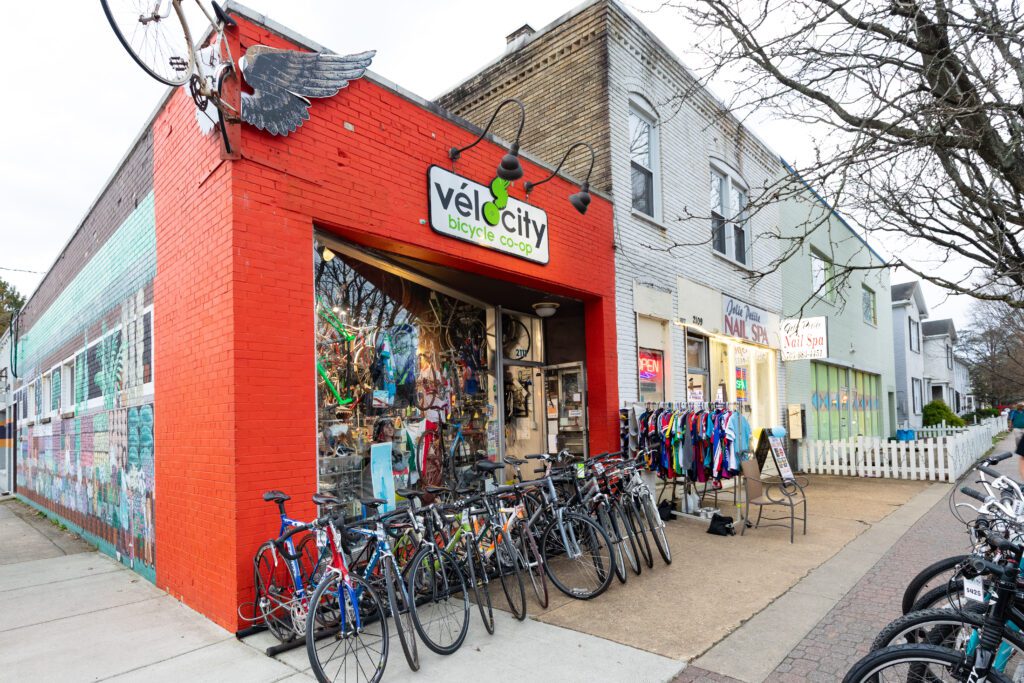
Vélocity believes everyone, no matter their income level, should be able to own and maintain a bicycle for healthy exercise and environmentally sustainable travel. At Vélocity’s shops in Arlington and Alexandria, Virginia, customers can purchase refurbished used bicycles, bike parts, and bike repairs at prices below those offered by for-profit bike shops. Vélocity’s professional mechanics guide customers in repairing their own bicycles at DIY nights each week. Vélocity also maintains a warehouse where anyone who is interested can learn to repair bicycles, either in low-cost maintenance classes or for free through the process of repairing donated bicycles with the help of experienced volunteers. Vélocity donates refurbished bicycles to under-resourced adults and children of low-income families, along with locks and helmets. Since Vélocity is a cooperative, volunteers who contribute 10 hours or more a month to Vélocity are entitled to work on their own bikes using Vélocity’s space and resources. They also receive discounts purchasing bicycles, parts, and supplies from Vélocity’s shops. Vélocity helps keep our environment clean by receiving and reusing unwanted bicycles, while recycling unusable components.
Impact Statement
In fiscal year 2025, Vélocity sold 725 used bicycles and over 7,000 new and used bicycle parts at affordable prices. Our mechanics provided nearly 2,200 low-cost repairs to customers’ bicycles and guided customers in repairing their own bicycles at DIY nights more than 200 times. More than 120 local residents spent a total of over 2,100 hours gaining hands-on experience fixing bicycles by volunteering with Vélocity. Volunteers and shop mechanics working together provided free refurbished bicycles, along with new helmets, bicycle locks, and (for adults) bicycle lights to approximately 100 disadvantaged individuals in our area. By providing a free means of transportation, Vélocity empowered underprivileged individuals to improve their lives. By creating a place to belong and contribute, Vélocity offered benefits to all members of our local community.
What ways can the public get involved?
All members of the public are invited to volunteer with Vélocity, refurbishing donated bicycles at our volunteer nights, helping customers repair their own bicycles at our DIY nights, and supporting our mechanics with customer service at our shops during business hours. Visit our Meetup page to sign up – no experience necessary! Vélocity also accepts donations of used bicycles, parts, and gear during business hours at our shops, which are posted on our website. We accept financial donations through Donorbox to help pay for the space we use, new tools for our volunteers, and consumable parts and supplies such as oil, grease, cables, chains, and inner tubes.
How are charitable dollars spent? Where does my donation go?
- $10 pays for a new chain to make a used bicycle work again
- $25 purchases a helmet so a recipient of a free bicycle can ride safely
- $50 supplies fresh tubes and tires to bring new life to a worn-out bicycle
- $100 covers parts and supplies to refurbish a bicycle for a child whose family can’t afford one, plus a cable lock and helmet
- $250 buys a folding bicycle repair stand, tire pump, tools and supplies for a volunteer to provide bicycle safety checks and mechanical support at youth cycling events
- $500 finances the parts and supplies to refurbish two bicycles for under-resourced adults who need a means of transportation, plus U-locks, helmets, and lights
- $750 funds one professional double-arm repair stand to allow two mechanics or volunteers to work on bicycles at one time
- $1,000 provides parts and supplies to refurbish a dozen bicycles, plus helmets, to start a new school cycling club
Information provided May 2026
Shepherd’s Center
 Shepherd’s Center
EIN: 46-0997432
Mission Statement
We assist our aging community members in maintaining independent and safe lifestyles in their own homes by providing free rides to medical and therapy appointments, and to grocery stores. As an all-volunteer, 501(c)(3) nonprofit organization, we are dedicated to serving seniors in need in Northern Virginia.
Program Summary
In the first 11 months of 2025, 31 volunteers who live in Arlington gave rides to seniors to medical appointments and grocery shopping. Forty-one seniors who live in Arlington received rides from Shepherd’s Center volunteers.
Impact Statement
By providing rides at no cost to seniors living in Arlington, the Shepherd’s Center has enabled seniors to age in place in their homes.
What ways can the public get involved?
The Shepherd’s Center is an all-volunteer organization. We rely on volunteers to provide rides to seniors. There is no minimum commitment; volunteers can drive once a week, once a month, or once a year. Volunteers are also needed in support roles, such as screening client applicants and help recruiting volunteers.
How are charitable dollars spent? Where does my donation go?
Our major expenses are hosting volunteer appreciation events several times a year, providing insurance for board members, and paying for taxis in the fewer than 5% of the cases where a client submits a request for a ride and no volunteer selects that ride.
Information provided March 2026
Arlington Friends of Urban Agriculture (FOUA)
 Arlington Friends of Urban Agriculture (FOUA)
EIN: 84-2182585
Mission Statement
Build a resilient, community-driven urban agriculture sector that provides a fair, healthy, sustainable food system for all Arlingtonians.
Program Summary
Plot Against Hunger: The Plot Against Hunger program is the only program in Arlington County whose sole mission is to grow fresh produce for Arlington residents in need. Through this program, we support over 100 Arlington gardens and gardeners who donate fresh produce weekly to local food pantries and pantries. Our gleaning program mobilizes volunteers to collect excess farm produce to prevent food waste and fight hunger. In addition to the network of gardens and gleaning, this program includes public education and engagement. Examples include seed and seedling giveaways, Central Library Garden Talks, and a Spring Garden Kick-Off event.
Urban Garden Partnerships: FOUA creates partnerships across public, private, civic, and non-profit communities to transform and enhance urban spaces to produce food. Two notable projects arethe HUG (Highland Urban Garden) project in the Aurora Highlands neighborhood involving several civic organizations, and the Terborgh Urban Garden located in the Donaldson Run neighborhood in collaboration with Northern Virginia Conservation Trust.
Public Policy: FOUA supports public policies that support urban agriculture entrepreneurs, support farmers’ markets, encourage developers to include urban agricultural elements, and institutionalize support of public school programs and curriculum.
Community Engagement: FOUA raises awareness of urban agriculture through educational, outreach, and social events such as October Urban Agriculture Month events and our annual Golden Radish Award. Our seed and seedling giveaways, Central Library Garden Talks, and a Spring Garden Kick Off provide all kinds of interaction and information sharing. FOUA has engaged hundreds of new and experienced gardeners to volunteer in private and community gardens, gleaning at farms, and packaging and distributing of produce to local food pantries. We receive multiple inquiries each week from school groups, private employer groups, and individuals looking to serve their neighbors in a fun, active, and meaningful way.
Impact Statement
FOUA believes that a resilient, community-driven urban agriculture sector drives improvements in public health, fights hunger and food insecurity, boosts economic health, and addresses environmental challenges, including stormwater management and heat stress. Through our programs, volunteers.
In 2024, our growers and garden teams harvested and donated more than 64,000 pounds of fresh produce (valued at $122,252) to Arlington food banks and pantries! We’re still harvesting and gleaning for 2025.
What ways can the public get involved?
The public can volunteer in our community gardens, grow produce at home for donation, glean at local farms, support our farmers markets, and urban farmers.
How are charitable dollars spent? Where does my donation go?
Your donation helps us provide the vital inputs gardens need to grow each season: seeds and seedlings, soil amendments, tools, and volunteers.
Information provided April 2026
The Arlington Players (TAP)
 The Arlington Players (TAP)
EIN: 23-7092092
Mission Statement
TAP’s mission is to produce epic and artistically challenging theatre by cultivating an environment of excellence and education for all of our members, volunteers, and audiences in the communities of Arlington County, VA and the greater DC area.
Program Summary
TAP produces at least three shows annually, including two musicals. TAP is welcome to both experienced and first-time theater artists, encouraging learning and collaboration across all ages, backgrounds and skill levels.
Impact Statement
The Arlington Players seeks to foster a community where individuals of all backgrounds can explore, learn, and experience all elements of theatrical arts.
What ways can the public get involved?
Anyone is welcome to audition or volunteer to help backstage, in the shop, or in the box office. Visit our site for audition opportunities, or email steward@thearlingtonplayers.org for volunteer opportunities. Donations are also welcome!
How are charitable dollars spent? Where does my donation go?
Donations go directly to supporting TAP’s mission to provide accessible theater art to the Arlington and DC community.
Information provided November 2025
Wild Virginia, Inc.
 Wild Virginia, Inc.
EIN: 54-1841861
Mission Statement
PROTECTING AND CONNECTING VIRGINIA’S WILD PLACES
Program Summary
Wild Virginia holds the state’s government and regulators accountable for improving habitat connectivity and protecting water quality to counter climate change, prevent species extinction, and defend the health of our communities and ecosystems. Through advocating for environmental protections, convening stakeholder groups to amplify impact, and empowering diverse communities to become active in the decision-making process, we connect people with a safer, more inclusive outdoors.
What We Do
- Strengthen habitat connectivity through increased wildlife crossings and corridors
- Protect water quality by preventing the release of forever chemicals, like PFAS
- Limit the environmental harms of natural gas pipelines
- Train dedicated volunteers through our Clean Water Advocates Program
- Provide educational opportunities to connect people to the wild places they love
Impact Statement
Within Arlington County, Wild Virginia is working to affect decisions by the Virginia Department of Environmental Quality to prevent the discharge of harmful levels of PFAS “forever chemicals” from Arlington County’s wastewater treatment plant. This will help ensure the state enforces safe water standards in Arlington’s backyard.
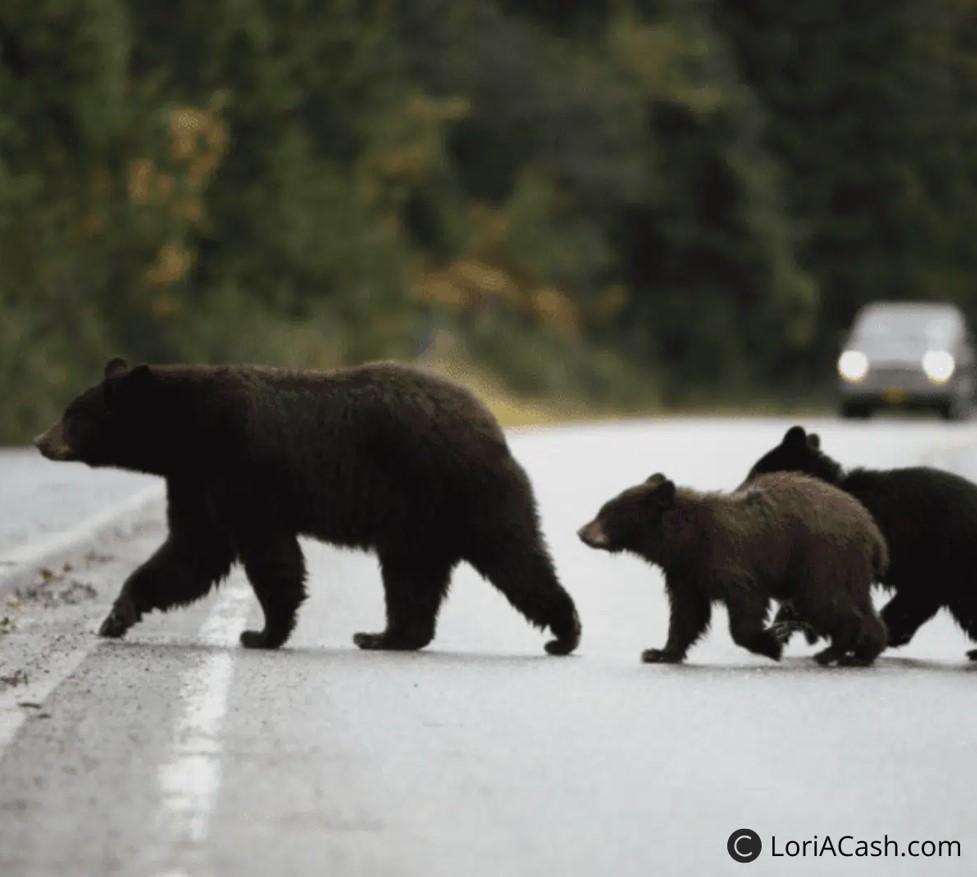
Additionally, Wild Virginia is working with Virginia localities to identify and implement safe wildlife crossing and corridor projects across the state. Wildlife crossing projects reduce animal-vehicle collisions and help maintain habitat connectivity in urban environments like Arlington’s.
What ways can the public get involved?
- Volunteer Opportunities: Volunteers – Wild Virginia
- Come to an Event: Wild Virginia Events
- Join Wild Virginia: Join Wild Virginia
- Be Inspired: Wild Virginia Podcasts
- Follow our Blog: Blog – Wild Virginia
How are charitable dollars spent? Where does my donation go?
Donations to Wild Virginia of any size go directly support our programs. While general support is always needed, specific program needs include:
IMPROVING HABITAT CONNECTIVITY
1. Wildlife-Vehicle Conflict Maps | Phase 1: $10,000 | Phase 2: $50,000
The Virginia Wildlife Corridor Action Plan has identified key corridors where wildlife-vehicle collisions occur, but its reliance on police report data underestimates the issue and focuses on large animals like deer and bears. Wildlife rehabilitation centers in Virginia collect robust data on diverse wildlife brought in due to vehicle collisions, including where animals were struck or found.
Phase one of this project will create the first-ever map of wildlife rehabilitation center data used as a creative and unprecedented way to identify wildlife-vehicle collision hotspots. This will build upon the data currently used by the Commonwealth and create a more accurate picture of where wildlife crossings may be most needed.
The second phase of this project will create a pipeline for rehabilitation center data to be automatically uploaded to a live map. This will provide a low-maintenance and living source of information for use by state agencies, nonprofits, localities, advocates, and more. This innovative tool will not only guide effective wildlife crossing planning in Virginia but will also serve as a model for identifying collision hotspots nationwide, advancing wildlife conservation and infrastructure improvements across the U.S.
2. New Website for the Virginia Safe Wildlife Corridors Collaborative | $10,000
Wild Virginia co-founded and leads the Virginia Safe Wildlife Corridors Collaborative (VSWCC), a coalition of 40 partner organizations dedicated to advancing wildlife corridor and crossing projects statewide. Our leadership supports coordination on initiatives aligned with Virginia’s Wildlife Corridor Action Plan to build a more connected landscape.
To amplify its impact, VSWCC is redesigning its outdated website to improve functionality and accessibility. The new site will feature clear information on wildlife-vehicle conflict, the collaborative’s mission, and how to join. Enhanced public engagement tools, including links to Wild Virginia’s advocacy efforts and the Virginia Habitat Connectivity Hub, will empower more community involvement and foster greater support for connectivity projects.
3. Locality Support Initiative | Year 1 Total $100,000 | Year 2 Total $125,000
Localities have turned to Wild Virginia for help in how to locate, construct, and fund wildlife crossing projects in their districts. To meet this need, in year one we will provide leadership, coordination, facilitation, and process support to two case study localities; the Afton Gap Crossing Project in central Virginia and the Loudoun Connectivity Initiative in northern Virginia. Documenting the process and lessons learned in year one, we will create resources for other localities (including Arlington) to help streamline their projects, and expand our support through the addition of an Assistant Director who can tailor help be an accessible resource.
As part of a broader strategy, Wild Virginia will initiate outreach with planning associations, such as the Virginia Association of Counties, and other local government stakeholders across the Commonwealth, to include Arlington. This will build a more informed base and foster future connectivity projects across Virginia. Our goal is to empower localities such as Arlington with the knowledge, relationships, and resources needed to pursue their own connectivity initiatives, while encouraging VDOT to expand wildlife passage efforts and paving the way for comprehensive state-level connectivity legislation.
4. First Habitat Connectivity Symposium | $17,000
Wild Virginia will host the first Habitat Connectivity Symposium in the fall of 2025. The inaugural year of this event will bring together VSWCC partners to learn and discuss high priority topics. It will include presentations and workshops on wildlife crossings and corridor work as well as networking and resource sharing to build collaborations and galvanize progress across Virginia. In successive years we will build upon this event, maturing it each year to include new audiences and expand its reach and impact towards becoming Virginia’s premiere habitat connectivity gathering.
PROTECTING WATER QUALITY
1. Water Quality Monitoring Initiative | $150,000
Wild Virginia launched a new campaign in 2023 to prevent damage to human and environmental health from per- and polyfluoroalkyl substances (PFAS). PFAS, often called “forever chemicals,” are present in many products and have been detected in the environment, in wildlife, and in humans. PFAS accumulates in bodies, posing serious health threats that persist for many years. By advocating for full enforcement of current state and federal water pollution control regulations, we seek to improve state policies to increase monitoring of PFAS, prevent the discharge of PFAS into the environment, and push the cost of mitigation back upstream to the polluters.
Most of Virginia’s surface waters and pollutant discharges have not been tested for PFAS. Data showing the presence of such contaminants is a powerful tool to galvanize action by state regulators. To fill this gap in information, Wild Virginia will sample waters from across the Commonwealth, with a focus on those in historically disadvantaged and vulnerable communities. In addition to being of use to Wild Virginia, details from these samplings will be shared via a report with the public, nonprofits, and others, for their use in combating PFAS pollution.
2. Science Reporting | $60,000
Our water quality program uses science and the law, backed by an educated and mobilized public, to influence decision makers and ensure that protections promised by the Clean Water Act are fully and faithfully enforced. We currently have supporting personnel with expertise in law and policy. To match this skill set we seek to add personnel with expertise in the scientific and technical fields, fully rounding out our water quality program. This addition will expand our ability to expose new details about the presence of PFAS in Virginia waterways (to include Arlington County and the Potomac River), increase the impact of our reporting, and help us prevent additional PFAS pollution.
CLEAN WATER ADVOCATES PROGRAMS
1. Pop-up Version of Clean Water Advocates for Frontline Communities | $40,000
The Clean Water Advocates is a nine-week skills-based program that equips participants with fundamental knowledge of federal and state water protection laws, regulatory processes, and basic research and advocacy skills used to influence environmental decisions and outcomes. However, the program will not always be practical for individuals and environmental justice communities facing immediate water contamination threats. Time is of the essence when a community has newly mobilized and now must come up to speed on not only the environmental issues but also the government decision-making processes at hand.
This pop-up will fund the development of a condensed version of the Clean Water Advocates Program for such circumstances. We will partner with the Sierra Club Virginia Chapter, Appalachian Voices, and 7 Directions of Service, who have reviewed and praised the existing curriculum, to develop, implement, and distribute this tool to the frontline communities that need it.
2. Sponsor a Clean Water Advocate Student | $2,800 per student | $70,000 whole cohort
The Clean Water Advocates Program is open and accessible to individuals of all backgrounds, with an emphasis on recruiting from historically disadvantaged and vulnerable communities, and/or organizations supporting those communities. In order to continue to provide this program for free to students, we seek sponsorship of each year’s cohort.
Information Provided March 2026