
Population: Unhoused
 Jews United for Justice
 Jews United for Justice
EIN: 52-2346578
Mission Statement
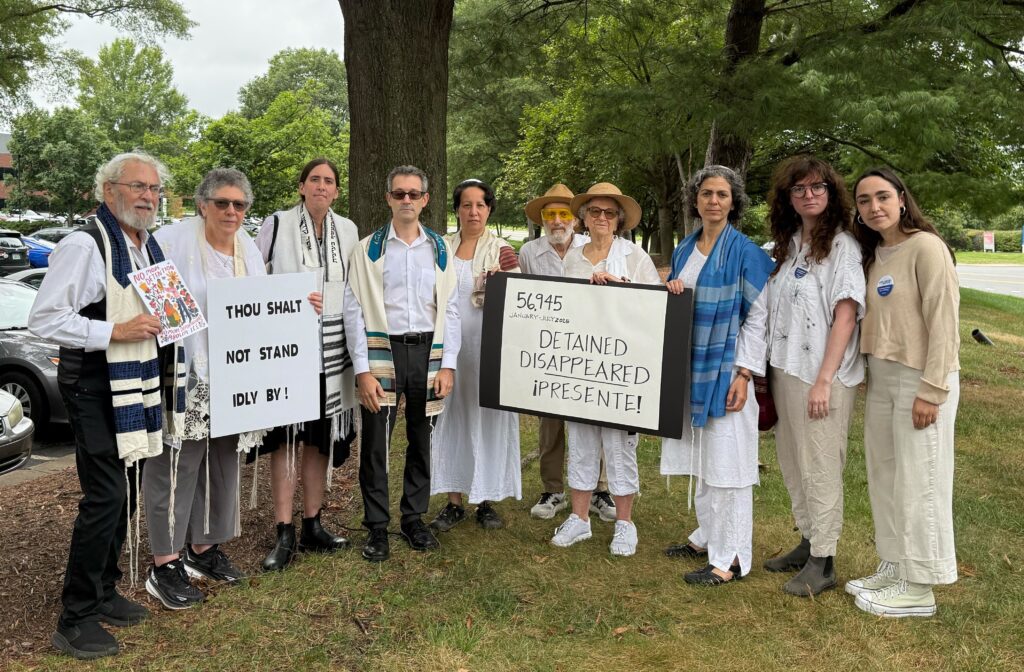
Jews United for Justice advances economic, racial, and social justice in Washington, DC, Maryland, and Virginia by educating and mobilizing our local Jewish communities to action.
We move our region closer to equity and justice by advancing issue-based campaigns that make real, immediate, and concrete improvements in people’s lives and build the power of working-class and poor communities of color. Through these campaigns we develop leaders, build our Jewish grassroots community, shift the consciousness of our community, and build the collective power needed to undo systemic racism and inequality.
Program Summary
For more than a quarter century, Jews United for Justice (JUFJ) has worked in coalition to win policy changes – like increasing the minimum wage, expanding access to affordable housing, and providing paid family leave to everyone – that make concrete improvements in the lives of millions of people. JUFJ simultaneously builds a vibrant Jewish community and Jewish home for local activists, who gather together for Jewish holiday celebrations and to take powerful action on local issues together. Through this work, JUFJ builds partnerships with non-Jewish organizations and communities across the region that increases understanding of the Jewish community and establishes the foundation for shared efforts to dismantle antisemitism, racism, and xenophobia.
JUFJ launched our work in Arlington and more broadly in Northern Virginia in 2025. We are currently:
- Building a vibrant community of leaders and volunteers committed to advancing justice
- Helping to win Constitutional Amendments to advance voting rights, marriage equality, and reproductive justice
- Mobilizing the Jewish community to support and protect immigrants in the region.
Impact Statement
JUFJ’s work targets two distinct communities. Through our policy advocacy campaigns, JUFJ’s work benefits millions of people in our region who are living in poverty or who are otherwise vulnerable. We work collaboratively with faith, community, and advocacy groups of people who are most directly and negatively impacted by the problems we seek to address, and we follow their leadership. Due to the advocacy of JUFJ and our partners, we have worked successfully for Paid Family Leave in Maryland and DC, Paid Sick Days in Maryland and DC, progressive tax laws, and many more policies that have a positive impact on people in our region.
Our work also directly impacts the lives of our base of mostly- Jewish volunteers, who plan and lead our programming, public education, and issue campaigns. This uniquely intergenerational constituency builds strong relationships, Jewish identity, and community, and often describes JUFJ as their Jewish home. They build leadership and advocacy skills and are part of a community working for justice.
What ways can the public get involved?
JUFJ is building a powerful group of volunteers that will fight for a more just state, and we are recruiting Virginians to volunteer with us. We invite you to join us at rallies, meetings with elected officials, and at our cultural and educational events. Our current advocacy is focused on supporting three state constitutional amendments to enshrine Voting Rights, Marriage Equality, and Reproductive Justice in the Constitution, and to advance Immigrant justice. We hope you will join us!
How are charitable dollars spent? Where does my donation go?
JUFJ is a careful steward of the money we raise, ensuring every dollar is spent wisely to help us advance our goals of a more just region.
More than 90% of our budget goes to our core staff costs. That staff provides the foundation to enable coordinated collective action with hundreds of multi-racial, multi-faith partners across the region, and to support our volunteer leaders to advance the work. We are actively seeking support to sustain and expand our staff team in Northern Virginia.
Information Provided February 2026
Velocity Bicycle Co-op
 Velocity Bicycle Co-op
EIN: 26-3453393
Mission Statement
The mission of Vélocity Bicycle Cooperative is to build a more equitable, sustainable, and healthy community through cycling. We promote equity by enabling greater access to bicycle ownership and maintenance for people of all income levels and cultures. We advance sustainability by recycling bicycles and making cycling more widely available as an alternative to motor vehicle travel. We support the physical and mental health of local residents through the exercise and independence provided by bicycles and through the positive socio-emotional effects of volunteering cooperatively.
Program Summary
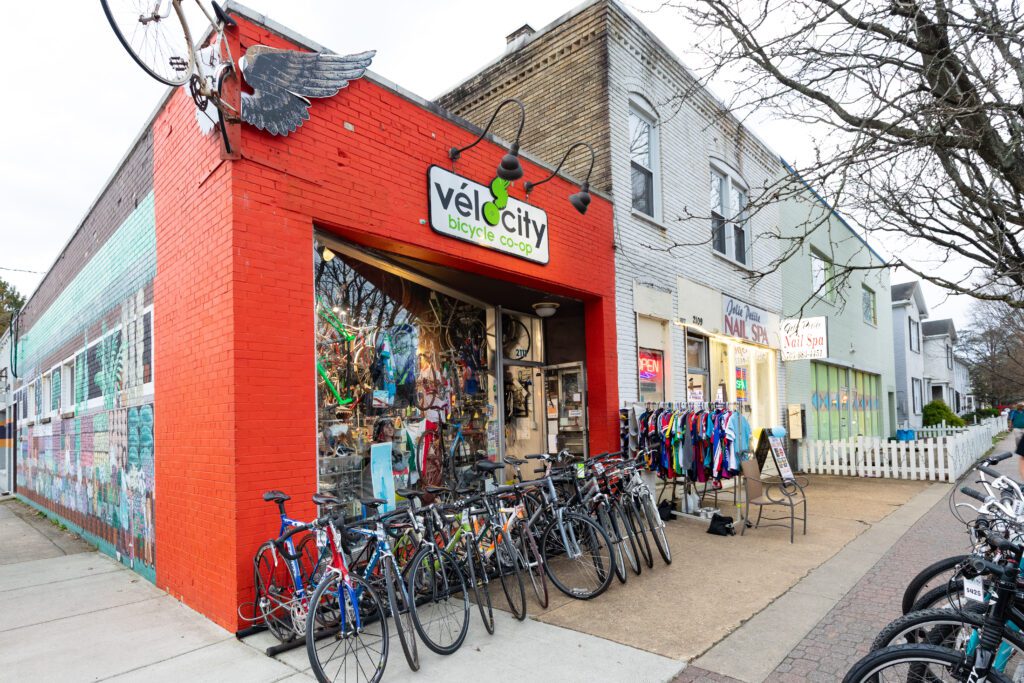
Vélocity believes everyone, no matter their income level, should be able to own and maintain a bicycle for healthy exercise and environmentally sustainable travel. At Vélocity’s shops in Arlington and Alexandria, Virginia, customers can purchase refurbished used bicycles, bike parts, and bike repairs at prices below those offered by for-profit bike shops. Vélocity’s professional mechanics guide customers in repairing their own bicycles at DIY nights each week. Vélocity also maintains a warehouse where anyone who is interested can learn to repair bicycles, either in low-cost maintenance classes or for free through the process of repairing donated bicycles with the help of experienced volunteers. Vélocity donates refurbished bicycles to under-resourced adults and children of low-income families, along with locks and helmets. Since Vélocity is a cooperative, volunteers who contribute 10 hours or more a month to Vélocity are entitled to work on their own bikes using Vélocity’s space and resources. They also receive discounts purchasing bicycles, parts, and supplies from Vélocity’s shops. Vélocity helps keep our environment clean by receiving and reusing unwanted bicycles, while recycling unusable components.
Impact Statement
In fiscal year 2025, Vélocity sold 725 used bicycles and over 7,000 new and used bicycle parts at affordable prices. Our mechanics provided nearly 2,200 low-cost repairs to customers’ bicycles and guided customers in repairing their own bicycles at DIY nights more than 200 times. More than 120 local residents spent a total of over 2,100 hours gaining hands-on experience fixing bicycles by volunteering with Vélocity. Volunteers and shop mechanics working together provided free refurbished bicycles, along with new helmets, bicycle locks, and (for adults) bicycle lights to approximately 100 disadvantaged individuals in our area. By providing a free means of transportation, Vélocity empowered underprivileged individuals to improve their lives. By creating a place to belong and contribute, Vélocity offered benefits to all members of our local community.
What ways can the public get involved?
All members of the public are invited to volunteer with Vélocity, refurbishing donated bicycles at our volunteer nights, helping customers repair their own bicycles at our DIY nights, and supporting our mechanics with customer service at our shops during business hours. Visit our Meetup page to sign up – no experience necessary! Vélocity also accepts donations of used bicycles, parts, and gear during business hours at our shops, which are posted on our website. We accept financial donations through Donorbox to help pay for the space we use, new tools for our volunteers, and consumable parts and supplies such as oil, grease, cables, chains, and inner tubes.
How are charitable dollars spent? Where does my donation go?
- $10 pays for a new chain to make a used bicycle work again
- $25 purchases a helmet so a recipient of a free bicycle can ride safely
- $50 supplies fresh tubes and tires to bring new life to a worn-out bicycle
- $100 covers parts and supplies to refurbish a bicycle for a child whose family can’t afford one, plus a cable lock and helmet
- $250 buys a folding bicycle repair stand, tire pump, tools and supplies for a volunteer to provide bicycle safety checks and mechanical support at youth cycling events
- $500 finances the parts and supplies to refurbish two bicycles for under-resourced adults who need a means of transportation, plus U-locks, helmets, and lights
- $750 funds one professional double-arm repair stand to allow two mechanics or volunteers to work on bicycles at one time
- $1,000 provides parts and supplies to refurbish a dozen bicycles, plus helmets, to start a new school cycling club
Information provided May 2026
Educational Theatre Company
 Educational Theatre Company
EIN: 52-2081464
Mission Statement
Founded in 1998, Educational Theatre Company’s mission is to unlock the potential of children and adults through immersion in theatre arts. ETC provides process-driven theatre arts programming for students from ages 3 -103. We make artistic expression available to all by fostering growth and learning in our communities.
All ETC programming highlights our four pillars: Creativity, Confidence, Collaboration, and Community. We eliminate the transportation barrier by bringing our programs to where students already are – at schools, community centers, and senior living homes.
Program Summary
CAMPS AND CLASSES
- Camps: Spring break & summer camps for ages 3-18 in improvisation, playwriting, Shakespeare, musical theatre, etc.
- After School: Theatre enrichment in schools & community centers for grades K-8.
- Neighborhood Classes: Outdoor classes for PreK-8th in your neighborhood.
- ETC Beginnings for Preschoolers (ETCB): Classes and camps that grow motor skills and encourage sensory, intellectual, & social development.
- ETC-on-Film: Hands-on training and experience for students in 3rd – 12th grades to create their own films.
- Creative Age: Lectures, readings, discussion, & devising for ages 55+ including courses for students with dementia.
RESIDENCIES AND WORKSHOPS
- Main Stage: Elementary students develop an original musical or use classroom curriculum to develop a straight play. Students write lines & lyrics, create their own characters, and design & produce the production elements.
- Shakespeare in the Schools (SIS): Professional actors perform for students, lead workshops & residencies to make Shakespeare accessible.
- Devising Hope: Using devised theatre techniques to create scenes, monologues, & movement pieces that address homelessness or combat racism, all culminating in a performance for our communities.
- Drama Days: Elementary students enjoy a day of acting, music, visual arts, & creative movement at school during student holidays and conferences.
SCHOOL CURRICULUM-BASED PROGRAMS
- ETC In-School: Theatre workshops to support curriculum and state & national Standards of Learning for grades PreK-12 in the classroom, partnering directly with the classroom teacher. Pre-recorded workshops are also available for grades 6-12, such as Clowning & Stage Combat.
- ETC STEAM: Classes, camps, and residencies using theatre techniques to reinforce Science, Technology, Engineering, the Arts and Mathematics.
- ETC ESOL/HILT: Classes with students for whom English is not a first language, supporting language arts objectives like building vocabulary, reading proficiency & public speaking skills through theatre arts.
Impact Statement
Our impact is best expressed by this (abbreviated) statement from a teacher:
My name is Megan Chaney, and I teach at Drew Elementary in the Community Peer Program pre-k class. My classroom is a mixed ability class, with half of my students having a disability. Some of my students are on the Autism spectrum, some are non-verbal…My students and I were lucky to have Ms. Katie McCreary come to our room once a week for two months. While she was leading instruction, I saw students come out of their shells and join in the imaginative learning. Ms. Katie provided meaningful lessons that both allowed students a creative outlet and supported learning in the classroom.
When Ms. Katie was not in the classroom, the things she taught our students continued to be accessible to them. There was a noticeable increase in creativity among the students in their play, and perhaps most excitingly to me, in their problem solving. Where students would sometimes previously get frustrated, they now could turn situations into a chance to get creative….I was so pleased with the growth my students showed in those two months with the guidance of Ms. Katie and the ETC program.
What ways can the public get involved?
ETC is always seeking volunteers as board members (board members meet quarterly for committees and full board meetings and are encouraged to volunteer at various points throughout the year). We are also open to volunteers who can help organize and maintain our storage unit, sort t-shirts, and make deliveries during the camp season to camp locations throughout Arlington.
We are regularly in need of pro bono legal support (though often only once a year to check language on documents, etc.).
ETC performances are free and open to the public, and we encourage audience members from the community to join us, talk about what you’ve seen, and spread the word about ETC! Joining our newsletter via our website is the best way to stay up-to-date on all things ETC.
How are charitable dollars spent? Where does my donation go?
- $100 Provides a scholarship for a student over the age of 55 to participate in an online multi-week session of Creative Age
- $500 Brings four actors into a school for a performance and workshops with Shakespeare in the Schools
- $5000 Provides a full quarter of weekly PreK in-school programming to six classrooms
- $10,000 pays for an entire session of Devising Hope: The Stories that Bind Us, presenting personal stories of racism shared by participants as a means of disrupting racism in our communities
Information provided March 2026
Arm & Arm Inc.
 Arm & Arm Inc.
EIN: 47-4617475
Mission Statement
The Arm & Arm Mission is to change the paradigm of how the transition process is addressed. Using our empathetic-based approach, we empower individuals during critical transition periods with tools that enable them to make rational evaluations of themselves and their situations.
Program Summary
Arm & Arm is redefining mental health and recovery by utilizing cutting-edge Cognitive and Somatic Recovery Techniques—proven methods that help individuals process trauma, regulate emotions, and develop self-sustaining coping strategies. Unlike traditional clinical programs, our model is peer-driven, allowing individuals with shared life experiences to mentor and guide others through their recovery.
Impact Statement
Arm & Arm is redefining mental health and recovery support by utilizing cutting-edge Cognitive and Somatic Recovery Techniques—proven methods that help individuals process trauma, regulate emotions, and develop self-sustaining coping strategies. Unlike traditional clinical programs, our model is peer-driven, allowing individuals with shared life experiences to mentor and guide others through their recovery. By providing peer-to-peer mentoring (a system of accountability) and educating the community on the signs and possible interventions to substance use and de-escalation strategies prior to police involvement, Arm & Arm is normalizing prevention as a lifestyle for our targeted population and their families.
What ways can the public get involved?
Arm & Arm is always looking for empathetic volunteers willing to help those in the community living with stigma. Anyone who is willing to donate their time and/or money to assist our efforts in building whole & healthy communities are always welcome.
How are charitable dollars spent? Where does my donation go?
To provide support for training, community outreach services and support.

Information provided March 2025
Legal Services of Northern Virginia
 Legal Services of Northern Virginia
EIN: 54-1137931
Mission Statement
To provide access to justice for disadvantaged individuals and communities.
Program Summary
LSNV provides free legal help to Arlingtonians who cannot afford a lawyer by providing services in a variety of substantive civil legal areas, including: family law/domestic violence, housing law/eviction prevention, consumer protection, elder law, public benefits claims, access to health care, child advocacy, and AIDS/HIV issues. Staff and volunteers provide legal advice, brief service, and representation in administrative hearings and in court, as well as community legal education, and advocacy before local and state governmental entities, all without charge to our clients.
What ways can the public get involved?
Volunteer. Every year we work with hundreds of volunteer lawyers and paralegal who help us extend our reach and serve more clients.
Financial support.
How are charitable dollars spent? Where does my donation go?
Donations go to direct services; helping a survivor of domestic violence obtain a protective order and escape the cycle of abuse; helping a low-income family avoid eviction and stay in their home; helping a low-income veteran obtain the benefits that he is entitled to after decades of services; and many other types of cases which impact basic needs.
Information provided March 2026
Food Pantry at St. George’s
 Food Pantry at St. George’s
Mission Statement
The mission of our Food Pantry, Arlington’s longest running, active food pantry: to serve as a vital source of food and fellowship for Arlingtonians who are in great need. Our goals and commitment – to provide equitable access to resources and opportunities needed for EVERY COMMUNITY MEMBER to be healthy, safe, and economically secure.
Program Summary
The Food Pantry at Saint George’s Episcopal Church, the oldest in Arlington, was established in 1989. Our mission is to serve as a vital source of food and fellowship for people in need in the Arlington community. By partnering with parishioners, local organizations, and individuals in the area, we help create a community solution to a community challenge. It is a fully-volunteer, unpaid Church ministry.
We provide one bag of food items that will last a client for 2 days, every Monday, Wednesday, and Friday, from 12:00 pm to 1:00 pm. Typical items include bottled water, boxed milk, canned vegetables, canned and microwavable pasta, canned and instant soup, instant oatmeal, applesauce cups, snacks, and fresh fruit. Basic personal care staples, baby wipes and diapers are also handed out.
Impact Statement
Open Monday, Wednesday and Friday, we serve approximately an average of 70 Arlingtonian’s daily. During the first quarter of 2026, the highest number of guests we served in one day topped 108. Visiting us each day we are open provides clients’ food to last six days.
No one is denied food. Clients are welcome to a wide variety of food offerings. Baby wipes and diapers are handed out for mothers with infants.
Our number of Food Pantry clients is steadily increasing. The number of clients served doubled from 2024 to 2025 and the start of 2026 shows a similar trend.
What ways can the public get involved?
We would be most grateful for cash donations that will allow us to replenish our weekly food supplies. We appreciate food donations that include bottled water, canned and boxed food goods. We welcome volunteers who can help prepare our bagged items and feed those who come to our Food Pantry.
How are charitable dollars spent? Where does my donation go?
- $5.25 will provide one client two days-worth of groceries.
- $15.75 will provide one client a week’s worth of groceries.
- $63 will provide one client a month’s worth of groceries.
Information provided March 2026
Bridges to Independence
 Bridges to Independence
EIN: 54-1368484
Mission Statement
Bridges to Independence leads individuals and families out of poverty and into stable, independent futures.
Since 1985, Bridges to Independence has empowered 16,000 homeless children and families in Arlington. What began as a small shelter has grown into a multifaceted children and family services agency.
Program Summary
Bridges provides the following programs for children and families experiencing homelessness in Arlington:
- Shelter: Bridges operates Arlington County’s largest emergency family shelter with approximately 50 beds across 15 apartment units and includes a 24-hour food pantry. The median length of stay is 90 days. 2 out of 3 shelter residents are children.
- Youth Development: The program transforms the lives of children. Activities include arts and crafts, tutoring, cooking, music, swim lessons, STEM workshops, and field trips. The young people improve their grades, self-esteem, job readiness, and health. Staff find students internships in the field of their choice. For the last seven consecutive years, 100% of high school seniors at Bridges are graduating on time and will continue on to college, job training, employment, or most often, a combination of these.
- Housing: Bridges provides rental assistance, housing placement support for families, and daily case management at the Rapid Rehousing program. Staff connect families to additional resources to access financial assistance, legal counseling, mental health services, and medical care.
- Community Services Center: Bridges offers a walk-in referral and information resource in South Arlington. Residents may meet regularly with a case manager. The Center offers health screenings, school supplies for students, and community classes on topics such as parenting, tenant rights, and nutrition.
- Workforce Development: Bridges provides seminars and counseling to transition working adults from minimum wage to a livable wage. The staff helps them find and maintain employment through partnerships with local businesses in Arlington while reducing barriers to employment, such as childcare, transportation, and professional certifications for workers to maintain employment and earn promotions.
Impact Statement
- In 2025, Bridges served 535 individuals experiencing poverty and homelessness in Arlington.
- 60% of the individuals served in our programs were children.
- The Youth Development Program effectively reduced the school dropout rate for homeless students in Arlington. For the 9th consecutive year, 100% of high school seniors at Bridges are graduating on time and continuing on to college, job training, a career, or most often, a combination of these.
- Bridges has an 80% success rate in moving families to permanent destinations who have been experiencing homelessness.
- 7 in 10 adults eligible for employment had income at the time they exited the Rapid Rehousing Program.
- 92% of families remained permanently housed after exiting the Rapid Rehousing Program.
- 3 out of 4 families maintained or increased their household income upon exit of the Bridges Rapid Rehousing Program.
- 260+ Arlington residents accessed referrals, resources, and services at the Bridges BAJ Community Services Center.
- 0 families were removed from the shelter without a safe place to go. Staff ensure that all families move from the shelter into housing, and no family is ever thrown out and left on the streets.
What ways can the public get involved?
- Donate: Money, food, clothing, household supplies, and resources that go directly to our community.
- Volunteer: Projects include gardening, tutoring, collecting supplies for our back-to-school donation drive or holiday toy drive, assembling Snack Sacks, and more!
- Join a committee: Join the Bridges events, communications and advocacy, or fundraising committee.
How are charitable dollars spent? Where does my donation go?
- $50- one pair of children’s sneakers
- $100- GED or ESL course registration fee
- $250- afterschool programming for one child
- $500- one month of groceries for a family
- $1,000- financial literacy and career workshops
- $2,000- one month of rent for a family
Information provided March 2026
Neighborhood Health
 Neighborhood Health
EIN: 54-1849891
Mission Statement
Our mission is to improve health and advance health equity in Alexandria, Arlington, and Fairfax by providing high quality primary care regardless of ability to pay.
Program Summary
Neighborhood Health provides accessible, high quality, and patient-centered primary care to patients in Arlington, the City of
Alexandria, and Fairfax County. Our comprehensive model of primary care includes family medicine, internal medicine, and pediatrics as well as dental care, behavioral health, laboratory services, medication assistance, pediatric vision services, HIV care, diabetes education, and medical and non-medical case management. We are accredited by the Joint Commission and a certified Primary Care Medical Home, coordinating care across the health care continuum. Our mission is to improve health and advance health equity in our service area by providing high quality primary care regardless of ability to pay. Our vision is that everyone in our community has the highest quality healthcare and the opportunity to attain their highest level of health.
Neighborhood Health operates two clinics in Arlington; one at the Sequoia complex that serves adults and the Arlington
Pediatric Center which joined Neighborhood Health in January 2024. Many Arlington residents receive care at Neighborhood Health clinics in other jurisdictions.
Impact Statement
Neighborhood Health provides care for low-income, underinsured and uninsured individuals in Arlington County, the City of Alexandria, and Fairfax County. We ensure access to high quality, comprehensive primary healthcare regardless of ability to pay.
In 2024, we served 42,703 pediatric and adult patients. Most of our patients are either uninsured (37%) or on Medicaid (48%). 98% of patients report income of 200% FPL or lower. Over 90% identify as a racial or ethnic minority. We are the largest safety net health provider in Northern Virginia. Our patients have few other options to receive care.
In 2024, Neighborhood Health provided care to over 6,500 Arlington residents.
Neighborhood Health was recognized by HRSA with these 2024 Community Health Quality Recognition awards: Silver Health Center Quality Leader (top 11-20%), Health Disparities Reducer, Access Enhancer, Addressing Social Risk Factors, and Advancing HIT for Quality.
What ways can the public get involved?
The best way to support Neighborhood Health is through a financial contribution.
Neighborhood Health has limited volunteer opportunities. Email nhojvat@nhnva.org with questions.
Neighborhood Health has limited capacity for accepting donated goods. Email nhojvat@nhnva.org with inquiries.
If your organization is interested in partnering with Neighborhood Health, email jknops@nhnva.org.
How are charitable dollars spent? Where does my donation go?
Given Neighborhood Health’s high percentage of uninsured patients – about 37%, we welcome the financial support of individuals, corporations, and foundations to help cover the costs of serving our uninsured neighbors. Donations are used to pay for the care of these uninsured patients.
Examples of What Your Donation Will Cover:
- $5,000 – supports care for 4 uninsured patients with diabetes for a year
- $2,000 – supports the preventive dental care of 2 patients
- $1,000 – supports medical care for 1 newborn for a year
- $750 – supports medical care for 1 uninsured adult patient for a year
- $500 – supports two medical visits for an uninsured patient with heart disease
- $350 – supports two behavioral health visits for an uninsured patient with depression
- $250 – supports a comprehensive dental exam for a new uninsured patient
- $150 – supports an optometry visit for vision screening for an uninsured child
- $100 – supports navigation to specialty care for one uninsured patient
- $50 – supports application of dental sealant for 1 uninsured child
Call (571) 457-9146 or email development@nhnva.org with questions about donations.
Donations to Neighborhood Health can be designated for General Operations or for a specific purpose or project within our scope of work. Donations can also be made in memorium or in honor of an individual chosen by the donor. Please email development@nhnva.org for more details.
Donations to Neighborhood Health are tax deductible as allowed by law.
Information provided March 2025
Britepaths
 Britepaths
EIN: 52-1596259
Mission Statement
Britepaths provides short-term safety-net services to our neighbors in need while empowering them to work toward long-term self-sufficiency. We deliver our services with respect, compassion, and equity, always preserving the dignity and self-esteem of our clients.
Program Summary
Britepaths brings personal finance classes and career building skills to partners in Arlington: Bridges to Independence, ACH Inc., Arlington Agency on Aging, Catholic Charities, ECDC African Community Center, Enterprise Development Group, and Melwood. Clients participate in a series of classes that vary with the needs of each partner and have options for further one-one-one financial empowerment and/or career building services. Arlington residents who have low or middle incomes are welcome to sign up for any of the free services offered through the Financial Empowerment Center (FEC). The FEC assists over 2,000 individuals annually, providing most services virtually which are offered in English, Spanish, and other languages as needed. Services include personal finance workshops, classes, financial coaching and mentoring, small business and tax consulting, tax assistance, and some legal services. Workforce development programs include workshops, coaching, leadership skills and soft skills training, mentoring, and culinary skills training. The best place for the most recent options is to go directly to the website at https://soco.financialempowermentcenters.org
Impact Statement
Britepaths offers services that actually help improve the lives of families in financial crisis. The services we provide to clients through our Arlington partners, help them to develop tools to organize, understand, and manage their finances. Using these tools, they can start to pay down debt, become banked, and/or start saving. We also help them with job skills to help them find a job or move a better paying one. Any of these skills can help improve their current situation. We encourage clients to explore our other, more long-term services that have proven effectiveness. For clients who attended classes or workshops, 71% of respondents have improved their financial situation, and for clients who participate in financial mentoring for 6-9 months, 81% improve their situation based on survey score. We serve more than 2,000 clients annually through the Financial Empowerment Center (FEC) receiving personal finance and/or workforce development services. We continue to add workforce training and certification classes.
What ways can the public get involved?
The Financial Empowerment Center uses many volunteers. Anyone with a financial background can be trained to be a financial coach, mentor, or instructor. Workforce development needs volunteers to mentor clients in their own field to help them learn more about the field and develop a professional network. We also need volunteers to do practice interviewing and review resumes. We are particularly seeking bilingual volunteers in any language but have a need for Dari and Pashto speakers. We also need office volunteers to help with data entry and calling clients to remind them of scheduled coaching sessions. The best way to find out about volunteering is https://soco.financialempowermentcenters.org/get-involved/ or https://britepaths.org/get-involved/volunteer/
How are charitable dollars spent? Where does my donation go?
Donated dollars go to support the staff time, materials needed for classes and workshops, translation services, and other community needs. The services provided at the Financial Empowerment Center (FEC) are mostly provided by volunteer financial professionals. Staff coordinate classes, coaching sessions, mentor matches, develop curricula for workshops and classes, data entry, and reporting. Workforce Development staff provide coaching, some classes, curricula develop and use professional volunteers for classes and mentoring. Training classes are taught by professional instructors. We provide training materials and in the case of culinary skills training, provide a kitchen and food to prepare. We engage in as many partnerships as possible to stretch donated dollars for maximum impact.
Information provided March 2026