
Population: Low-income
 Habitat for Humanity of Washington, D.C. & Northern Virginia
 Habitat for Humanity of Washington, D.C. & Northern Virginia
EIN: 52-1589700
Mission Statement
Habitat for Humanity of Washington, D.C. & Northern Virginia’s (Habitat DC-NOVA) mission is to reduce poverty and housing instability in the national capital area by creating and preserving decenter, affordable, and energy-efficient homes for Washington, D.C., and Northern Virginia residents with low to moderate incomes.
Program Summary
Habitat DC-NOVA believes that everyone deserves a safe, decent place to live. We work to break down barriers to homeownership and help families create stability and intergenerational wealth through permanent housing.
Homeownership: Habitat provides unique opportunities for families with low to moderate incomes to buy their first home. We build quality homes and partner with DC & NOVA families to sell them below market value with affordable financing, reduced down payments, and mortgage payments proportional to income. We serve families earning 30-80% of the Area Medium Income (AMI) and who live in Arlington County, Fairfax County, The Cities of Alexandria, Falls Church, Fairfax, and the District of Columbia.
Home Repair: We partner with seniors with lower incomes and adults with disabilities to help them make critical repairs and accessibility modifications to their homes. By helping families who cannot afford these repairs, we’re helping to make their homes safe, healthy, and supportive of aging in place. With modifications and support, they can continue to live—and thrive- in their own homes and communities.
Impact Statement
For the last 35 years, Habitat DC-NOVA has partnered with families to help them build stronger foundations for their future. Currently, 1/3 of households in our region pay more than 30% of their monthly income towards housing. With many spending a large portion of their income on housing, they have to make difficult decisions between spending on housing, healthcare, food, and transportation.
We have built over 300 homes, completed over 235 home repairs, and served almost 2,000 individuals. In 2018, we found that 52% of homeowners pursued higher education, and 92% of children in Habitat homes had graduated high school.
We have set an ambitious goal to serve 1,000 people by 2030 through our homeownership and home repair program. Active construction is going on in Arlington at Reeves Farmhouse, in DC at 55th Street, and in Fairfax at Fairfax Presbyterian Church.
What ways can the public get involved?
Habitat DC-NOVA brings people with all different backgrounds together to eliminate poverty housing and build community alongside our neighbors needing a decent place to live. We believe everyone can make a difference with their unique skills and talents, and we offer a variety of opportunities to support our affordable housing mission.
Whether you want to swing a hammer, help bring in donations at the ReStore, hold a fundraiser to support our builds, plan an event to raise awareness of housing needs or advocate for housing policies, we have an opportunity that will fit your needs.
Volunteering: We have volunteer opportunities on our construction site, our ReStores, and in our office. Learn more at https://www.habitatdcnova.org/get-involved/volunteer/
Donate home goods, furniture, or construction materials to the ReStore. We have three ReStores (Alexandria and Chantilly) open to the public Monday-Saturday. Shop the store that helps build homes! We accept donations at the store and may be able to pick up larger items at your home. Learn more at https://www.habitatdcnova.org/restore/
Donate your vehicle, motorcycle, or RV to the Habitat for Humanity Cars for Homes program. Your vehicle can help support local families in building strength, stability, and shelter. Learn more at https://www.habitatdcnova.org/support-us/donate-your-car/
How are charitable dollars spent? Where does my donation go?
Habitat DC-NOVA provides decent, affordable homes to families needing a safe place to call home. Each donation is used responsibly to support programs, serve families, and build more equitable and accessible communities in our region. We are currently ranked as a 4-star charity on Charity Navigator, with a 94% ranking.
With the continually increasing cost of building materials and land, we work hard to build partnerships to reduce these expenses. However, significant costs for materials, site preparation, and other services are still needed to serve families in our area.
Information provided March 2026
Arlington Soccer Association
 Arlington Soccer Association
EIN: 23-7284150
Mission Statement
Provide quality soccer programs and experiences for youth of all abilities, backgrounds and financial means to encourage personal growth, promote a love for the game, and advance soccer in Arlington and surrounding communities.
Program Summary
Arlington Soccer Association offers recreational, developmental and travel soccer, as well as a number of camps, clinics and other programs throughout the year. Over 9,000 children take advantage of Arlington Soccer programs each year!
How are charitable dollars spent? Where does my donation go?
For the Arlington Soccer Association, a 501(c)(3) nonprofit organization, charitable donations are vital to supporting its mission and operations. Generally donations go towards financial aid, unless they are specifically earmarked for other causes. Here is how financial aid funds are typically utilized:
Financial Aid for Players: Donations designated for financial aid are used to subsidize the costs for players who may not otherwise be able to afford to participate in the soccer programs. This can include covering part or all of the fees associated with:
- Registration Fees: These are often the primary costs associated with joining the soccer programs. Financial aid can help cover these expenses to ensure every child has the opportunity to play, regardless of their financial background.
- Uniforms and Equipment: Soccer requires specific gear, such as jerseys, shorts, socks, cleats, and shin guards. Financial aid can help families obtain these necessary items.
- Travel Costs: For travel teams, expenses can include transportation, lodging, and meals for away games and tournaments. Financial aid can help ensure that all team members can participate in these important events.
Information provided March 2026
Neighborhood Health
 Neighborhood Health
EIN: 54-1849891
Mission Statement
Our mission is to improve health and advance health equity in Alexandria, Arlington, and Fairfax by providing high quality primary care regardless of ability to pay.
Program Summary
Neighborhood Health provides accessible, high quality, and patient-centered primary care to patients in Arlington, the City of
Alexandria, and Fairfax County. Our comprehensive model of primary care includes family medicine, internal medicine, and pediatrics as well as dental care, behavioral health, laboratory services, medication assistance, pediatric vision services, HIV care, diabetes education, and medical and non-medical case management. We are accredited by the Joint Commission and a certified Primary Care Medical Home, coordinating care across the health care continuum. Our mission is to improve health and advance health equity in our service area by providing high quality primary care regardless of ability to pay. Our vision is that everyone in our community has the highest quality healthcare and the opportunity to attain their highest level of health.
Neighborhood Health operates two clinics in Arlington; one at the Sequoia complex that serves adults and the Arlington
Pediatric Center which joined Neighborhood Health in January 2024. Many Arlington residents receive care at Neighborhood Health clinics in other jurisdictions.
Impact Statement
Neighborhood Health provides care for low-income, underinsured and uninsured individuals in Arlington County, the City of Alexandria, and Fairfax County. We ensure access to high quality, comprehensive primary healthcare regardless of ability to pay.
In 2024, we served 42,703 pediatric and adult patients. Most of our patients are either uninsured (37%) or on Medicaid (48%). 98% of patients report income of 200% FPL or lower. Over 90% identify as a racial or ethnic minority. We are the largest safety net health provider in Northern Virginia. Our patients have few other options to receive care.
In 2024, Neighborhood Health provided care to over 6,500 Arlington residents.
Neighborhood Health was recognized by HRSA with these 2024 Community Health Quality Recognition awards: Silver Health Center Quality Leader (top 11-20%), Health Disparities Reducer, Access Enhancer, Addressing Social Risk Factors, and Advancing HIT for Quality.
What ways can the public get involved?
The best way to support Neighborhood Health is through a financial contribution.
Neighborhood Health has limited volunteer opportunities. Email nhojvat@nhnva.org with questions.
Neighborhood Health has limited capacity for accepting donated goods. Email nhojvat@nhnva.org with inquiries.
If your organization is interested in partnering with Neighborhood Health, email jknops@nhnva.org.
How are charitable dollars spent? Where does my donation go?
Given Neighborhood Health’s high percentage of uninsured patients – about 37%, we welcome the financial support of individuals, corporations, and foundations to help cover the costs of serving our uninsured neighbors. Donations are used to pay for the care of these uninsured patients.
Examples of What Your Donation Will Cover:
- $5,000 – supports care for 4 uninsured patients with diabetes for a year
- $2,000 – supports the preventive dental care of 2 patients
- $1,000 – supports medical care for 1 newborn for a year
- $750 – supports medical care for 1 uninsured adult patient for a year
- $500 – supports two medical visits for an uninsured patient with heart disease
- $350 – supports two behavioral health visits for an uninsured patient with depression
- $250 – supports a comprehensive dental exam for a new uninsured patient
- $150 – supports an optometry visit for vision screening for an uninsured child
- $100 – supports navigation to specialty care for one uninsured patient
- $50 – supports application of dental sealant for 1 uninsured child
Call (571) 457-9146 or email development@nhnva.org with questions about donations.
Donations to Neighborhood Health can be designated for General Operations or for a specific purpose or project within our scope of work. Donations can also be made in memorium or in honor of an individual chosen by the donor. Please email development@nhnva.org for more details.
Donations to Neighborhood Health are tax deductible as allowed by law.
Information provided March 2025
Latinas Leading Tomorrow
 Latinas Leading Tomorrow
EIN: 27-5119847
Mission Statement
Our mission is to connect and expose Latinas to opportunities that enrich their future through education, mentoring and leadership development
Program Summary
We are dedicated to empowering Latina middle and high school students through our free programming initiatives. These programs, specifically designed for Latinas leading tomorrow, encompass a range of opportunities. From our CORE (Creating Opportunities to Reach Excellence) program, which lays the groundwork for future success, to our ELITE Leadership Academy, where leadership skills are honed within a supportive team environment, we strive to provide avenues for personal and academic growth. Additionally, our LLT STEMpower Camps serves as a platform for Latinas to excel in these critical fields, equipping them with the skills and confidence to become leaders in STEM and beyond. Through these initiatives, we aim to inspire and empower the next generation of Latina leaders to reach their full potential and make a meaningful impact in their communities and beyond.
Impact Statement
Our organization’s efforts have yielded significant outcomes for the population we serve. Latinas Leading Tomorrow has positively impacted a diverse demographic, with 65% coming from low-income backgrounds, 60% being first-generation students, and 50% raised in single-parent households. Remarkably, 90% of our participants have successfully transitioned to college, showcasing the profound effect of our work.
What ways can the public get involved?
Ways the Public Can Get Involved with Latinas Leading Tomorrow
There are many meaningful ways individuals, organizations, and businesses can support the mission of Latinas Leading Tomorrow and help empower the next generation of young women leaders.
Volunteer with Our Programs and Events
Community members can volunteer their time by supporting student workshops, mentoring sessions, STEM activities, or helping at community events such as our Noche de Impacto celebrations, STEM Boot Camps, and college exposure trips.
Become a Speaker or Mentor
Professionals are invited to share their career journeys and expertise with our students through guest speaking opportunities, career panels, and mentorship sessions that inspire young women to explore new possibilities.
Partner with Us
Organizations, universities, and businesses can partner with LLT to create internships, host educational experiences, sponsor programs, or collaborate on initiatives that expand opportunities for our students.
Make a Donation or Provide In-Kind Support
Financial contributions and in-kind donations such as school supplies, technology, transportation support, or event sponsorships help ensure that our programs remain accessible to the students and families we serve.
Host or Support a Fundraiser
Community members can help raise awareness and resources by organizing fundraising events, sponsoring program activities, or participating in events like our Reach for the Stars 5K or Noche de Impacto celebrations.
Together, we can create more opportunities for young women to grow as confident leaders, pursue higher education, and shape the future of our communities.
How are charitable dollars spent? Where does my donation go?
Latinas Leading Tomorrow allocates $0.89 to $1 of each dollar towards programming, directly supporting mission-related activities and services. Here’s a detailed breakdown:
Programming Expenses: This part of the budget covers essential activities and services that fulfill the organization’s mission. For instance, it includes expenses for program materials like T-shirts and educational materials, as well as provisions for meals/snacks and transportation for field trips. Additionally, it covers costs for a program coordinator to oversee operations.
Administrative Costs: Administrative expenses pertain to the overall running of the organization and include expenditures like rent for storage space and dues & subscription expenses.
Fundraising Expenses: Funds dedicated to fundraising cover various costs associated with generating additional financial support for the organization’s mission. This encompasses expenses related to events like 5K Run/Walk, marketing and advertising efforts, donor outreach, and engaging a race timer.
Information provided March 2026
Culpepper Garden
 Culpepper Garden
EIN: 54-1681671
Mission Statement
Serving Northern Virginia since 1975, Culpepper Garden nonprofit retirement community provides affordable housing and a range of supportive services that enable older adults on very low, fixed incomes to age with independence, dignity, wellness, connection, and peace of mind. This award-winning community provides a vital lifeline for 400 vulnerable seniors per year who in no other instance can afford a home in this costly area or the services that meet their basic needs as they grow older. In many cases, Culpepper Garden is their last, best home.
Program Summary
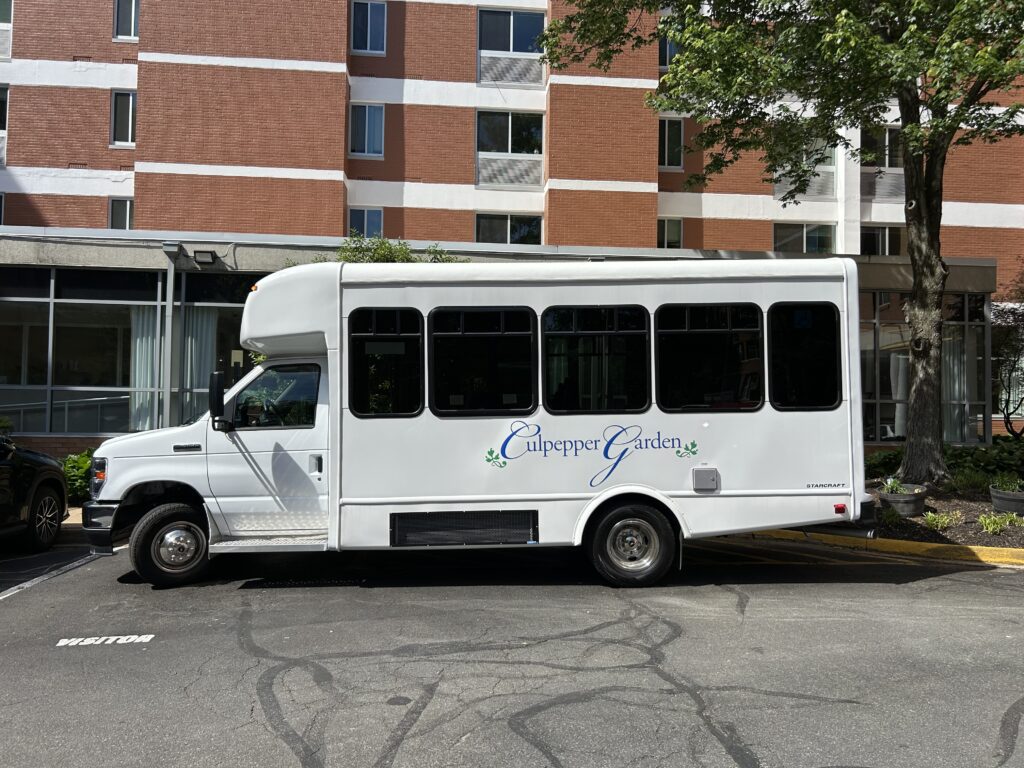
Owned by the nonprofit Arlington Retirement Housing Corporation, Culpepper Garden provides 346 units of federally subsidized Independent Living. Our services begin with immediate housing stabilization in our well-maintained apartments, but our work does not end there. We are the only affordable retirement community in Arlington that offers a dining plan and provides free transportation to medical appointments and shopping destinations to ensure our residents have food security and access to healthcare services. A full calendar of daily activities fosters social engagement and enriches our residents’ lives. An array of free and low-cost wellness services provided by two dozen community partners help to maintain residents’ physical, dental, visual, and mental health. Through responsible stewardship and a commitment to equity, we strive to ensure older adults with limited resources have a stable home, meaningful support in a vibrant community, and the opportunity to thrive.
This affordable, service-enriched housing model has helped to reduce homelessness among older adults in Arlington County by 15% over the past several years. Culpepper Garden’s services provided in collaboration with our partners’ wellness programs consistently improve health outcomes for our residents, resulting in a 20% decrease in hospital admissions. We remain committed to providing a safety net for Arlington’s most vulnerable older adults and meeting their needs for generations to come.
Impact Statement
Our impact is reflected in the ability of older adults to age in place with stability, dignity, and appropriate support. At Culpepper Garden, residents secure not only affordable housing, but also access to essential services that enable them to maintain independence and quality of life.
While we serve individuals aged 62 and older who meet federal income eligibility requirements, our resident population is significantly older and more vulnerable than these criteria suggest. Sixty-five percent of residents are age 75 or older, and nearly one-third are over age 82, with many living into their 90s and beyond.
Residents live on extremely limited financial resources, with an average annual income of $18,069. The majority rely on Social Security, and many require additional assistance to meet basic needs, including food security. A growing number of residents enter our communities following periods of housing instability or homelessness.
Through stable housing and coordinated support, Culpepper Garden enables older adults with the greatest needs to live safely, maintain independence, and experience improved well-being.
What ways can the public get involved?
Volunteer. Our organization could not do this important work without the dedicated, passionate volunteers who serve Culpepper Garden. Volunteers assist with maintaining our gardens and grounds, assisting with special events, leading resident activities, and more. By volunteering here, you will be joining others in our community who are making a positive difference.
Donate. Almost all of the funding we receive from donors goes toward delivery of affordable service-enriched housing that enhances the lives of at-risk older adults. We are extremely efficient in how we use the money we have.
Collaborate. We regularly seek out opportunities to partner with local organizations and supporters who compliment and advance the impact we are able to make in our community. We’ve been able to sustain our work for more than 50 years because of our lasting partnerships
How are charitable dollars spent? Where does my donation go?
Financial support plays a vital role in sustaining and expanding our mission to provide affordable housing, services, and compassionate support for older adults with limited financial meals. Every contribution directly helps create a safe and supportive living environment while also funding programs that promote health, social connection, and overall well-being.
Through careful and responsible stewardship of every dollar, we ensure that resources are used efficiently and transparently to maximize their impact.
By investing in this work, donors help empower older adults to live with dignity and purpose—ensuring they have a stable home and the opportunity to truly thrive.
Information provided March 2026
National Chamber Ensemble (NCE)
 National Chamber Ensemble (NCE)
EIN: 46-4007072
Mission Statement
The Mission of the National Chamber Ensemble (NCE) is to entertain as well as provide opportunities to appreciate and enjoy the art of chamber music, bringing together performers, audiences and composers. The NCE produces high quality chamber music performances for the general public at a reasonable cost. Through our performances and commissions of original musical works we present a full range of chamber music repertoire from the classics to the contemporary. The most important goal of the NCE is to build a sense of closeness between performers and audience that enhances the feeling of community and a deeper musical experience.
How are charitable dollars spent? Where does my donation go?
Contributions are tax deductible to the fullest extent of the law. They support educational programs NCE produces as well as general operation support such as printing, piano movers, piano tuners etc. They may help with special projects involving guest artists.
Information provided March 2025
Britepaths
 Britepaths
EIN: 52-1596259
Mission Statement
Britepaths provides short-term safety-net services to our neighbors in need while empowering them to work toward long-term self-sufficiency. We deliver our services with respect, compassion, and equity, always preserving the dignity and self-esteem of our clients.
Program Summary
Britepaths brings personal finance classes and career building skills to partners in Arlington: Bridges to Independence, ACH Inc., Arlington Agency on Aging, Catholic Charities, ECDC African Community Center, Enterprise Development Group, and Melwood. Clients participate in a series of classes that vary with the needs of each partner and have options for further one-one-one financial empowerment and/or career building services. Arlington residents who have low or middle incomes are welcome to sign up for any of the free services offered through the Financial Empowerment Center (FEC). The FEC assists over 2,000 individuals annually, providing most services virtually which are offered in English, Spanish, and other languages as needed. Services include personal finance workshops, classes, financial coaching and mentoring, small business and tax consulting, tax assistance, and some legal services. Workforce development programs include workshops, coaching, leadership skills and soft skills training, mentoring, and culinary skills training. The best place for the most recent options is to go directly to the website at https://soco.financialempowermentcenters.org
Impact Statement
Britepaths offers services that actually help improve the lives of families in financial crisis. The services we provide to clients through our Arlington partners, help them to develop tools to organize, understand, and manage their finances. Using these tools, they can start to pay down debt, become banked, and/or start saving. We also help them with job skills to help them find a job or move a better paying one. Any of these skills can help improve their current situation. We encourage clients to explore our other, more long-term services that have proven effectiveness. For clients who attended classes or workshops, 71% of respondents have improved their financial situation, and for clients who participate in financial mentoring for 6-9 months, 81% improve their situation based on survey score. We serve more than 2,000 clients annually through the Financial Empowerment Center (FEC) receiving personal finance and/or workforce development services. We continue to add workforce training and certification classes.
What ways can the public get involved?
The Financial Empowerment Center uses many volunteers. Anyone with a financial background can be trained to be a financial coach, mentor, or instructor. Workforce development needs volunteers to mentor clients in their own field to help them learn more about the field and develop a professional network. We also need volunteers to do practice interviewing and review resumes. We are particularly seeking bilingual volunteers in any language but have a need for Dari and Pashto speakers. We also need office volunteers to help with data entry and calling clients to remind them of scheduled coaching sessions. The best way to find out about volunteering is https://soco.financialempowermentcenters.org/get-involved/ or https://britepaths.org/get-involved/volunteer/
How are charitable dollars spent? Where does my donation go?
Donated dollars go to support the staff time, materials needed for classes and workshops, translation services, and other community needs. The services provided at the Financial Empowerment Center (FEC) are mostly provided by volunteer financial professionals. Staff coordinate classes, coaching sessions, mentor matches, develop curricula for workshops and classes, data entry, and reporting. Workforce Development staff provide coaching, some classes, curricula develop and use professional volunteers for classes and mentoring. Training classes are taught by professional instructors. We provide training materials and in the case of culinary skills training, provide a kitchen and food to prepare. We engage in as many partnerships as possible to stretch donated dollars for maximum impact.
Information provided March 2026
Four Mile Run Conservatory
 Four Mile Run Conservatory
EIN: 81-1611867
Mission Statement
The Four Mile Run Conservancy connects nature, culture, and community at lower Four Mile Run through restoration, advocacy, recreation, and education.
Program Summary
COMMUNITY STEWARDSHIP: we provide frequent opportunities for volunteers to improve the condition of lower Four Mile Run, such as land- and kayak-based litter clean-ups, native tree/shrub plantings, and invasive species removal.
YOUTH AND PUBLIC PROGRAMS: through our Nature Explorers And Restorers (NEAR) program, we offer outdoor learning opportunities for young people, mostly those from program partners that serve recently-immigrated families, families transitioning from homelessness, and underserved youth. NEAR programming is provided at no cost to them. Throughout the year we offer public interpretive programs, such as pop-up nature centers and park walks highlighting nature and local history.
CONSERVATION INTERNSHIPS: we offer part-time paid summer internships for high-school and college age youth, providing on-the-job experience in natural resource management, field research, and program leadership.
COMMUNITY SCIENCE: we conduct ongoing research with community volunteers and youth interns that includes wildlife camera surveys, water quality testing, and documentation of the ecosystem using the iNaturalist app and online mapping tools.
PARK IMPROVEMENT: we advocate for and seek out resources to support better park infrastructure. Projects have included signage, public drinking water sources, bird nesting boxes, and our current project to build an ADA-accessible kayak and canoe launch.
Impact Statement
We see lower Four Mile Run, its associated park lands, and surrounding community as extraordinary in ecological and socioeconomic diversity, as well as in the range of activities that happen here, whether organized sports, outdoor recreation, informal play, fishing, picnicking, and more. The area’s demographic diversity is reflected in our volunteers, who come from the immediate neighborhood as well as from all across the DC metro region.
We continue to work to ensure the benefits of nearby nature are accessible to the community, both in terms of addressing physical barriers, as with our recently completed project to build an ADA-accessible public kayak/canoe launch, and in terms of sociocultural barriers, as with translation of signage and interpretive materials.
As we celebrate our 10th anniversary this year, we reflect on an impact that has included:
- more than 20 tons of litter removed in 265 land and kayak-based clean-ups
- 200+ trees and 300+ wetland plants/shrubs planted
- 56 internships provided for high school and college students
- Construction completion of an ADA-accessible kayak launch
Coming soon: freshwater mussel restoration and adaptive paddling programs!
What ways can the public get involed?
Volunteering for land-based and kayak-based stream/park clean-ups, planting, and invasive plant removal events, participating in our local nature/history walks, visiting our pop-up nature centers and tables at local events.
How are charitable dollars spent? Where does my donation go?
Donations support project and program expenses. We do not receive County or City funding, and depend on donations and grants to support our work.

Information provided March 2026
Equipment Connections for Children
 Equipment Connections for Children
EIN: 27-1062106
Mission Statement
ECFC connects with families of children living with disabilities in order to help fulfill vital unmet adaptive equipment needs, provide educational workshops, and foster community, free of charge.
Program Summary
Our equipment loan closet helps provide needed equipment to families struggling to get the equipment their child needs, either at all or in a timely manner. Families can use the equipment as long as needed. When the items are returned, they can then go out to another family in need!
Impact Statement
We have helped thousands of families with children living with disabilities in Maryland, DC, and Northern Virginia since 2009.
How are charitable dollars spent? Where does my donation go?
All donations go to support our equipment loan closet program.
Information provided May 2026