
Population: Children and Youth
 Arlington Montessori House
 Arlington Montessori House
EIN: 54-1594105
Mission Statement
Arlington Montessori House is a community committed to helping each child and family realize the full benefit of a complete Montessori experience that meets the needs of the whole child. We recognize that a partnership between home and school is a critical part of the successful development of children.
Program Summary
Arlington Montessori House (AMH) holds an Association Montessori Internationale (AMI) Certificate of Recognition which indicates we follow Dr. Maria Montessori’s principles and practices in their original integrity and completeness.
The children at AMH spend their days in three charming houses designed to provide a nurturing environment that supports their innate curiosity, growing independence and instinctive social connections. Our small community encourages deep relationships between school and family as partners working together for the benefit of our children. Children attend AMH for four or five years, culminating in their Kindergarten year, allowing for the full benefit of our Montessori education.
Amidst the hustle and bustle of Arlington, you will find a calm sanctuary for exploration. Both of our primary classrooms serve up to 28 students of mixed ages. Our toddler classroom serves up to 12 students. All our classrooms are led by AMI certified teachers. The houses share a common driveway, a spacious playground and small garden beds which complement our safe and inviting classrooms.
Impact Statement
Arlington Montessori House has been a pillar of the Arlington community for thirty-five years and continues to grow and serve the children and families of the area by providing a high-quality Montessori education.
Building community at AMH carries over into the greater community in Arlington, most notably in Arlington Public Schools.
In an effort to provide affordable, full-day care to low-income working families, AMH is an approved vendor with the VA Child Care Subsidy Program. AMH dedicates at least 10% of its total enrollment to the subsidy program children. This approach guarantees that enrollment will reach families at or below 50% of the Area Median Income, and that they will pay no more than 7% of gross household income toward child care/schooling.
What ways can the public get involved?
Due to the generosity of AMH families and the greater community over the years, AMH continues to thrive and grow. Any donation is greatly appreciated.
Parent volunteering is a key part of AMH’s program. The public is welcome to participate in activities like taking care of our gardens, serving on our board of directors, or providing assistance with managing AMH’s operations using any special skills they may have.
How are charitable dollars spent? Where does my donation go?
Donations will help AMH fund its Child Care Subsidy Program, which allows low-income working families to enjoy all the benefits of a high-quality Montessori education.

Information provided October 2025
 ENDependence Center of Northern Virginia (ECNV)
 ENDependence Center of Northern Virginia (ECNV)
EIN: 54-1302368
Mission Statement
Empowering People with Disabilities to Live Independently.
The ENDependence Center of Northern Virginia (ECNV) is a community resource and advocacy center run by and for persons with disabilities. ECNV’s mission is to END dependence by empowering people with disabilities to live independently. We are a cross-disability organization and work with people of all ages who have every type of disability. ECNV’s experience is extensive in peer-lead advocacy and support. We can bring best practices, strategies, success stories, and firsthand experiences to the table related to how peer-led advocacy can effectively empower people with disabilities (PWD) and promote self-advocacy.
Program Summary
ECNV is peer-led by people with disabilities, including staff, volunteers, and the Board of Directors, who have unique perspectives and understandings of living in the world with a disability.
We offer:
- Peer mentors/social groups: work to achieve goals for Independent Living
- Travel training: learn to travel safely and independently using public transportation in the Washington Metro Area
- Independent Living Skills Training: teach basic tasks that lead to independence
- Durable Medical Equipment: connect items to individuals in need of free equipment
- Pre-Employment Transition Service: two programs to for career readiness
- AND MORE!
Impact Statement
Our workshops equip participants with practical life skills and navigating daily challenges with greater ease. ECNV mentorship programs establish connections, provide guidance, and encourage personal growth. Collaboration with the community, schools, and our outreach efforts break down societal barriers, promoting understanding and acceptance.
What ways can the public get involved?
Volunteering/mentoring opportunities and donating gently used Durable Medical Equipment to our DME closet. Corporate sponsorships.
How are charitable dollars spent? Where does my donation go?
Donations go to our general operating funds used to continue to provide support and services for people with disabilities.

Information provided March 2026
National Capital Treatment and Recovery
 National Capital Treatment and Recovery
EIN: 54-0805530
Mission Statement
National Capital Treatment and Recovery’s mission is to save lives and heal communities touched by substance use disorders. Our vision is communities free from pain and suffering associated with substance misuse. Over the past 60+ years, NCTR has served more than 60,000 patients.
Program Summary
RESIDENTIAL PROGRAMS
NCTR’s residential programs are all medically monitored & clinically managed 24/7. We utilize an evidence-based, trauma-informed approach to care through individual and group counseling and offer additional medical and mental health care as needed.
- PHOENIX PROGRAM INTENSIVE RESIDENTIAL PROGRAM FOR MEN provides care for up to 64 adult men and offers withdrawal management services when needed. This program helps break the cycle of drug and alcohol misuse and equips men with the tools to be successful at the next appropriate level of care.
- DEMETER HOUSE INTENSIVE RESIDENTIAL PROGRAM FOR WOMEN provides care for up to 20 adult women in a safe, supported, and comfortable environment. This program serves women from all walks of life and prepares them for the next appropriate level of care to be successful in recovery.
- ARLINGTON RECOVERY CENTER offers withdrawal management and intensive residential treatment services for adult men and women in the early stages of recovery. This program, operated under contract with Arlington County, is available to Alexandria and Arlington County residents.
- NCTR PHASE TWO MENS RESIDENTIAL gives patients extended time in treatment while also allowing them to adjust to day-to-day living in recovery. Patients attend outpatient treatment at our nearby Counseling Center, receive supportive services, and are encouraged to seek employment or volunteer in the community as they progress in the program and as their schedule permits.
- INDEPENDENCE HOUSE provides low intensity supportive services to adult men and women who have completed intensive treatment, so they have a safe and stable living environment, while securing employment and practicing living in recovery. NCTR operates this program under contract with Arlington County for Arlington residents.
OUTPATIENT PROGRAMS
At NCTR’s Counseling Center, we provide flexible outpatient services that meet patients where they are,
offering a range of treatment levels based on individual needs. Group sessions combined with one-on-one
personalized counseling, provide both clinical and emotional support.
- PARTIAL HOSPITALIZATION PROGRAM (PHP) is the most intensive level of outpatient care consisting of six hours per day / five days per week for up to 4-6 weeks.
- INTENSIVE OUTPATIENT PROGRAM (IOP) For individuals 18 and over, we offer Adult IOP. Patients typically participate three to five times a week for three hours each day, for up to 6-8 weeks. Adolescents aged 13 – 18 can attend our Adolescent IOP which is offered three times a week for two hours each day, for up to 6-8 weeks.
- OUTPATIENT PROGRAM (OP) Adults and Adolescents (ages 13-18) are provided outpatient continuing care as they step down from more intensive counseling. Patients typically begin by attending an average of two times a week and gradually progress to attending once per month over a 6–12-month period.
- MEDICATION ASSISTED TREATMENT NCTR operates an office-based addiction treatment clinic (OBAT) in our outpatient facility. Patients are required to participate in outpatient counseling while receiving medication.
COMMUNITY COLLABORATIONS
NCTR’s commitment to community collaboration is evident through its partnerships with various organizations and institutions. Through these collaborations, NCTR enhances its ability to provide effective treatment and support, reinforcing its mission to save lives and heal communities impacted by substance use disorders.
- FAMILY SERVICES Families are included in the treatment process to better understand addiction and support recovery. Our weekly Concerned Persons Conversations is an online educational opportunity that provides insight and support for families, helping them play a positive role in their loved one’s recovery journey.
- RECOVERY HAVEN Located in Alexandria, VA, this low intensity residential program for women aged 18+ in recovery combines NCTR and Friends of Guest House’s strengths. It offers extended treatment, supportive services, intensive case management, and helps patients transition to daily life through employment and volunteer opportunities.
- YOUTH EMPOWERMENT PROGRAM provides on-site assessment and counseling for youth with substance use disorders at the Northern Virginia Juvenile Detention Center, serving Arlington, Alexandria, and Falls Church. It supports recovery by offering treatment during detention and transitioning patients to outpatient care upon release.
Impact Statement
We offer several levels of person-centered treatment designed to meet the severity and unique needs of every patient we serve. In each program, our interdisciplinary staff of highly-qualified clinicians delivers treatment based on evidence-based practices in a supportive atmosphere where patients can achieve a drug/alcohol-free lifestyle.
Our programs include cognitive behavioral therapy, 12-step facilitation, trauma-informed treatment, and Medication Assisted Treatment, as needed.
Every step of the way, we are educating, empowering, and supporting the patient. We provide patients with education about the disease, how to identify the signs and symptoms of their substance use disorder, develop a recovery plan, and learn coping skills. We hold patients accountable as we support them in their efforts to change negative behaviors to positive.
In turn, we expect patients to act as responsible members of the patient community, complete treatment tasks, take part in their treatment planning, and fulfill their obligations within the Residential or Outpatient Community Structure.
What ways can the public get involved?
We welcome the community to get involved by joining one of NCTR’s Board committees: Development/Fundraising, Facilities, or Marketing/Communications.
The public can also donate in-kind goods, including clothing, books, art supplies, etc. for men and women in our residential programs. Due to strict HIPAA regulations and patient confidentiality, we are unable to accept volunteers other than Board members and professional internship opportunities.
How are charitable dollars spent? Where does my donation go?
Charitable donations are spent specifically to provide financial assistance to adults and adolescents who are uninsured, under-insured or without personal financial resources.
Our Patient Assistance Fund and the Young Adult Treatment Fund in Memory of John Buck, were created to provide access to treatment for patients who lack insurance or financial means to pay for treatment. Through these funds, which rely entirely on donations from the community, we ensure that all patients who turn to us – even those with no medical coverage – can access the treatment they need. We also have our Recovery Rewards Fund. Donations to this Fund allow us to purchase patient “rewards” such as journals, gift certificates or fun experiences, to reinforce and incentivize positive patient recovery behavior.
Information provided March 2025
Doorways
 Doorways
EIN: 54-1087829
Mission Statement
Doorways creates pathways out of domestic violence, sexual assault, and homelessness, leading to safe, stable, and empowered lives.
Program Summary
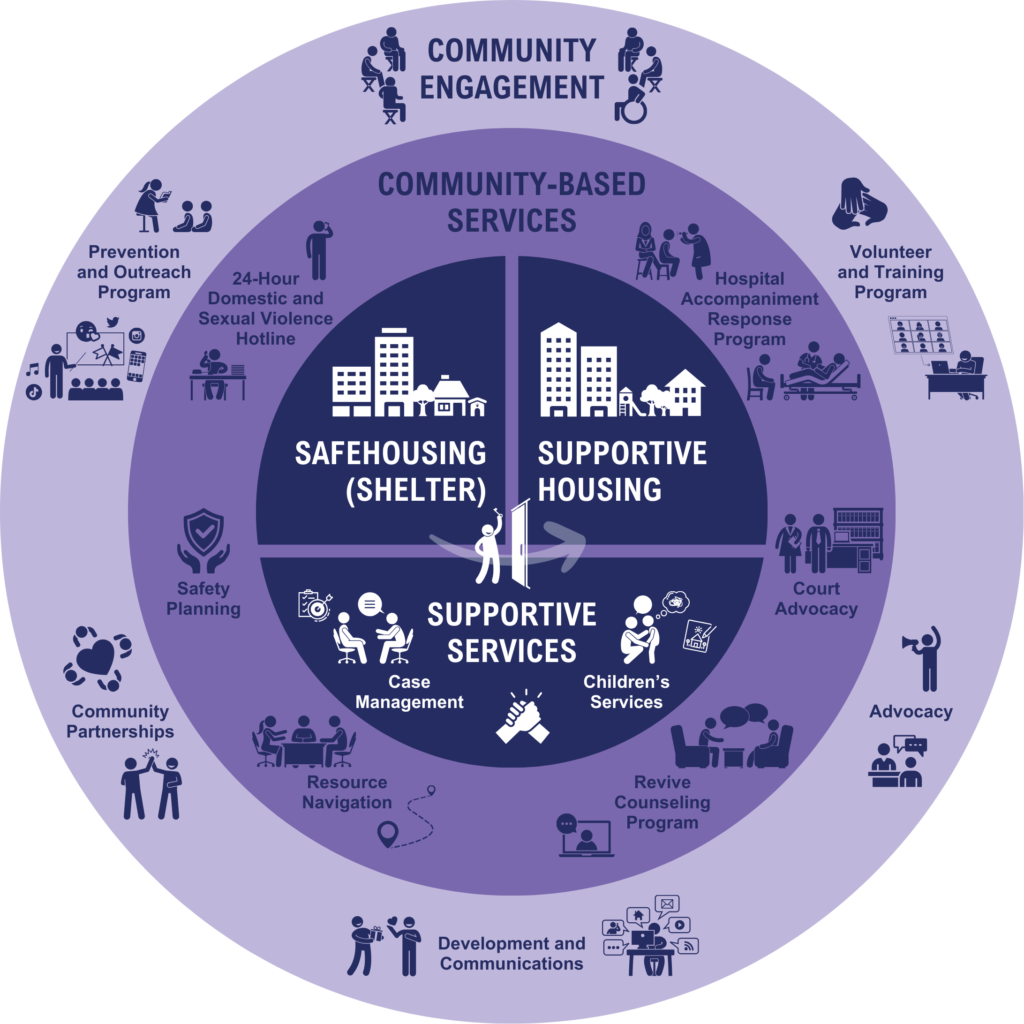
Doorways’ response to domestic and sexual violence spans a spectrum—from preventing violence, to supporting survivors and their families throughout our community, to providing shelter and housing. We offer a wide range of trauma-informed services designed to meet survivors’ complex needs. All services are free, confidential, and available in all languages (multiple languages spoken in-person onsite, and more available through a language line). Through the generosity of our partners and supporters, we provide safe harbor, healing, and hope.
Community Engagement
Doorways partners with our neighbors, supporters, and fellow service providers to realize our mission every day.
- Prevention and Outreach Program
- Volunteer and Training Program
- Community Partnerships
- Advocacy
- Development and Communications
Community-Based Services
Doorways supports survivors throughout our community with a wide range of crisis response services, advocacy, and counseling.
- 24-Hour Domestic and Sexual Violence Hotline (703-237-0881)
- Hospital Accompaniment Response Program (HARP)
- Safety Planning
- Court Advocacy
- Revive Counseling Program
Shelter, Housing, and Supportive Services
Doorways provides Arlington’s only emergency safehousing for survivors experiencing homelessness due to domestic and sexual violence. HomeStart, Doorways’ housing program, supports clients transitioning out of shelter to a home of their own.
- Supportive Services (Case Management, Children’s Services, Financial and Employment Counseling)
- Safehousing (Shelter)
- HomeStart Supportive Housing Program
Impact Statement
2025 was another record-breaking year for Doorways:
- Safehousing provided emergency shelter for 150 people (80 adults and 70 children) in 79 households, a record high throughout Doorways’ history. 90% of households who disclosed their next destination did not return to an abusive living situation after leaving shelter.
- HomeStart supported 149 people (69 adults and 80 children) in 58 households.
- Children’s Services provided 2,390 sessions supporting kids and their parents in our shelter and housing programs, more than double compared to 2024.
- Revive Counseling Program provided supportive counseling and safety planning for 240 people, including 2,519 individual counseling sessions.
Read Doorways’ annual report to learn more about how supporters like you make a difference for survivors like the ones quoted here:
“Doorways saved my life and has changed everything.”
“Doorways has helped my child open up, express her feelings, and communicate. She loves to attend play therapy where we see a huge change with issues we had prior to coming.”
“I have learned to understand my situations and got help with getting custody of my son. This is a great resource for victims of domestic violence.”
“My mental health has improved greatly post-assault. I was having trouble taking care of myself because I was mentally in a sad state. Doorways’ therapy sessions have taught me how to cope and recover in a healthy way. I feel fully supported here.”
What ways can the public get involved?
- Host a Fundraiser or Donation Drive: Individuals and groups can support Doorways’ mission by collecting critical funds and supplies. Monetary donations and VISA gift cards are needed year-round. Please contact Doorways for a current list of in-kind needs (e.g., personal and household items) or see our wish list. Learn more at www.doorwaysva.org/join-our-cause.
- Host an Educational Prevention Workshop: Contact our Prevention and Outreach Program to host a free educational prevention workshop for your community/organization, or to request Doorways representation at an upcoming event. Request a workshop by visiting www.doorwaysva.org/prevention.
- Volunteer: Volunteers are an essential part of the Doorways team! Visit www.doorwaysva.org/volunteer to learn more, submit an online application, and plan to attend an information session to get started.
- For Kids and Youth: Visit Doorways’ Kids’ Corner for ways that young people can get involved, including learning about the issues with our recommended reading list, hosting a fundraiser, and more: www.doorwaysva.org/kids-corner/.
How are charitable dollars spent? Where does my donation go?
Every year, half of Doorways’ budget comes from private donations. These monetary gifts from individuals, businesses, foundations, and corporate, faith, civic, and community groups ensure that Doorways is able to provide safe haven to every survivor in-need.
- $100 could help provide a month of infant care supplies for a baby living in shelter.
- $250 could help provide a Revive trauma therapy session for an adult, youth, or child impacted by domestic violence.
- $500 could help sustain Doorways’ wraparound services in shelter and housing to promote healing, safety, and sustainability.
- $1,500 could help provide a security deposit for a survivor’s new apartment after graduating from shelter.
Information provided March 2026
True Ground Housing Partners (formerly APAH)
 True Ground Housing Partners (formerly APAH)
EIN: 54-1414133
Mission Statement
We exist to provide quality affordable housing and resident-centered programming to help our residents make the most of their home.
Program Summary
Our homes provide residents with the foundation to live their dreams. Our resident services program strives to propel residents’ efforts to achieve their personal and professional goals. Together, these programs strive to elevate residents across lower levels of economic status throughout our community.
Specifically, our resident services program is centered around a mission to provide assistance to all True Ground residents and help them eliminate barriers to obtaining self-sufficiency. This is achieved through more targeted goals for four programmatic pillars: housing stability; economic mobility; health and wellness; and children, youth and families. Ultimately, it is our hope that True Ground residents either break the cycle of poverty and their children have the academic and social capital to receive post-secondary education/training and acquire a family-sustaining job, or that adults are able to age in place in their apartment living a healthy, quality life in pursuit of their own professional and personal goals
Impact Statement
True Ground’s vision guides our work: Everyone deserves a place to call home – a foundation to live their dreams.
Our growing Resident Services program and regional real estate development projects positively impact the resilient, diverse populations that True Ground serves.
What ways can the public get involved?
True Ground accepts charitable and in-kind donations as a charitable nonprofit organization.
Volunteers are critical to our regular operations; they help with supplemental nutrition distribution, after-school activities, community-building events, and much more.
Neighbors and housing advocates can support local initiatives that advance affordable housing priorities in their communities
How are charitable dollars spent? Where does my donation go?
Philanthropic funding at True Ground supports our mission to provide affordable housing in the region and resident-centered programming to benefit those who call our communities home. Our resident services program is funded entirely through philanthropic gifts like yours.
Information provided March 2025
Arlington Community Foundation
 Arlington Community Foundation
EIN: 54-1602838
Mission Statement
Arlington Community Foundation (ACF) uses the power of philanthropy and its role as community convener and catalyst to improve the quality of life in Arlington and beyond.
As a grantmaker, convener, and leader of programmatic initiatives, ACF strives to strengthen local nonprofits, encourage better understanding of the needs of Arlingtonians, and address the most critical issues of our time to ensure that our community provides opportunity for everyone.
Program Summary
Personalized Philanthropy – For over 30 years, individuals, families, and businesses have relied on us to make charitable giving easy, flexible, tax-smart, efficient, personal, and deeply rewarding. We’re experts in vetting nonprofits and philanthropic investment strategies, so you don’t have to be.
Economic Mobility – With a unique bird’s eye view of Arlington, ACF serves as a community convener, nonprofit reserve fundholder and grantmaker, and driver of major community initiatives and in-house community impact funds to create economic opportunities and prevent displacement, with a special focus on deeply affordable housing, deeply affordable childcare, and pathways to living wages.
Scholarships – Arlington Community Foundation has a well-established Annual Scholarship Program that, over the last decade, has awarded more than $5 million to Arlington students attending college. Generous individuals, families, companies and organizations fund the scholarships, which have their own unique eligibility criteria.
Impact Statement
Philanthropy Impact: In 2023, with the support of so many community members, we provided over $5 million in grants to nonprofits and community programs. We currently manage over $30 million in assets, with over 200 funds, including 20+ nonprofit agency funds. Behind each fund is an inspiring story of passion and purpose, put into action through philanthropy. Such is the case with one of our newer legacy fundholders, Dimple Dhabalia. Dimple’s two-decade career in humanitarian work is marked by a profound connection between her own story and the lives she touches through her work and legacy fund. Read her story here.
Economic Mobility Impact: Community advocacy based on our 2023 Affordable Childcare Report led the County Board in April 2023 to fund, beginning in FY 24, a new full-time senior level DHS position to support the implementation of the Child Care Action Plan, among other priorities. In June 2023, the findings of our recently-completed deeply affordable housing pilots demonstrated feasible pathways to closing the affordability gap for our lowest income neighbors. Concluding in December 2023, the data and lessons learned from our 18-month guaranteed income pilot, and pilots from around the country, are being used to inform national policy that would create a federal income floor under which no one in our country can fall.
Scholarship Impact: In 2023, ACF awarded more than $700,000 in scholarships to new and renewal students. To celebrate the achievement of these students, ACF hosted a Scholarships Ceremony in June, filled with students, their families, and scholarship donors. During the ceremony, 11 scholarship recipients shared what the scholarship means to them in an inspiring video. You can watch the video here.
What ways can the public get involved?
There are several ways to get involved with the Community Foundation:
- Donate to or Start a Fund: Browse our current funds and make a one-time donation to support a variety of needs in Arlington. Check out our Plan Your Giving page to explore how our different fund options can maximize your own charitable giving, from scholarship funds to legacy funds, and everything in between.
- Volunteer to Review Scholarship Applications: Every year, we seek volunteers to participate in our annual community scholarship review. The entire process is virtual and takes place between January and March. Click here to sign up for updates.
- Spirit of Community Awards: For over 30 years, the annual Spirit of Community Awards have recognized those who demonstrate a tireless commitment to improving life in Arlington, whether through philanthropy, advocacy, the arts, social justice, or volunteering (among other fields). You can get involved by nominating someone for the award, attending the Celebration & Luncheon, and/or sponsoring the event! Learn more by clicking here.
- Sign Up for our Community E-news: Be the first to know about scholarship updates, events, grant opportunities, charitable giving tips, community stories, volunteer opportunities, and more by clicking here.
How are charitable dollars spent? Where does my donation go?
Unrestricted donations help the Foundation support long-term solutions; respond quickly to emergencies; and meet changing social, arts and cultural, educational, health and human services, or environmental needs in our community.

Information provided March 2024