
population-scope: Arlington
 Arlington Historical Society
 Arlington Historical Society
EIN: 54-0920730
Mission Statement
Our mission is to improve our community by building knowledge of our diverse history.
The Arlington Historical Society, founded in 1956, is a nonprofit educational organization incorporated under the laws of the Commonwealth of Virginia. The Arlington Historical Society conducts research to preserve and disseminate knowledge relating to the history, archaeology, material culture, geography, and socio-economic development of Arlington County, Virginia.
Program Summary
The society fulfills its mission by providing historic resources for the community, including two historic properties (the Arlington Historical Museum and the Ball-Sellers House) and its artifact collection; original historical research (such as the Memorializing the Enslaved in Arlington project) and publications (including an annual scholarly magazine); the discovery, collection, preservation and exhibition of artifacts; and the presentation and dissemination of knowledge on the local history of Arlington County (through both recurring monthly events as well as individual community events), and all of this is free to the public.
Impact Statement
AHS builds community by spreading awareness and appreciation of our shared history.
Our museums reach life-long residents, newcomers who want to learn about their new community and out of town guests who learn about Arlington’s role in just about every aspect of US history.
Our current project, Memorializing the Enslaved in Arlington involves original research of the enslaved in Arlington, including their names (where available from the historic record), their occupations and place of enslavement. This information is available on our website, and it is made accessible to the public through community events and through “stumbling stones” which are markers that will be placed throughout the community to commerate the lives of the enslaved. We are working with Arlington County Public Schools to produce the stumbling stones and the County to place the stumbling stones. The first 18 of an estimated 2750 have been produced and placed as a pilot program, and more will be regularly produced and placed.
Additionally, AHS is actively involved in community outreach and many people gain a deeper understanding and appreciation of our county’s history through our monthly events, special events at our museums and our involvement with numerous civic and other community events.
What ways can the public get involved?
- Become a member: membership starts at $35. Get monthly email, quarterly newsletter, annual Arlington Historical Magazine, and 10% discount on any AHS purchase.
- Donate artifacts of Arlington history. Help us tell Arlington’s story.
- Donate financial support for the work of AHS and preservation of our two museums.
- Volunteer with AHS in any of our wide variety of opportunities. We’ll help you find something you’ll find rewarding and fun.
How are charitable dollars spent? Where does my donation go?
AHS has very little overhead, and virtually all money raised goes directly into our program. Our significant expenditures include operating and maintaining our two historic properties, the oldest extant school building in the county and the oldest extant structure in the county, maintaining our artifact collection, holding our events and educating the public through our digital and physical content.
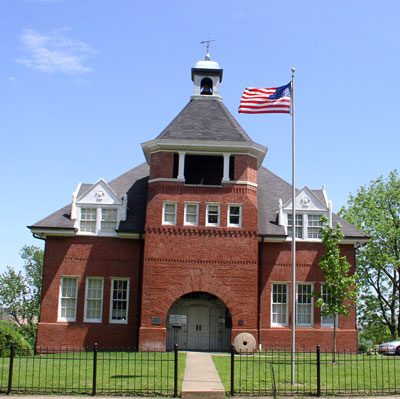
We have recently completed preservation work on the Arlington Historical Museum, housed in the historic 1891 Hume School. We have updated all the exhibits and transformed space previously used for storage into community space that will be used as a center for history education, presentations, co-curated exhibits that highlight our rich diversity, and for general community use. We are raising money for a part time Museum Director, part time Executive director to expand our reach in the community, as well as raising money for preserving the Ball-Sellers House. We are also raising money for the stumbling stones for the Memorializing the Enslaved in Arlington program.
Information provided April 2025
Arlington Soccer Association
 Arlington Soccer Association
EIN: 23-7284150
Mission Statement
Provide quality soccer programs and experiences for youth of all abilities, backgrounds and financial means to encourage personal growth, promote a love for the game, and advance soccer in Arlington and surrounding communities.
Program Summary
Arlington Soccer Association offers recreational, developmental and travel soccer, as well as a number of camps, clinics and other programs throughout the year. Over 9,000 children take advantage of Arlington Soccer programs each year!
How are charitable dollars spent? Where does my donation go?
For the Arlington Soccer Association, a 501(c)(3) nonprofit organization, charitable donations are vital to supporting its mission and operations. Generally donations go towards financial aid, unless they are specifically earmarked for other causes. Here is how financial aid funds are typically utilized:
Financial Aid for Players: Donations designated for financial aid are used to subsidize the costs for players who may not otherwise be able to afford to participate in the soccer programs. This can include covering part or all of the fees associated with:
- Registration Fees: These are often the primary costs associated with joining the soccer programs. Financial aid can help cover these expenses to ensure every child has the opportunity to play, regardless of their financial background.
- Uniforms and Equipment: Soccer requires specific gear, such as jerseys, shorts, socks, cleats, and shin guards. Financial aid can help families obtain these necessary items.
- Travel Costs: For travel teams, expenses can include transportation, lodging, and meals for away games and tournaments. Financial aid can help ensure that all team members can participate in these important events.
Information provided April 2025
Friends of Clarendon House
 Friends of Clarendon House
EIN: 54-1644438
Mission Statement
In existence since 1992, the Friends is a group of individuals who support Arlington’s mental health programs, especially Clarendon House, and individuals served by Arlington’s Behavioral Healthcare Division.
How are charitable dollars spent? Where does my donation go?
Housing assistance, medical and dental expenses, food pantry, social activities
Information provided March 2025
CARE, Inc.
 CARE, Inc.
EIN: 54-1807476
Mission Statement
Our mission is to provide and serve our clients with resources, education, enrichment and economic opportunities. We do this for the disadvantaged and underserved, primarily serving and mentoring low-income, at-risk youth and families.
We work with community partners and provide them with project/program management and support, fundraising events, technical skills and grant writing.
Program Summary
Our programs and activities include the following:
- Community Learning afterschool programs and summer camps that build collaborations through resources and education for those we serve with opportunities, apprenticeships, classes, workshops and retreats.
- Association of providers who we support and encourage them to support our participants.
- Resources for Parents, Seniors, Ex-Offenders and Youth to support and enrich their lives.
- Education and opportunities through programs like Dinner Chats, Community Gardens and Youth Markets at our Green Valley Farmers Market. We believe in “Teaching Men to Fish and Farm for a Living” to become self-sufficient.
- Enrich the lives of those we serve in underserved communities.
- Economic development opportunities at our Green Valley Farmers Market and Learn to Earn Program, Mobile Food and Concession Stands. We provide opportunities for employment and income through these programs in underserved communities.
- Preserving the history in communities and engaging residents to learn more about how they can enrich their lives and their communities, by understanding their past.
Impact Statement
- Underachievers who attend our programs find purpose and grow up with skills learned for a lifetime of living.
- Parents gain access to resources and programs that can meet their needs. We engage them in community matters as volunteers and resources, helping them to relay their needs and get any help that they need.
- Our programs created to serve youth are now modeled by others and offered in several communities.
- We work with partners and help them to be successful in delivering their programs and activities to those in need.
- Our youth are provided opportunities afterschool and outside of home that can lead them to learn skills and fulfill their goals in life.
- Starting with Gardening for the community we have now connected our Gardening Apprenticeship Program (GAP), Farm to Table and the Green Valley Farmers Market (GVFM) that will provide coupons and encourage healthy eating and wellness through other market activities.
What ways can the public get involved?
CARE is primarily an organization served with volunteers. We look for volunteers that want to share their knowledge and skills to enrich the lives of our program participants. Volunteers are needed to mentor, teach and chaperone. Volunteers works with groups in our gardens and will be helpful in setting up and operating our Farmer’s market and selling goods and services. No specific skills are required, just time and energy. Students in middle and high school can volunteer and participate in GAP and Learn to Earn, while preparing for college.
We always welcome any donations and contributions of resources that we use in our programs and distribute to families in need. We provide family time meals and snacks and refreshments in our programs afterschool and when we meet with parents. Parents can attend Dinner Chats to meet service providers and share their needs.
How are charitable dollars spent? Where does my donation go?
Donations help us to buy and provide school supplies for students, snacks afterschool, meals for family times and programs. For programs we provide supplies that includes arts & crafts, healthy eating and incentives and awards. Awards includes trophy’s, certificates, gift cards and gifts to recognize special achievements and accomplishments.
Student scholarships are awarded to those who want to participate in organized sports, clubs and camps. Sometimes we supplement fees that can be several hundred dollars for a summer camp. Donations help to support our summer and afterschool programs with staffing when needed. Transportation cost for field trips and admissions are needed for those we work with, that cannot afford to pay added cost.
We use space and facilities that sometimes charges us fees and requires us to have insurance to cover any liability issues.
Our programs and support for the communities we serve is based on donations, grants and in-kind services.

Information provided March 2025
Read Early and Daily (READ)
 Read Early and Daily (READ)
EIN: 82-3345797
Mission Statement
Ensuring babies and young children have new, quality, culturally relevant books of their own that are mirrors and windows into their everyday lives and communities
Program Summary
FACT: All babies are born with the same number of neurons…BILLIONS.
FACT: Neurons are pretty much useless unless they make a connection (aka synapse).
FACT: Connections are made through talking, singing, cuddling, and most importantly, READING books with your baby.
Every time a book is read to a baby, a connection is made in their brain, that is, a neuron is activated (*lit up*). Isn’t that amazing?! It’s that simple.
BUT without books in the home, reading to babies and young children every day is nearly impossible.
- On average, children from low-income families have 1 book compared to 12 books that their peers from middle income families have.
- As a result, these young children hear 25 hours of 1-to-1 reading before school while children from middle-income families hear 1,000 hours of listening to books read aloud.
- By age 3, a child from a low-income family has a listening vocabulary of 500 words, compared to 1,100 for their peers from middle-income families.
- Arriving at school, they score 60% lower on cognitive tests and lag 12-14 months behind in language and pre-reading skills.
READ was created to address reading inequities faced by Arlington’s youngest and most economically vulnerable children. We meet expectant, uninsured families at their prenatal appointments and start them off with a baby book bag filled with five board books plus tips for reading. When the baby is born, they are automatically enrolled in our cornerstone program READ With Me and receive a texted order form for a new FREE, quality, culturally relevant book each month for their baby’s first year. In addition, they receive monthly reading texts and tips.
Impact Statement
In 2024, over 400 babies and toddlers from economically vulnerable families were enrolled in our cornerstone program READ With Me, allowing their families to choose and receive a new, quality, age-appropriate, culturally relevant book every month.
- 100% of families report READ With Me has helped them build a home library
- 99% of families report spending more time reading with their baby.
- 97% of families report they have made reading part of their daily routine
- 99% of families report their child has learned new words and/or new information from the books.
- Over 50% of our families report READ is their only source of books
One family’s story
Annie, age 2, has received 28 books from READ: five prenatally and one each month via READ With Me. READ is her family’s only source of books. These books have helped Annie’s brain develop, and she has gained the following skills:
- Recognizes basic colors, shapes, and some numbers (1-10) and letters,
- Sorts objects by size, shape, or color,
- Speaks in full sentences,
- Shows enhanced vocabulary and language development,
- Understands and follows along with simple stories.
What ways can the public get involved?
READ with Me Book Fairies (Delivery Drivers)
- Drivers spend about 2 hours on a Friday or Saturday morning toward the end of each month delivering books to families in Arlington. A car and valid driver’s license are needed.
Email clairemorris@readearlyanddaily.org for more information and to sign up to volunteer.
How are charitable dollars spent? Where does my donation go?
Our model is simple. READ gets free, quality, culturally relevant books to vulnerable babies when they need them the most. You can choose to help one baby or many babies.
- $100 helps build and *light up* one baby’s brain
- $500 helps build and *light up* five babies’ brains
- $1000 helps build and *light up* ten babies’ brains
When you support READ, YOU are enhancing the literacy and language experiences of economically vulnerable babies and toddlers at their most vital brain development by providing books for them to keep and for parents to read aloud. These early simple acts of reading together sets a baby on the path to future academic success and self-sufficiency.

Information provided March 2025
Friends of the Mount Vernon Trail
 Friends of the Mount Vernon Trail
EIN: 83-4129792
Mission Statement
The Friends of the Mount Vernon Trail supports the National Park Service in keeping the trail safe and welcoming for all users through education, trail maintenance, and community events.
Program Summary
The Mount Vernon Trail is an 18-mile long shared use path that travels along the George Washington Memorial Parkway in Northern Virginia between Rosslyn and George Washington’s home at Mount Vernon. The Friends of the Mount Vernon Trail (FoMVT) was formed in 2018 and supports the National Park Service in keeping the trail safe and welcoming for all users through education, trail maintenance, and community events.
The Friends of the Mount Vernon Trail hold regular volunteering activities for the public. All are welcome to attend, no experience necessary, and kid-friendly.
Impact Statement
FoMVT believes that the Mount Vernon Trail and the George Washington Memorial Parkway should be enjoyed by everyone and that everyone should be given the opportunity to be a steward of the park. Volunteers have ranged in age from 2 to 85 years old. Weekly volunteer events do not have a participant cap and have been as large as 160 participants. Since 2018, the FoMVT have hosted over 200 volunteer events with over 4,000 volunteers giving back to the trail.
What ways can the public get involved?
We host volunteer events every Saturday on the trail. You can see a list of upcoming events on our website at https://mountvernontrail.org/events/
We also host resource appreciation events such as an annual Tulip Walk/Bike Ride, Bat and Firefly Walk, Beaver Moon Walk, and various art classes.
How are charitable dollars spent? Where does my donation go?
The largest overhead cost of the organization is paying for the storage of tools and equipment. We also use donations to purchase new tools, signs, fencing, maintenance of trail fixing equipment, and cold patch to fill potholes.

Information provided March 2025
Shirlington Employment and Education Center (SEEC)
 Shirlington Employment and Education Center (SEEC)
EIN: 54-2036192
Mission Statement
SEEC’s mission is to raise the standard of low-wage, immigrant day laborers in Arlington County so that Day Laborers and other immigrant workers can participate in dignified work, in safe working conditions, and earn fair wages. We provide an opportunity for Day Laborer to find safe work at a fair wage and to obtain skills that improve their employability and we work to improve the overall conditions of day Laborers in Arlington.
Program Summary
SEEC provides services to Day Laborers – workers who provide a critical temporary labor force for local construction, food, janitorial, moving support and landscaping businesses, without whom these businesses could not survive. Arlington’s Day Laborers are majority Latino (over 95%) recently immigrated men, over 95%, who are unable to obtain or maintain permanent part-or full-time employment.
The majority of SEEC’s clients are from Zip Codes 22204 and 22206; over 70% are from 22204. As recent lone immigrants, most have little or no familial support in the area and lack English language skills, which presents a barrier to employment. These Laborers are extremely low- to no income workers who present with immediate critical needs for jobs, food, housing, emergency funds, and medical care. In FY 2024, 80% fit the criteria for homelessness; 90%
reported food insecurity; and approximately one third required referral to the Arlington Free Clinic ( AFC). In a society that often fears single Latinos and men of color congregating in public places and who resemble – or are – homeless and unemployed, historically marginalized, Day Laborers face a significant amount of institutional, systemic, and individual discrimination, are often isolated, and require protection from the illegal labor practices and exploitation encountered on job sites.
Impact Statement
SEEC provided vital services to the immigrant community that included:
- Serving 749 laborers
- Filled 689 jobs
- Resolved 12 cases of wage theft
- Prevented 30 evictions
- Distributed 2,200 free brown bag meals
- Referred 108 Day Laborers to the Arlington Free Clinic
- Referred 259 Day Laborers to the Arlington Food Assistance Center
- Provided 650 monthly hot meals through the SEEC Winter Hot Meal Initiative
- Inaugurated the SEEC Emergency Needs Fund and the SEEC Saturday Legal Clinic, which aids with immigration issues
What ways can the public get involved?
We invite volunteers who can tutor English to our clients.
We need volunteers to provide transportation to take day laborers to local jobs.
We invite volunteers to provide bag lunches for the day labores.
How are charitable dollars spent? Where does my donation go?
Over 95% of the charitable donations go to pay for training and support for the day laborers. This includes paying for temporary rent, bus transportation, for the cell phones that are essential to communicating with employers, prescription drugs and meals for those who can’t find work and are going hungry.
Information provided March 2025
Jennifer Bush-Lawson Foundation
 Jennifer Bush-Lawson Foundation
EIN: 47-1374686
Mission Statement
The Jennifer Bush-Lawson Foundation serves economically vulnerable mothers and babies by increasing access to much-needed health care support, conducting research to affect systemic change, and ensuring they have the supplies needed to bring baby home. In honor of Jennifer Lawson, a loving mother of three who tragically lost her life in 2014, we aim to honor her dedication, generosity, and kind heart by fulfilling the vision that she crafted for every mother and baby in need.
Program Summary
We have 3 primary initiatives to accomplish our mission. The first is to ensure families have everything they need to bring baby home safely – from cribs to car seats. The second is to increase access to quality care by funding innovative pilots – such as tele-health – that enable these families to access care that meets their daily needs. The third is to raise awareness of the issues facing this community through thought leader events and social media promotion.
Impact Statement
Throughout our 9-year history we have served more than 3,000 families, provided more than 350 basics materials, hosted 10 awareness campaigns, and funded more than $250,000 to support Including projects focused on infant care, tele-health, & maternal mental health. In addition to these mission related activities, we strive to be nimble in an ever-changing environment to help these families in other important ways. For example, in 2020 we launched a program to put kitchen staff back to work while delivering home cooked meals to new mothers whose family were affected by the economic shutdowns.
What ways can the public get involved?
We have two ways of getting involved with the Jennifer Bush-Lawson Foundation. Volunteer throughout the year by helping us collect gently used baby supplies such as car seats, strollers, and portable cribs. In addition, our signature fundraising event, the 5K and Family Fun day is always in need of volunteers. This event is held the Saturday before Thanksgiving at the Knights of Columbus.
How are charitable dollars spent? Where does my donation go?
The Jennifer Bush-Lawson Foundation is giving economically vulnerable mothers and babies renewed hope by increasing access to much-needed health care support, conducting research to affect systemic change, and ensuring they have the supplies needed to bring baby home. Your support changes lives.
$25 helps provide a breastfeeding starter pack
$50 helps provide a portable crib
$100 helps provide a car seat
Information provided March 2025
Affordable Homes & Communities (AHC)
 Affordable Homes & Communities (AHC)
EIN: 54-1026365
Mission Statement
The residents of Affordable Homes & Communities are at the heart of all we do. We build opportunity by creating quality homes with holistic resident services. We drive change through innovation, genuine partnerships, and responsible investment.
Program Summary
AHC envisions a world where all people share the same opportunities regardless of income, race, or other qualities; where housing is integral to a healthy, welcoming, and equitable society; and where affordable homes are available to all.
Our Resident Services program started in Arlington, VA, over 30 years ago. Today, the program provides a multitude of services for families, adults, and senior citizens, along with a multi-pronged education initiative for elementary-aged children all the way through high school. The resident-driven program focuses on four key areas of housing stability:
Education & Youth Development: AHC’s educational programs for students encourage academic and personal growth. Our approach includes our Afterschool program focused on improving literacy and social-emotional learning; Teen Tutoring, which includes one-on-one tutoring, college visits, and SAT test prep; the College and Career Readiness program, which helps high school juniors and seniors transition to their next step; and a Summer Camp program designed to prevent learning loss.
Health & Wellness: AHC offers community connections and onsite programs to help adults strengthen their economic stability and build stronger futures for themselves and their families. Programs include onsite screening, partnerships with local food banks that provide food weekly, English as a Second Language courses, and access to local government services. Activities for senior citizens include exercise classes, arts and crafts, nutrition and wellness programs, access to libraries, continuing education, and cultural excursions.
Economic Mobility: Through workshops and clinics, Resident Services works with residents to access funds, increase income, and maintain housing stability. The team collaborates with organizations that provide financial assistance, help build financial stability, and promote career development for low-income families, seniors, and people with disabilities. Staff regularly meet with residents to provide individualized, step-by-step financial guidance and offer ongoing support.
Community Building & Engagement: AHC’s goal is to increase resident voice throughout our communities through surveys, focus groups, and resident meetings—and supporting resident-led activities and community groups. We also have a Resident Ambassador Committee to help elevate resident voices. Our communities host a variety of activities to bring residents together and build strong connections among neighbors.
Impact Statement
Affordable Homes & Communities provides quality affordable housing enriched by a nationally accredited Resident Service program. Every year, more than 3,000 residents are positively impacted by our programs that provide vital resources focusing on education and youth development, health and wellness, economic mobility, and more. In 2024, 1,500+ residents received food assistance, 500+ were protected from eviction as they grappled with the impact of the pandemic, 42 high school seniors completed our College and Career Readiness program and received scholarships toward their higher education and career goals.
What ways can the public get involved?
Please visit our website to learn more:
· Volunteer. Join us to tutor students, distribute groceries to a senior citizen, serve a holiday meal, and much more. Activities are available for individuals and groups.
· Donate. Consider making a special tribute gift, ask your employer if they will match donations, or share a meaningful gift through your donor-advised fund.
· Partner with us. We welcome the opportunity to create a meaningful community, corporate, or advocacy partnership to best match your interest in supporting AHC residents.
How are charitable dollars spent? Where does my donation go?
When you give to AHC, your donated funds are used to run our year-round Resident Services program which provides vital social services and onsite education and wellness programs to improve the lives of AHC residents. Your generosity means more neighbors from low-income households will have a safe and nurturing place to access budgeting workshops, rent relief, vaccine clinics, job readiness workshops, community movie nights, computer software for students, summer camp field trips, college boot camp for teens, and much more. Thank you!
Information provided April 2025