
This definition of “affordable” leaves out many people who are essential to Arlington’s workforce and economic success – childcare workers, home health aides, food prep workers, among so many others – whose 2025 wages are typically between $33,000-$40,000 per year, if working full-time (many are not).The rent at an “affordable” apartment is twice what these very low-income neighbors can afford.
Deep affordability means that more families can live in a safe, quality apartment that they can afford, with rents at about $1,100/month for a 2-bedroom. This not only prevents housing instability and homelessness, but it also alleviates financial stress for Arlington’s essential families. ACF’s many pilots demonstrate what people do when they have this financial “breathing room”… and it’s life-changing.
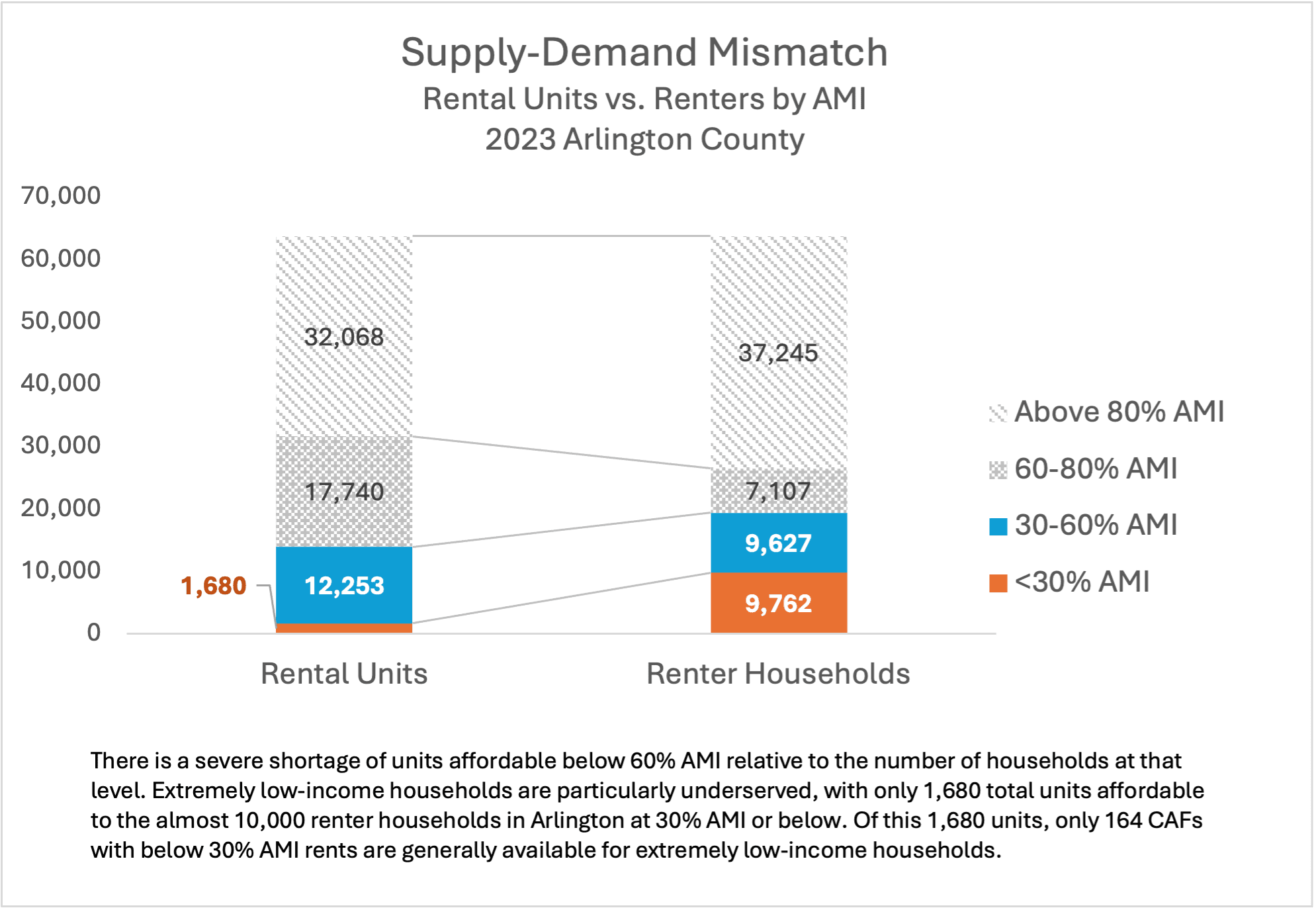
Yet, while there are nearly 10,000 renter households earning 30% AMI or less in Arlington, there are only 164 committed affordable units (CAFs) at 30% AMI. These households make up 15% of all renters in Arlington, but units affordable to them make up only 1.4% of all CAFs.
In 2023, based on advocacy and analysis led by ACF, Arlington County invested in the major redevelopment of the Barcroft Apartments by Jair Lynch, committing 134 of the 1,335 units to deep and long-term affordability at 30% AMI or less. And in 2024, the County Board invested an additional $1 million to “buy-down” apartments to rents affordable to households earning less than 30% AMI. This is the first time in Arlington’s budget history that funds are specifically earmarked for deep housing affordability at 30% AMI.
Arlington needs a balanced approach—one that meets immediate needs through subsidies and builds lasting committed affordable housing stock for our very lowest-income neighbors. ACF is urging the county to adopt a policy that all affordable properties funded through the County’s Affordable Housing Investment Fund include at least 10% of units that are affordable to 30% AMI households.
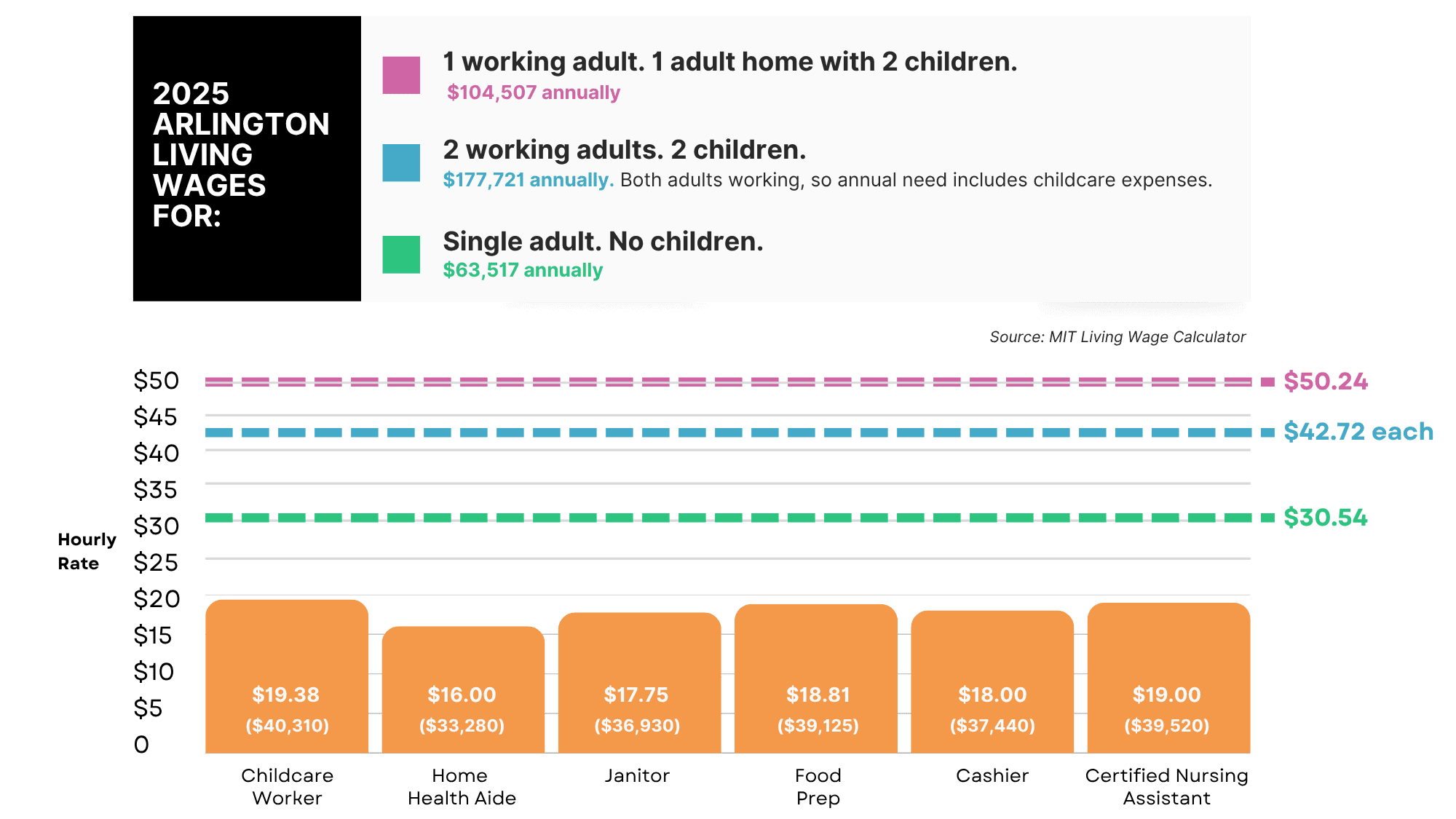
Based on most recent available data (April 2025)
Contact your state and local legislators and tell them you support significant investment in the construction of deeply affordable apartments for your neighbors in Arlington. And urge them to push for the creation of a Commonwealth rent subsidy program as a complement to the County’s Housing Grant program.
Let’s make true affordability achievable for everyone.


